



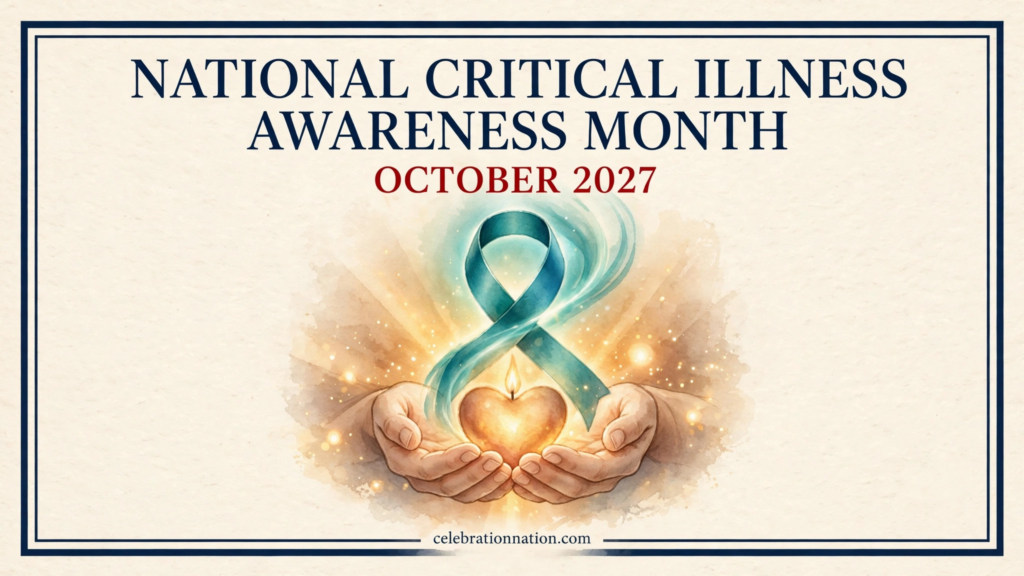
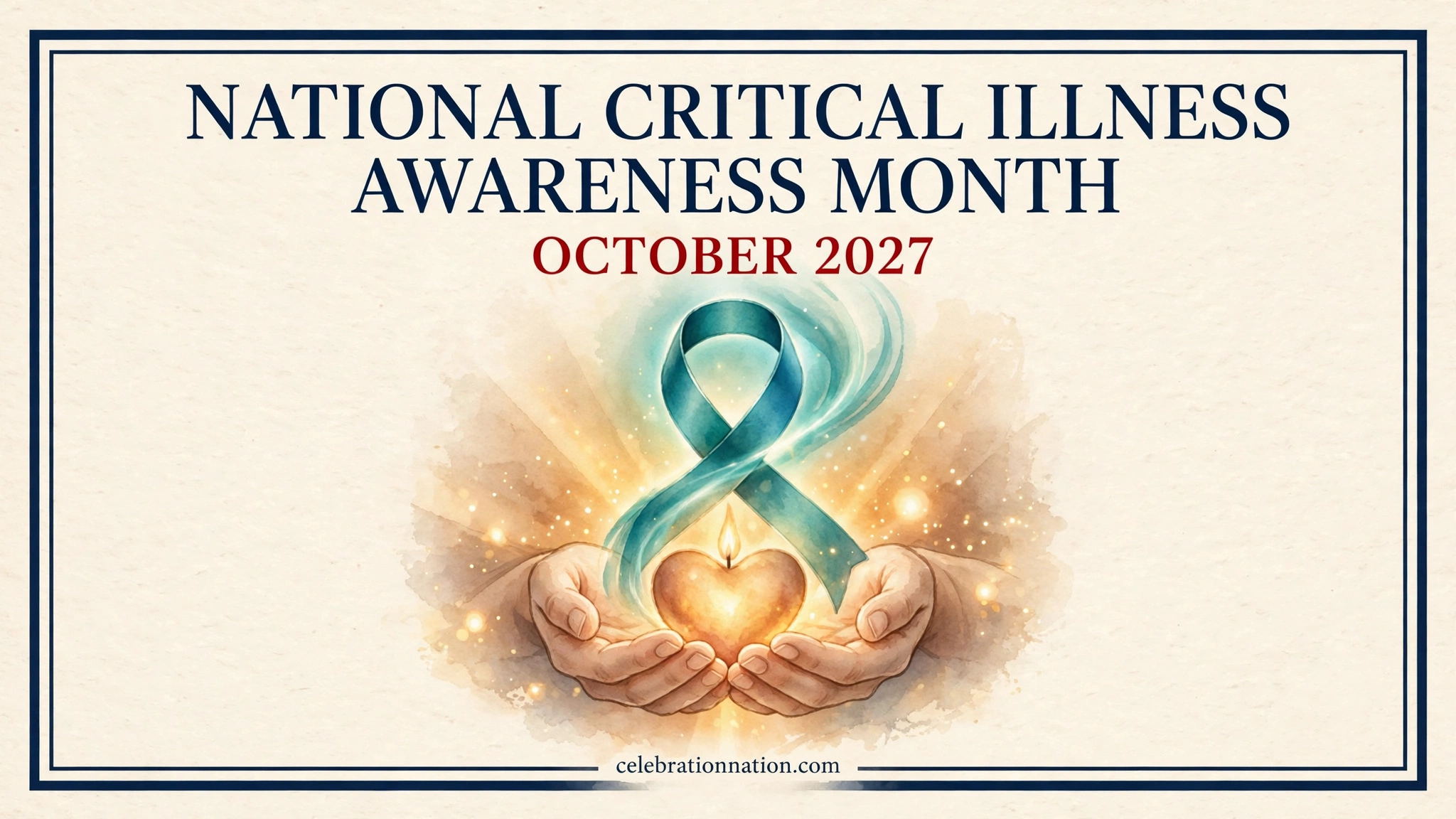
National Critical Illness Awareness Month
Every October, National Critical Illness Awareness Month invites us to face a difficult subject with open hearts and clear eyes. Roughly 75 percent of adults over age 40 will be diagnosed with a critical illness in their lifetime. October 2027 is a time to learn, to prepare, and to hold space for everyone walking this road, including the caregivers who walk it beside them.
- Hashtag
- #NationalCriticalIllnessAwarenessMonth
NATIONAL CRITICAL ILLNESS AWARENESS MONTH
Every October, National Critical Illness Awareness Month invites us to face a difficult subject with open hearts and clear eyes. Roughly 75 percent of adults over age 40 will be diagnosed with a critical illness in their lifetime. October 2027 is a time to learn, to prepare, and to hold space for everyone walking this road, including the caregivers who walk it beside them.
A critical illness is a life-threatening condition, defined very specifically by the medical community. The three most common are cancer, heart attack, and stroke. These are words we hope never to hear a doctor say, yet they touch nearly every family. This month exists so that fewer of us meet them unprepared, and so that those who do feel seen and supported rather than alone.
The statistics are sobering, and they are worth sitting with. According to Critical Illness Planning, three out of four adults over the age of forty will face a critical illness diagnosis during their lives. Stroke is the fifth leading cause of death in the United States. Cancer is the fourth leading cause of death among young women in the U.S. Every 43 seconds, someone in America has a heart attack. Behind every one of those numbers is a person, a family, a story interrupted.
October was chosen deliberately for this observance. The American Association for Critical Illness Insurance established the month in 2011, and its director, Jesse Slome, explained the reasoning with care. Awareness efforts gain momentum toward the end of the year, when many employers offer critical illness coverage during fall benefits enrollment. October also follows Breast Cancer Awareness Month’s pink-ribbon season and leads into November’s Lung Cancer Awareness Month, so the message joins a chorus of conversations about serious disease rather than standing apart from them.
One of the quietest gifts of this month is what it teaches us about early action. Doctors do not always recognize stroke symptoms in younger patients, which is why public awareness of warning signs matters so much. There are more than 100 different types of cancer, and it can affect any part of the body, which is why routine screenings and attention to new symptoms are so vital. Prevention cannot promise certainty, but a healthy diet, a steady workout regimen, and adequate sleep give the body its strongest foundation for as long as possible. Knowing your family history and sharing it honestly with your doctor turns vague worry into a concrete plan, which is one of the most powerful forms of self-care there is.
This month also honors the emotional and financial weight that follows a diagnosis. A critical illness reshapes a household: the long treatments, the missed work, the bills that arrive alongside the fear. Families who have walked this road often say the same thing, that knowledge and community carried them when their own strength faltered. Talking about critical illness in October, gently and honestly, helps neighbors, coworkers, and friends understand what real support looks like.
Communities mark the month in quiet, meaningful ways. Local businesses host educational workshops on preventative health. Clinics offer free or discounted health screenings, including blood pressure and cholesterol checks. Walk-for-a-cause events bring people together to move their bodies and raise funds for research. Restaurants feature heart-healthy menu items and donate a portion of sales to a relevant charity. None of these gestures erase the gravity of the subject, but together they turn awareness into action, and they remind every patient and family that their community is standing with them.
Workplaces have a meaningful role to play as well. Because many employers present benefits options each fall, October is the perfect time to review what your plan actually covers. Critical illness policies pay a lump sum upon diagnosis of a covered condition, money that can go toward copays, deductibles, transportation, or childcare while you focus on healing. Even if you never buy a policy, understanding the fine print of your own coverage is an act of care for yourself and your family.
Above all, National Critical Illness Awareness Month is a reminder that caring for one another includes preparing for the hardest chapters. Learn the signs. Keep your appointments. Check on the friend who is recovering. Ask your employer what your benefits include, and keep those documents where your family can find them. The lives we touch with attention and compassion are, in the end, the measure of this month.
Caregivers deserve a special place in this month’s story. When a loved one receives a critical diagnosis, a spouse, child, sibling, or friend often steps into a role they never trained for: managing medications, driving to appointments, sitting through long nights. These quiet heroes carry their own grief alongside their duty, and they need rest, respite, and gratitude just as much as patients need treatment. If you know a caregiver, offer something concrete this October, a meal, a ride, an hour of company.
It is also worth noting that the conversation around critical illness is slowly changing for the better. Earlier detection, improved treatments, and growing survivorship communities mean that a diagnosis today carries different possibilities than it did a generation ago. Awareness months like this one contribute directly to that progress, because research funding and public understanding grow hand in hand. Every workshop attended and every screening completed is a small vote for a healthier future.
THE STORY BEHIND NATIONAL CRITICAL ILLNESS AWARENESS MONTH
🏥️ The Association That Started It
The American Association for Critical Illness Insurance established National Critical Illness Awareness Month in 2011, with the word “insurance” deliberately left out of the name to invite broader public involvement.
📅️ Why October Was Chosen
Director Jesse Slome selected October because fall benefits enrollment makes it a natural time for education, and because it sits between Breast Cancer Awareness Month and Lung Cancer Awareness Month.
👤⚕️ A Word About the Founder
Jesse Slome, the association’s director, had previously created National Long-Term Care Awareness Month in 2001, and he built this observance on the belief that grassroots awareness takes time but pays lasting dividends.
💵️ The 75 Percent Statistic
According to Critical Illness Planning, roughly 75 percent of adults over age 40 will be diagnosed with a critical illness in their lifetime, a figure that anchors the month’s urgency.
🏛️ Recognized Across the Country
The observance has since been recognized by Congress and by numerous governors and mayors, and it marked its 10th anniversary in October 2020 with growing participation from employers, clinics, and communities nationwide.
WAYS TO CELEBRATE
🏥️ Schedule Your Health Screenings
Book the checkups you have been putting off, from annual physicals to blood pressure and cholesterol checks, and remind a loved one to do the same.
👥️ Share Life-Saving Knowledge
Learn the warning signs of heart attack and stroke, then share them with friends and family, because doctors do not always recognize stroke symptoms in younger patients.
🤝️ Support Your Local Cause
Join a community walk, attend a preventative health workshop, or donate to an organization supporting people living with cancer, heart disease, or stroke recovery.
Celebrate National Critical Illness Awareness Month
This October 2027, take a quiet moment for the most important work of all: protecting your health, learning the signs, and standing gently beside everyone whose life has been touched by critical illness.
Coming up next
See the calendar


Celebrate every day, all year
Official gear from the people who track 1,700+ celebrations.
Browse the shop 2027 Wall Calendar, signed by Marlo AndersonSigned by the founder of National Day Calendar.
Never miss a reason to celebrate.
One quick morning email with today's celebrations, ideas and posters. Free, unsubscribe anytime.
🎉 You're on the list! Watch your inbox for The Daily Confetti.