

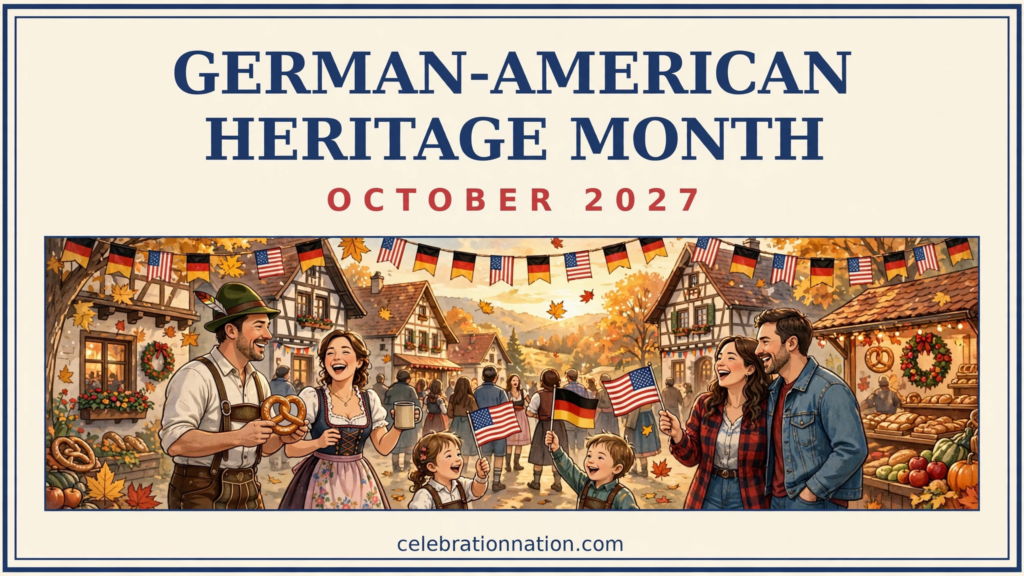
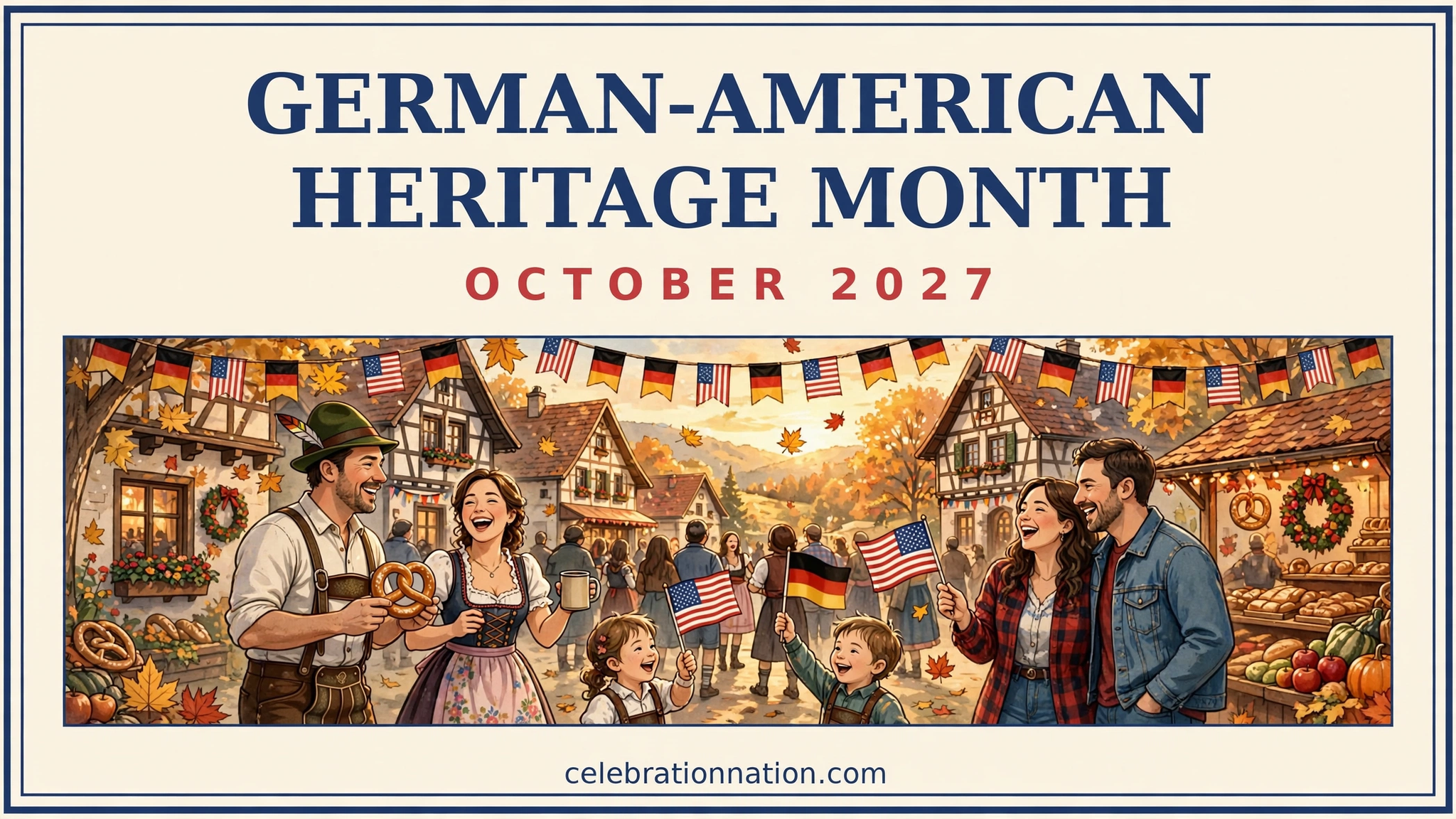
German-American Heritage Month
Every October, German-American Heritage Month honors the millions of Americans whose families came from Germany, and the lasting mark their ancestors left on American life. More than 40 million Americans, roughly 15 percent of the United States population, claim German ancestry, a larger group than any ancestry except the British. This month remembers that the American story has been written in many languages, and that one of its oldest chapters arrived aboard the ship Concord in 1683.
- Hashtag
- #GermanAmericanHeritageMonth
GERMAN-AMERICAN HERITAGE MONTH
Every October, German-American Heritage Month honors the millions of Americans whose families came from Germany, and the lasting mark their ancestors left on American life. More than 40 million Americans, roughly 15 percent of the United States population, claim German ancestry, a larger group than any ancestry except the British. This month remembers that the American story has been written in many languages, and that one of its oldest chapters arrived aboard the ship Concord in 1683.
On October 6, 1683, thirteen German families from Krefeld, near the Rhine, landed in Philadelphia. These were German Mennonites seeking religious freedom, and they went on to establish Germantown, Pennsylvania, the first German settlement in the original thirteen colonies. The date anchored centuries of remembrance. German-American Heritage Month takes October as its home precisely because of that October day, and because of the wave of immigration, culture, and craftsmanship that followed it across more than three hundred years.
The Krefeld families were only the beginning. In the 1700s, German immigrants traveled by ship to the port of Philadelphia as redemptioners, indentured servants who worked hard labor on farms and in fields for three to seven years in exchange for the opportunity to come to America. In the 1800s, nearly 1.5 million Germans left their country to settle in the United States, with about 250,000 German immigrants arriving in 1882 alone. The 1910 Census counted more than 8 million first and second generation German Americans in a national population of 92 million. Germans spread into nearly every corner of the country, tried their hand at nearly every trade and pursuit, and helped shape some of the fundamental institutions of American life.
Their contributions are woven into ordinary American days. The kindergarten was created by German educator Friedrich Froebel in 1837, his play-based program designed to help young children transition from home life to school life. The Christmas tree tradition was brought to the United States from Germany, with German settlements displaying community trees as early as 1747, and by the 1890s Christmas ornaments were arriving from Germany as the tree’s popularity soared. Hot dogs came to the United States in 1893 as part of the Chicago Columbian Exposition, and that same year they became standard fare at baseball parks. Germans gave America its brewing traditions, its gymnastics clubs called Turnvereine, St. Nicholas customs, and food staples such as sauerkraut and pretzels, while towns named Heidelberg and New Braunfels still dot the American map.
The observance itself grew out of remembrance and resilience. Communities first celebrated German Day in Philadelphia in 1883, on the two hundredth anniversary of the founding of Germantown, with parades and concerts. The custom died out during World War I, when anti-German sentiment led to the suppression of the language and culture: German street names were changed, and sauerkraut was rebranded as “liberty cabbage.” After the war, interest in celebrating German heritage waned, until it resurfaced in 1983, when President Ronald Reagan proclaimed October 6 as German-American Day to celebrate and honor the 300th anniversary of German immigration and culture in the United States. On August 6, 1987, Congress approved S.J. Resolution 108 designating October 6, 1987, as German-American Day, it became Public Law 100-104 when President Reagan signed it on August 18, and Proclamation 5719, issued on October 2, 1987, called on Americans to observe the day with appropriate ceremonies and activities. Presidents have continued to issue proclamations every year since, and many communities extended the celebration across the whole month, transforming the day into German-American Heritage Month.
The breadth of the German-American story is extraordinary. Germans were aboard the first ships that came ashore at Jamestown, and German-Americans were among those who built the rockets that took men to the moon. Members of Congress have honored German descendants as great American icons, naming figures like Babe Ruth, Lou Gehrig, and Casey Stengel in sports, and John Steinbeck, Kurt Vonnegut, and Dr. Seuss in literature. From the classroom to the ballpark, from the bakery to the space program, German immigrants and their descendants have left their fingerprints on nearly every chapter of American progress.
German-Americans count among their descendants great American icons in sports, literature, science, and public life, and their story reminds us that heritage is not only about the past. It is about what immigrants build when they are given a chance: schools and bakeries, breweries and churches, newspapers and universities. German-American Heritage Month invites every American to recognize that contribution, to learn the history honestly, including the years when it was suppressed, and to celebrate the friendship between Germany and the United States that has grown since.
THE STORY BEHIND GERMAN-AMERICAN HERITAGE MONTH
📅 The October 6, 1683 Landing
Thirteen German families from Krefeld, near the Rhine, landed in Philadelphia aboard the ship Concord and founded Germantown, Pennsylvania, the first German settlement in the original thirteen colonies.
🎒 The First German Day
In 1883, Philadelphia celebrated German Day for the first time, on the two hundredth anniversary of the founding of Germantown, with parades and concerts honoring two centuries of German immigration.
😔 The Quiet Years
During World War I, anti-German sentiment led to the suppression of German language and culture. German street names were changed and sauerkraut was rebranded as “liberty cabbage,” and interest in celebrating German heritage waned after the war.
📅 The 1983 Revival
President Ronald Reagan proclaimed October 6, 1983, as German-American Day to celebrate and honor the 300th anniversary of German immigration and culture in the United States.
📰 The 1987 Law
Congress approved S.J. Resolution 108 in 1987, it became Public Law 100-104, and Proclamation 5719 called on Americans to observe German-American Day with appropriate ceremonies and activities. Presidents have continued to make proclamations every year since.
👥 Forty Million Strong
Today, more than 40 million Americans claim German ancestry, approximately 15 percent of the United States population, more than any other ancestry group except the British.
🌹 The Friendship Garden
The German-American Friendship Garden in Washington, DC stands as visible evidence of the friendship and cooperation between the Federal Republic of Germany and the United States, a friendship that German-Americans proudly pledge to support.
WAYS TO CELEBRATE
🏫 Visit a Heritage Festival
Look for German-American heritage events in your area this October. Oktoberfest celebrations, which traditionally begin in late September, overlap with the month and make it a natural time to join the festivities.
🍳 Cook a German Dish
Make sauerkraut, bake a soft pretzel, or try a family recipe passed down from German ancestors. Sharing food is one of the oldest ways heritage travels from one generation to the next.
📖 Trace Your German Roots
Spend an afternoon with census records or a family tree project to learn when your German ancestors arrived and where they settled. October is a fitting time to give those stories the attention they deserve.
Celebrate German-American Heritage Month
All through October 2027, take time to honor the German families who crossed an ocean and helped build a nation. Visit a festival, cook a traditional dish, or simply learn the story of the thirteen families from Krefeld who landed in Philadelphia on October 6, 1683. Heritage is not only about where we come from. It is about what we carry forward, and this October is the perfect time to carry it with pride.
Coming up next
See the calendar

Celebrate every day, all year
Official gear from the people who track 1,700+ celebrations.
Browse the shop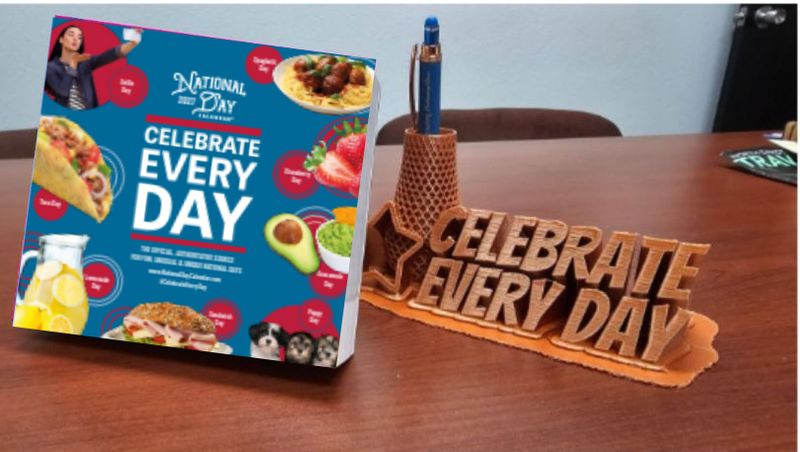 2027 National Day Desk CalendarA new celebration every morning. Daily tear-off.
Never miss a reason to celebrate.
One quick morning email with today's celebrations, ideas and posters. Free, unsubscribe anytime.
🎉 You're on the list! Watch your inbox for The Daily Confetti.