





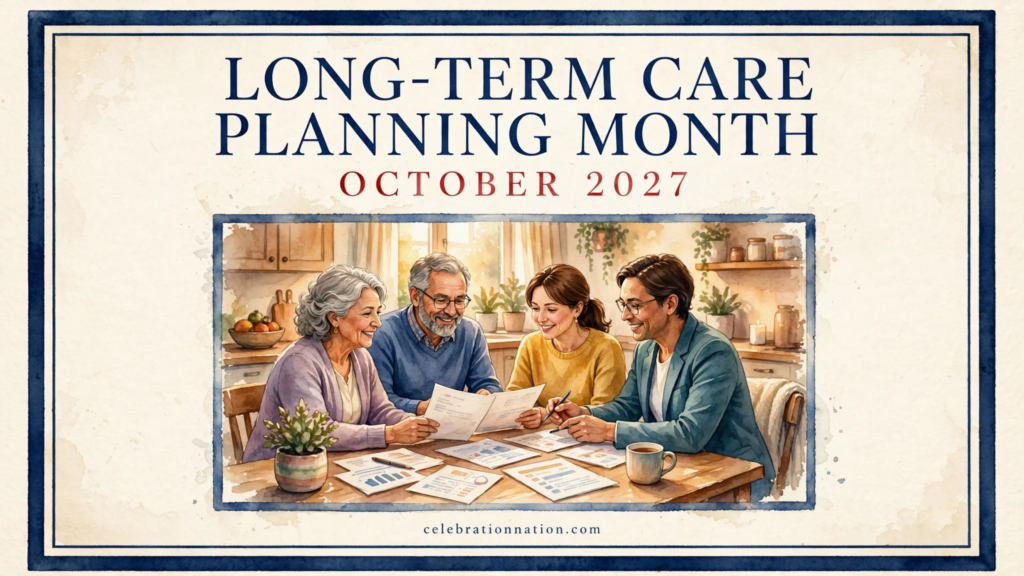
Long-Term Care Planning Month
Every October, families across the country pause for Long-Term Care Planning Month, a time to think honestly and kindly about the care we may one day need. The U.S. Department of Health and Human Services estimates that nearly 70 percent of people turning 65 will eventually need some form of long-term care, yet most families avoid the conversation until a crisis forces it. This month reminds us that planning is an act of love, not of worry.
- Hashtag
- #LongTermCarePlanningMonth
LONG-TERM CARE PLANNING MONTH
Every October, families across the country pause for Long-Term Care Planning Month, a time to think honestly and kindly about the care we may one day need. The U.S. Department of Health and Human Services estimates that nearly 70 percent of people turning 65 will eventually need some form of long-term care, yet most families avoid the conversation until a crisis forces it. This month reminds us that planning is an act of love, not of worry.
Long-Term Care Planning Month has been observed every October since 2001. It emerged in the early 2000s as the nation faced a growing awareness of an aging population and rising demand for care. The American Association for Long-Term Care Insurance played a significant role in establishing the observance, alongside care advocates and professionals who wanted a dedicated time to encourage proactive planning. Over the years, it has been promoted by financial advisers, elder care providers, insurers, and senior living communities. October was chosen in part because it arrives just before the holiday season, when families gather and difficult conversations can happen face to face.
Long-term care is the range of services and supports that help people meet their personal care needs. It is often custodial or supportive rather than medical: help with bathing and dressing, meal preparation, transportation, housekeeping, mobility, shopping and errands, medication routines, and companionship. Care can be provided at home, in the community, or in residential settings such as assisted living, memory care, and nursing homes. Planning does not mean assuming the worst. It means understanding the possibilities so that, if needs change, the choices ahead are thoughtful rather than frantic. Unlike acute medical care, long-term care is often custodial or supportive in nature, focused on maintaining quality of life and independence rather than curing an illness.
The need for planning is far more common than most people believe. The U.S. Department of Health and Human Services estimates that nearly 70 percent of people turning 65 will eventually need some form of long-term care, a figure later confirmed by research from the TIAA Institute built on two decades of federal health data. Yet most people wait: 54 percent of Americans say they have done little or no planning for ongoing living assistance, and just over half have ever discussed care options with anyone. Nearly 40 percent of people underestimate their future assisted living costs. Many wrongly assume that Medicare will cover long-term care, when in fact Medicare covers only limited short-term stays. In past decades, Medicaid has played a major role in paying for care: in the 1990s, 64 percent of elder nursing home stays involved Medicaid support. But eligibility rules are stringent, with asset limits, spend-down requirements, and state-by-state variation, and many facilities or services may not accept Medicaid at all.
The financial stakes explain the urgency. A private room in a nursing home can top 100,000 dollars a year in many parts of the country, and even in-home care or assisted living can run into the tens of thousands annually. The median monthly rate for a one-bedroom unit in an assisted living community is about 3,500 dollars, according to the senior placement service Assisted Living Locators. Traditional health insurance rarely covers custodial care, which is help with daily tasks rather than medical treatment. Most long-term care is financed through a patchwork of private savings, insurance, Medicaid, and out-of-pocket spending, which is why early decisions matter so much. For many families, the fear is not just losing physical ability, but running out of financial resources, or having to burden loved ones. Without a plan, individuals may face difficult tradeoffs: depleting assets, being forced into undesired care settings, or lacking agency in their own care.
A good plan answers three questions: what kind of care you would want, where you would want to receive it, and how it would be paid for. That can mean long-term care insurance purchased while still eligible, personal savings and investments set aside for future needs, and, for veterans, benefits earned through military service. Families sometimes draw on pension or Social Security benefits, the proceeds from selling a home, or temporary bridge loans during a move. Medicaid can help pay for care, but its eligibility rules are strict, with asset limits and state-by-state variation. Because every option has tradeoffs, October is a good time to review documents, update advance directives, and confirm that the people named to make decisions still reflect your wishes. Delaying the planning process can present real challenges when the time comes to use these services, and long-term care insurance providers generally do not approve individuals over the age of 75 or those with a debilitating condition. Securing a plan in advance lets you make smart decisions today and eases your financial burden down the line.
Starting the conversation is often the hardest part, and the month exists to make it easier. Financial advisers, care agencies, and community groups use October to share tools, host workshops, and distribute checklists that turn an overwhelming subject into a series of small, manageable steps. Families can begin at the kitchen table: talk about where everyone feels comfortable living as they age, what daily help might look like, and what matters most about independence and dignity. People in their fifties and sixties often find this the most useful time to act, while health and cognitive function still allow for the widest range of choices. For Gen X and Boomers especially, the month creates a structured moment to break through procrastination and emotionally charged avoidance, because aging is rarely linear or tidy.
The quiet promise of Long-Term Care Planning Month is that a little foresight today spares loved ones from impossible choices tomorrow. Planning ahead can reduce both the financial and the emotional burden on family caregivers, who so often step in without a roadmap. When wishes are written down and shared, adult children are not left guessing, spouses are not left scrambling, and the person who needs care keeps a voice in their own future. Dignity in aging is not an accident. It is the result of decisions made with care, and October is the invitation to begin. The idea behind the observance is simple: give people a reminder, a nudge, and a structure to start important conversations and take action before a crisis forces them to act. During this month, individuals, families, agencies, and professionals share tools, host workshops, and promote checklists to help people at every stage of life think about care, funding, and legal decisions.
THE STORY BEHIND LONG-TERM CARE PLANNING MONTH
📅 Since 2001
Long-Term Care Planning Month has been observed every October since 2001, when care advocates and professionals created a dedicated time for proactive planning. Over the years it has been promoted by financial advisers, elder care providers, insurers, and senior living communities.
👥 70 Percent
The U.S. Department of Health and Human Services estimates that nearly 70 percent of people turning 65 will eventually need some form of long-term care. A TIAA Institute study built on two decades of federal health data later reconfirmed the figure.
🍲 Before the Holidays
October was chosen in part because it arrives just before the holiday season, when families gather and can talk face to face.
💰 A Costly Gap
A private nursing home room can top 100,000 dollars a year, and nearly 40 percent of people underestimate their future assisted living costs. Even in-home care or assisted living can run into the tens of thousands annually. Traditional health insurance rarely covers custodial care, which is help with daily tasks rather than medical treatment.
💬 The Medicare Myth
Many wrongly assume Medicare will cover long-term care. In reality, it covers only limited short-term stays.
WAYS TO CELEBRATE
💬 Start the Conversation
Gather the people you love this October and talk about what kind of care you would want, where you would want to live, and who should help decide.
📄 Review Your Plan
Pull out existing plans, policies, and documents and check that they are still current and reflect your wishes today.
👷 Thank a Caregiver
Reach out to a family caregiver or professional care worker and thank them for the daily work of caring with dignity.
Celebrate Long-Term Care Planning Month
All through October 2027, give the future a little of your attention and give your family a lasting gift: a plan made with love. Start the conversation, review the documents, and thank the caregivers in your life. The care you may one day need deserves the same thought you give to everything else you cherish. Begin this October, and rest easier for every October after.
Coming up next
See the calendar



Celebrate every day, all year
Official gear from the people who track 1,700+ celebrations.
Browse the shop 2027 Wall Calendar, signed by Marlo AndersonSigned by the founder of National Day Calendar.
Never miss a reason to celebrate.
One quick morning email with today's celebrations, ideas and posters. Free, unsubscribe anytime.
🎉 You're on the list! Watch your inbox for The Daily Confetti.