
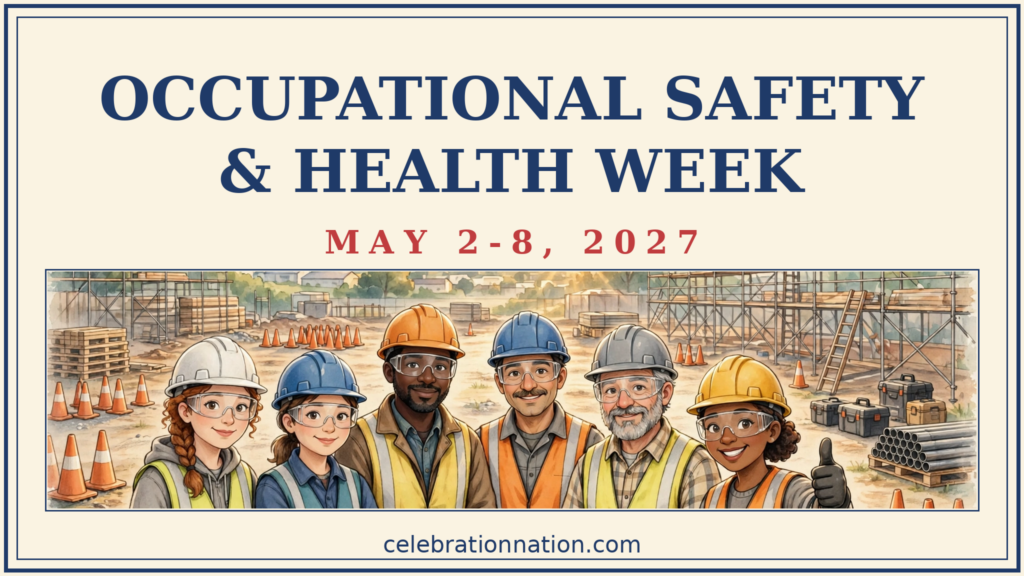
Occupational Safety & Health Week
Every May, during the first full week of the month, workplaces across North America observe Occupational Safety & Health Week, a dedicated time to focus on preventing injuries and illnesses on the job. According to the National Safety Council, a worker is injured on the job every seven seconds in the United States. This week honors a simple and solemn truth: every worker deserves to come home safe at the end of the day.
- Hashtag
- #OccupationalSafety038HealthWeek
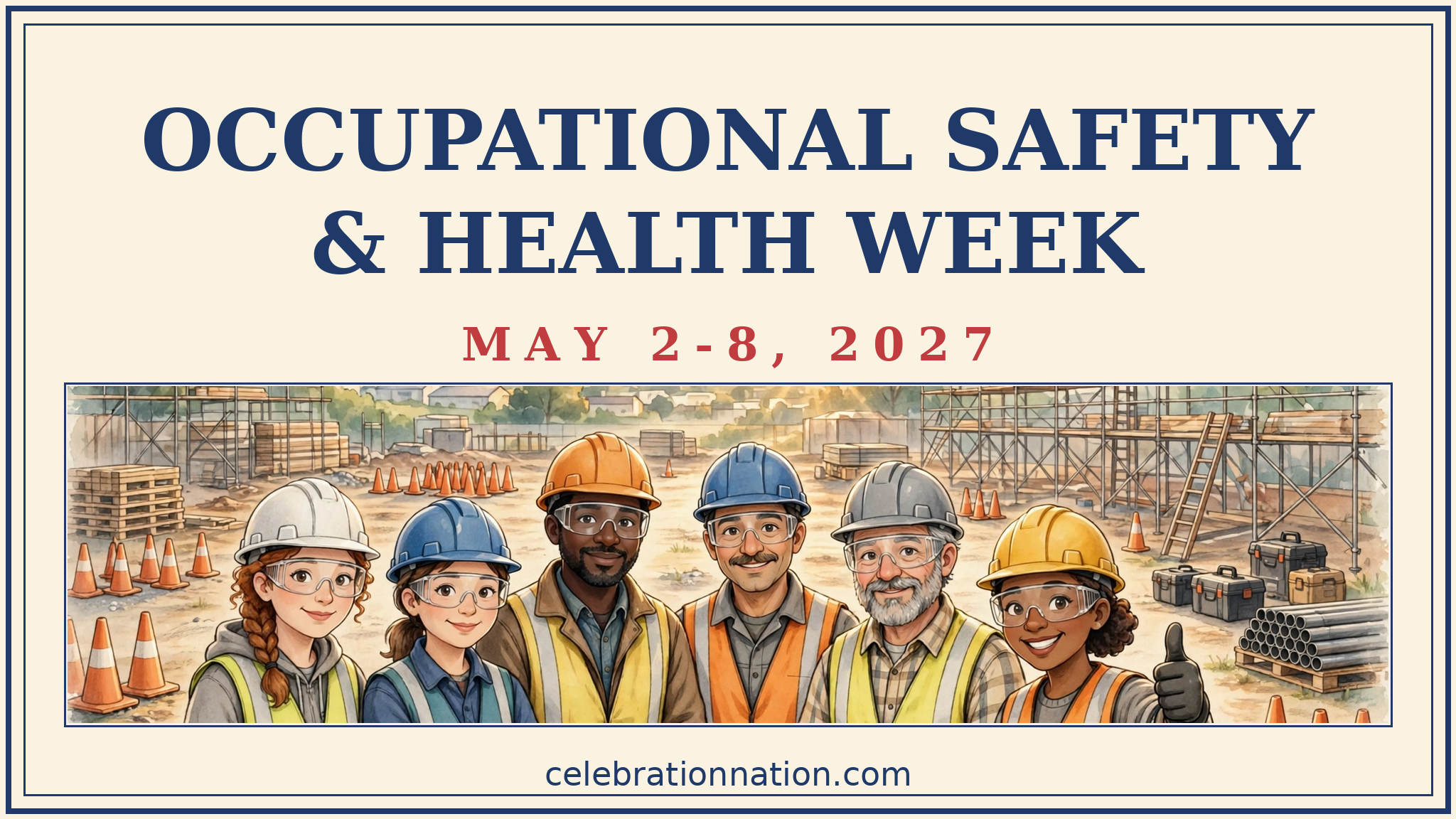
OCCUPATIONAL SAFETY & HEALTH WEEK
Every May, during the first full week of the month, workplaces across North America observe Occupational Safety & Health Week, a dedicated time to focus on preventing injuries and illnesses on the job. According to the National Safety Council, a worker is injured on the job every seven seconds in the United States. This week honors a simple and solemn truth: every worker deserves to come home safe at the end of the day.
In 1997, the United States, Canada, and Mexico came together in agreement to launch the first North American Occupational Safety and Health Week, known as NAOSH Week, held every year during the first full week of May. The observance was created to raise awareness about occupational safety, health, and the environment, and to bring workers, companies, employers, and industry professionals together around a single goal: fewer workplace accidents. What began as a cross-border partnership has grown into one of the most recognized annual moments for workplace safety on the continent.
The week is led by safety professionals themselves. The American Society of Safety Engineers partners with the Canadian Society of Safety Engineering to raise public awareness, and government agencies, including the Department of Labor’s Occupational Safety and Health Administration, stand with them through alliance partnerships. During the week, ASSE members host classes, symposiums, and work safety fairs, and they share guidance on subjects such as catastrophe preparedness, roadway crash prevention, and teen worker safety. It is a week when expertise leaves the office and meets people where they work.
The stated goal of the observance, in the words of its organizers, is to focus employers, employees, partners, and the public on the importance of preventing injury and illness in the workplace, at home, and in the community. That last part matters. The habits the week promotes, from checking equipment to planning for emergencies, protect people far beyond the factory floor or the job site. Safety is not a department. It is a culture, and this week asks every organization to take its measure honestly.
The reason such a week exists is written in difficult numbers. The National Safety Council reports that a worker is injured on the job every seven seconds. The U.S. Department of Health and Human Services points to familiar, preventable contributors: poor lighting and poor environmental hygiene, missing guard rails on walkways, poorly maintained or misused equipment, unclear safety procedures or a lack of training, and unsafe walking surfaces. None of these are mysteries. Each one is a choice, and the week exists to help workplaces choose better.
The observance also looks to the future. In the months leading up to the week, ASSE holds its annual children’s safety-on-the-job poster contest for ages 5 to 14, which runs from September 19 through February 14 and teaches young people why workplace safety matters long before they draw their first paycheck. Each year, ASSE also honors members who have gone above and beyond in supporting the week and the profession with the NAOSH Week Champion awards, presented at the ASSE Professional Development Conference. Recognition keeps the mission personal. Every award tells the rest of the profession that this work matters and that doing it well does not go unnoticed.
For individual workers, the week is an invitation to pay attention. Walk your workspace with fresh eyes. Learn where the first aid kit, the fire extinguisher, and the emergency exits are, and make sure you know the plan if something goes wrong. Wear the protective equipment the job requires, every time, even when it feels inconvenient. Speak up about hazards you notice, and listen when someone else speaks up about one you missed. Small acts of care, repeated daily by millions of people, are what turn statistics around.
Occupational Safety & Health Week does not pretend that danger can be eliminated from every job. It insists, instead, that injuries and illnesses can be reduced when employers invest in safety and employees stay vigilant. When a company updates its training, when a crew starts the day with a safety talk, when a teenager learns to ask for protective gear at a first job, the week has done its work. Behind every precaution is a person, and behind every person is a family counting on them to come home.
The week’s cross-border character is part of what makes it special. Safety professionals in the United States, Canada, and Mexico mark the same days with their own local traditions, and each year provinces and states, cities and counties pass proclamations and resolutions in support of the observance and the practitioners who work to prevent accidents, injuries, and occupational diseases. Local members turn those proclamations into action with community events, from work safety fairs to teen worker safety programs, and the Society even donates personal protective equipment as part of the week. It is a reminder that while the week has a North American name, its work happens one workplace, one classroom, and one job site at a time.
The observance also reaches beyond the workplace on purpose. Its goal speaks of preventing injury and illness at work, at home, and in the community, because the same careful habits protect people everywhere: checking a ladder before climbing it, storing chemicals safely, keeping walkways clear, and planning what to do in an emergency. Employers are asked to invest in training and equipment, and employees are asked to stay alert and look out for one another. When both sides hold up their end, the result is measured in the most meaningful way possible: more people ending each day exactly as they started it, healthy and whole.
If your workplace already takes safety seriously, the week is a chance to say so out loud. Post about your safety programs, invite a neighboring business to compare notes, or open your doors for a community safety fair the way ASSE members do each May. Visibility matters: when companies talk openly about near misses and fixes, the whole industry gets smarter. And when leaders treat the week as more than a poster on the break room wall, employees learn that speaking up about a hazard will be met with action, not eye rolls.
THE STORY BEHIND OCCUPATIONAL SAFETY & HEALTH WEEK
📆 The 1997 Launch
The first North American Occupational Safety and Health Week was celebrated in 1997, born from an agreement between the United States, Canada, and Mexico, and it has been observed every May since.
🔬 The 1970 Act
In 1970, the Occupational Safety and Health Act was passed, obligating employers to provide their workers with a safe and secure workplace.
👥 The Partnership
The American Society of Safety Engineers and the Canadian Society of Safety Engineering lead the week, joined by OSHA and its alliance partners.
❤️ Every Seven Seconds
The National Safety Council reports that a worker is injured on the job every seven seconds, a statistic this week works to change.
🎉 The Poster Contest
Each year, ASSE runs a children’s safety-on-the-job poster contest for ages 5 to 14, running September 19 through February 14.
WAYS TO CELEBRATE
🏫 Run a workplace safety check
Use the week to walk your workplace with fresh eyes: check lighting, guard rails, equipment, and emergency plans, then share what you find with your team.
❤️ Thank a safety professional
Recognize the safety managers, trainers, and committee members who work to keep your workplace injury-free with a note or a team shout-out.
👥 Teach kids about job safety
Share the children’s safety-on-the-job poster contest with a school or youth group and talk about why protective gear matters on every job.
Celebrate Occupational Safety & Health Week
From May 2 through May 8, 2027, take the week seriously. Attend a safety training, thank the people who watch out for you at work, and fix one hazard you have been walking past. Share what you learn, because a lesson that stays with one person protects one person, and a lesson that is shared protects everyone. Prevention is quiet work, but its results are loud: fewer injuries, healthier families, and workplaces where everyone gets to go home safe.
Keep the party going
See the calendar

Celebrate every day, all year
Official gear from the people who track 1,700+ celebrations.
Browse the shop 2027 Wall Calendar, signed by Marlo AndersonSigned by the founder of National Day Calendar.
Never miss a reason to celebrate.
One quick morning email with today's celebrations, ideas and posters. Free, unsubscribe anytime.
🎉 You're on the list! Watch your inbox for The Daily Confetti.