







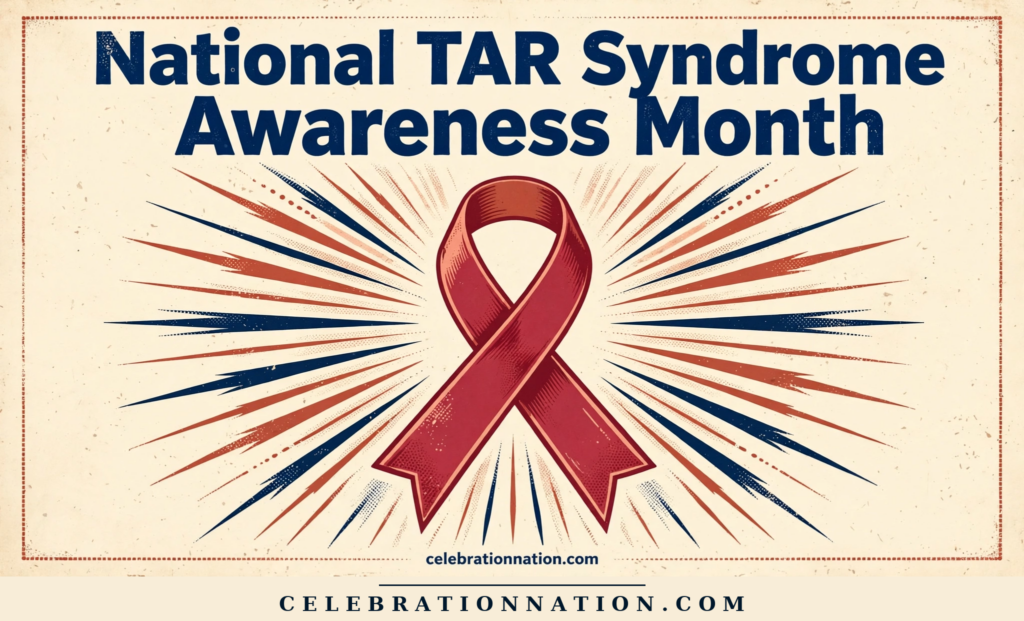
National TAR Syndrome Awareness Month
On National TAR Syndrome Awareness Month, we listen louder, learn more, and make sure no one feels invisible.
- Roots
- Launched in 2021 by Jylan Ross and the Uniquely Me Foundation/TAR Syndrome Association
- Vibe
- Empowerment through education and support
- Hashtag
- #NationalTARSyndromeAwarenessMonth
Ways to celebrate
Small, doable ways to celebrate National TAR Syndrome Awareness Month.
- Share one reputable resource with your network.
- Donate to a patient-led organization working on tar syndrome awareness.
- Check in on someone you know who's living with it.
- Book the screening or appointment you've been putting off.
- Listen more than you speak.
Fast facts
The story
TAR Syndrome, or Thrombocytopenia Absent Radius Syndrome, is a rare genetic disorder characterized by the absence of the radius bone in the forearm and low platelet counts. This condition can lead to various physical challenges, including limb malformations and increased risk of bleeding. Despite these challenges, individuals with TAR Syndrome often lead fulfilling lives, aided by medical advancements and supportive communities.
Read the full story
National TAR Syndrome Awareness Month was established to promote understanding and compassion for those affected by this condition. Advocacy groups have played a crucial role in this initiative, organizing events and creating resources to educate the public. By raising awareness, these organizations aim to foster a sense of community and support for families navigating the complexities of TAR Syndrome.
During this month, many communities across the United States host events such as informational seminars, fundraising walks, and family gatherings to celebrate the lives of those with TAR Syndrome. These events not only serve to educate the public but also provide a space for individuals and families to connect, share their experiences, and find encouragement in their journeys.
As we observe National TAR Syndrome Awareness Month, it is important to recognize the strength and resilience of those affected. By spreading awareness and understanding, we can help reduce stigma, promote inclusivity, and support ongoing research efforts aimed at improving the lives of individuals living with TAR Syndrome.
Worth knowing
Understanding TAR Syndrome
Learn about the symptoms and challenges faced by individuals with TAR Syndrome.
Support Families
Find ways to support families dealing with TAR Syndrome.
Educational Resources
Access a variety of resources to learn more about TAR Syndrome.
Join the Community
Connect with organizations dedicated to raising awareness for TAR Syndrome.
Did you know?
First Case Reported
The first patient with TAR Syndrome was described in 1929.
Notable Awareness Day
International Rare Disease Day is celebrated on the last day of February.
Genetic Basis
TAR Syndrome is caused by mutations in the RBM8A gene.
Support Networks
Various support groups exist globally for TAR Syndrome.
Global Impact
TAR Syndrome affects individuals worldwide, though it is rare.
Research Progress
Ongoing research aims to improve treatment options.
Community Events
Local communities often host events to raise awareness.
Around the world
Every culture celebrates a little differently.
- USUnited StatesHome to numerous advocacy organizations for TAR Syndrome.
- CACanadaParticipates in awareness events and support networks.
- GBUnited KingdomHosts events to raise awareness and support research.
- AUAustraliaInvolved in international discussions on rare diseases.
- DEGermanyEngages in medical research related to genetic disorders.
- INIndiaIncreasing awareness and support for rare genetic conditions.
Coming up next
See the calendar


Celebrate every day, all year
Official gear from the people who track 1,700+ celebrations.
Browse the shop 2027 National Day Wall CalendarGet the 2026 edition free. 1,700+ observances.
Never miss a reason to celebrate.
One quick morning email with today's celebrations, ideas and posters. Free, unsubscribe anytime.
🎉 You're on the list! Watch your inbox for The Daily Confetti.