



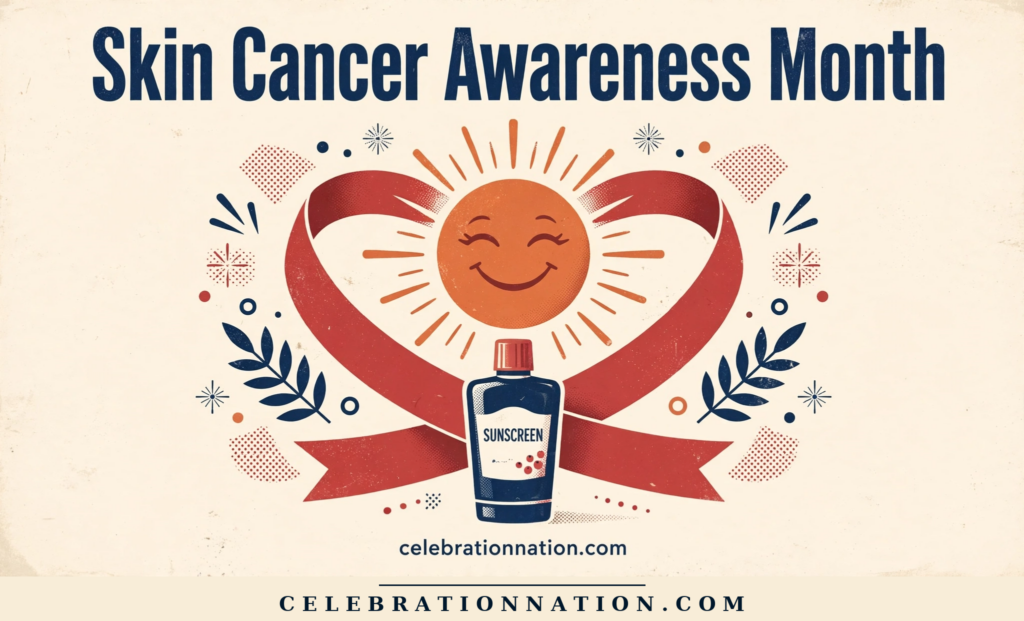
Skin Cancer Awareness Month
Skin Cancer Awareness Month is a hand extended — to the patients, caregivers, researchers, and families living with skin cancer awareness.
- Roots
- Supported by the AAD, the CDC, and the Skin Cancer Foundation.
- Vibe
- A call for collective action on prevention.
- Hashtag
- #SkinCancerAwarenessMonth
Ways to celebrate
Small, doable ways to celebrate Skin Cancer Awareness Month.
- Share one reputable resource with your network.
- Donate to a patient-led organization working on skin cancer awareness.
- Check in on someone you know who's living with it.
- Book the screening or appointment you've been putting off.
- Listen more than you speak.
Fast facts
The story
Skin Cancer Awareness Month, observed each May, is supported by the American Academy of Dermatology, the CDC, and the Skin Cancer Foundation. This initiative aims to educate the public about skin cancer prevention and the importance of early detection. Because skin cancer is common yet largely preventable, awareness is critical. The month serves as a reminder to prioritize sun safety and to engage in open conversations about skin health.
Read the full story
Skin cancer is the most common form of cancer in the United States, with one in five Americans developing it in their lifetime. The two most prevalent types are basal cell carcinoma and squamous cell carcinoma, which are often linked to excessive sun exposure. Melanoma, the deadliest form of skin cancer, continues to rise among adults 50 and older. Understanding these statistics can empower individuals to take proactive steps in protecting their skin.
Prevention strategies include regular use of sunscreen, wearing protective clothing, and avoiding peak sun hours. The American Academy of Dermatology recommends a broad-spectrum, water-resistant sunscreen with an SPF of 30 or higher, applied generously and reapplied every two hours when outdoors. Regular skin checks, both self-exams and professional evaluations, are essential for catching potential issues early. Education plays a vital role in reducing the incidence of skin cancer.
Community engagement is also a key component of Skin Cancer Awareness Month. Local organizations often host events, screenings, and educational workshops to promote skin health. By participating, individuals can help foster a culture of awareness and prevention. Let this month inspire you to take action, not just for yourself, but for those around you, ensuring that everyone understands the importance of safeguarding their skin.
Worth knowing
Sun Safety
Learn how to protect your skin from harmful UV rays.
Early Detection
Regular skin checks can save lives.
Skin Screenings
Find local events for free skin screenings.
Spread the Word
Share information about skin health with others.
Did you know?
Most Common Cancer
Skin cancer is the most frequently diagnosed cancer in the U.S.
Tanning Beds
Indoor tanning raises melanoma risk, especially for women under 30.
Vitamin D
Moderate sun exposure can help your body produce vitamin D.
Aging Factor
The risk of skin cancer increases with age.
Australia's Rates
Australia has one of the highest rates of skin cancer in the world.
Early Signs
Changes in moles can indicate skin cancer and should be monitored.
Sunscreen Expiration
Sunscreen can expire; always check the date before use.
Around the world
Every culture celebrates a little differently.
- USUnited StatesHome to numerous awareness initiatives and events.
- AUAustraliaLeads in skin cancer research and prevention.
- GBUnited KingdomHosts community events for skin cancer awareness.
- CACanadaPromotes sun safety through public health campaigns.
- ESSpainFocuses on educating citizens about skin cancer risks.
- DEGermanyOffers resources for skin health and protection.
Coming up next
See the calendar


Celebrate every day, all year
Official gear from the people who track 1,700+ celebrations.
Browse the shop 2027 Wall Calendar, signed by Marlo AndersonSigned by the founder of National Day Calendar.
Never miss a reason to celebrate.
One quick morning email with today's celebrations, ideas and posters. Free, unsubscribe anytime.
🎉 You're on the list! Watch your inbox for The Daily Confetti.