
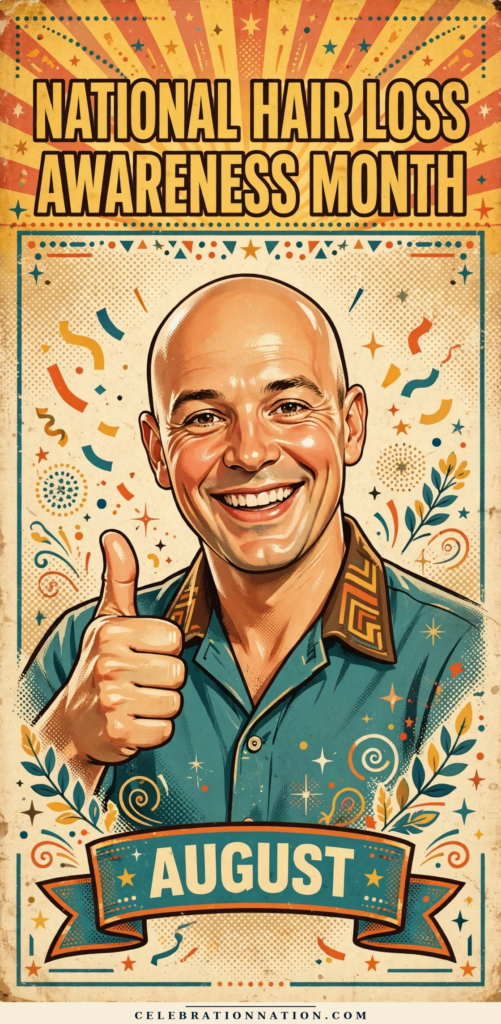
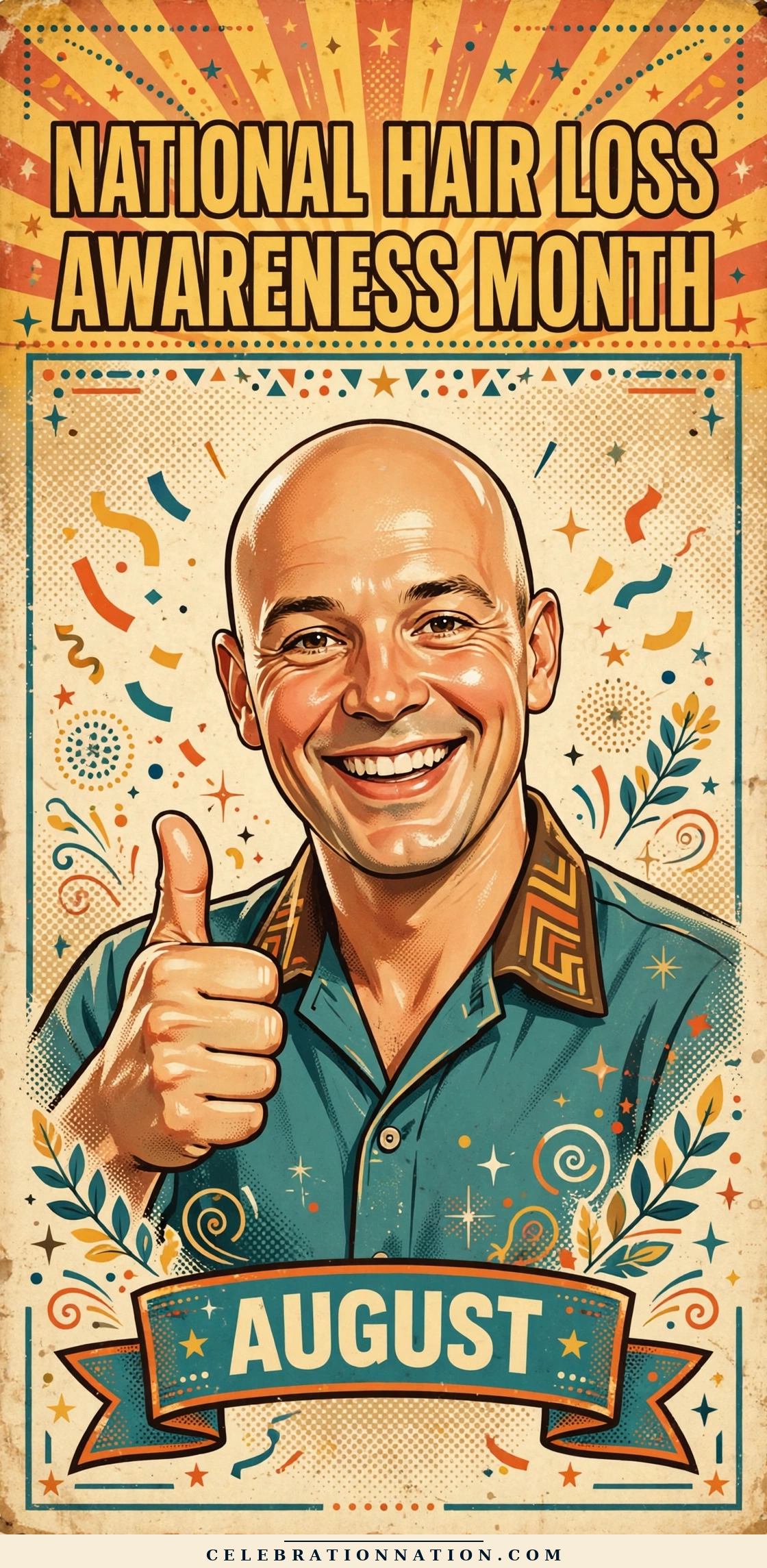
National Hair Loss Awareness Month
August is a time to embrace the journey of hair loss and support one another in understanding it.
- Roots
- Established to raise awareness about the emotional and physical effects of hair loss.
- Vibe
- Promoting awareness and acceptance of hair loss in society.
- Hashtag
- #NationalHairLossAwarenessMonth
Fast facts
The story
National Hair Loss Awareness Month is observed every August, aiming to shed light on the often stigmatized topic of hair loss. Millions of individuals, both men and women, experience some form of hair loss, and this month serves as a reminder to support those affected. It is crucial to foster conversations that break down societal norms surrounding hair and beauty.
Read the full story
Hair loss can stem from various factors including genetics, hormonal changes, and medical conditions. Conditions such as alopecia areata can lead to sudden hair loss, causing emotional distress for many. Treatment options vary widely, from topical solutions to surgical transplantation, and educating oneself can make a significant difference in finding the right path forward.
As part of this awareness initiative, communities are encouraged to hold educational events, discussions, and support groups. These gatherings can provide a safe space for individuals to share experiences and insights. Engaging with those who understand the challenges can foster a sense of solidarity and reduce feelings of isolation often associated with hair loss.
In addition to personal stories, scientific research continues to evolve in the field of hair restoration. New treatments and therapies are being developed, offering hope to those looking to regain their confidence. This month is about more than awareness; it is about celebrating resilience and promoting acceptance in a society that often equates beauty with hair.
Worth knowing
Understanding Hair Loss
Hair loss can affect anyone, but understanding its causes can help individuals cope better. It's essential to recognize that hair loss does not define a person's worth.
Innovative Treatments
Research into hair loss treatments is ongoing, with new therapies and technologies emerging. Staying informed can empower those seeking solutions that work for them.
Support Networks
Connecting with others who share similar experiences can be incredibly beneficial. Support groups provide a place to share resources and emotional support.
Educational Resources
Numerous books and online resources are available that offer insights into hair loss. Educating oneself can foster a greater understanding of the condition.
Did you know?
Hair Loss Statistics
About 50% of men and 25% of women will experience hair loss at some point in their lives.
Alopecia Areata Facts
Alopecia areata affects approximately 2% of the population, leading to unpredictable hair loss.
Emotional Impact
Hair loss can significantly affect self-esteem and emotional well-being, prompting discussions on mental health.
Cultural Perceptions
Different cultures have varied perceptions of hair loss, often influencing social acceptance and stigma.
Historical Context
Historical figures like Napoleon reportedly wore wigs to cover hair loss, illustrating the long-standing societal values placed on hair.
Support Groups
Many regions have support groups specifically for those experiencing hair loss, providing a network for sharing and healing.
Treatment Advances
Advances in hair restoration technologies include PRP therapy and scalp micropigmentation, offering new hope.
Around the world
Every culture celebrates a little differently.
- USHair Loss Awareness in the U.S.In the U.S., National Hair Loss Awareness Month serves as a platform for individuals to share their experiences and challenges.
- GBGlobal PerspectivesCountries across Europe also recognize the importance of discussing hair loss, with various organizations promoting awareness and support.
- AUSupport in AustraliaAustralia hosts events and discussions focusing on hair loss, highlighting community support and innovative treatments available.
- CACanadian InitiativesIn Canada, awareness campaigns are prevalent, encouraging people to talk openly about hair loss and its effects.
- JPAwareness in AsiaAsian countries are increasingly engaging in conversations about hair loss, with growing support networks emerging.
- BRBrazilian InitiativesIn Brazil, National Hair Loss Awareness Month is also recognized, promoting discussions around beauty standards and hair health.
Coming up next
See the calendar
Celebrate every day, all year
Official gear from the people who track 1,700+ celebrations.
Browse the shop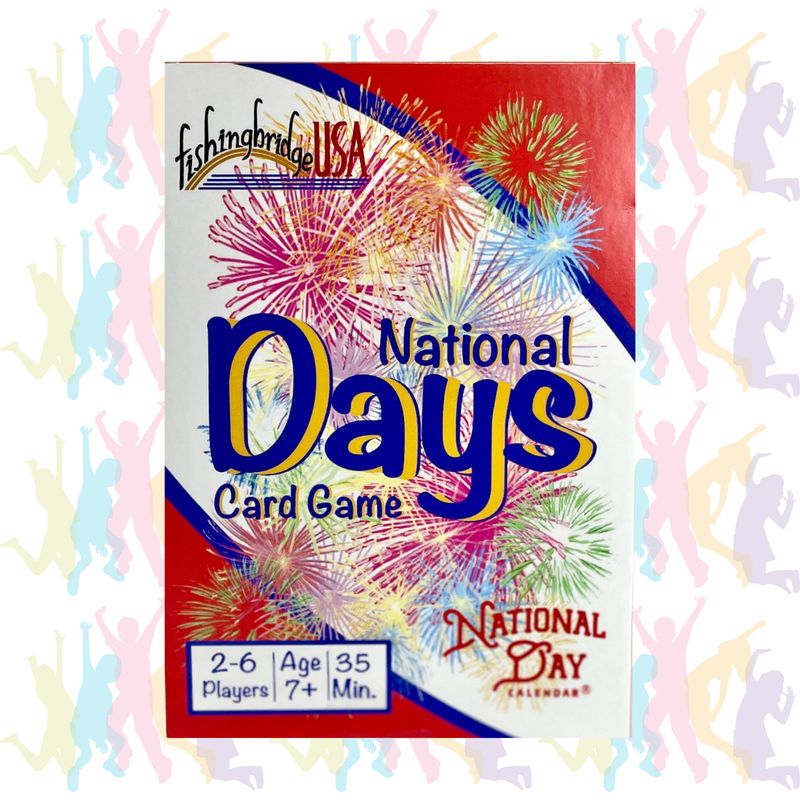 National Day Celebration Card GameA party in a box, any day of the year.Shop now
Never miss a reason to celebrate.
One quick morning email with today's celebrations, ideas and posters. Free, unsubscribe anytime.
🎉 You're on the list! Watch your inbox for The Daily Confetti.