



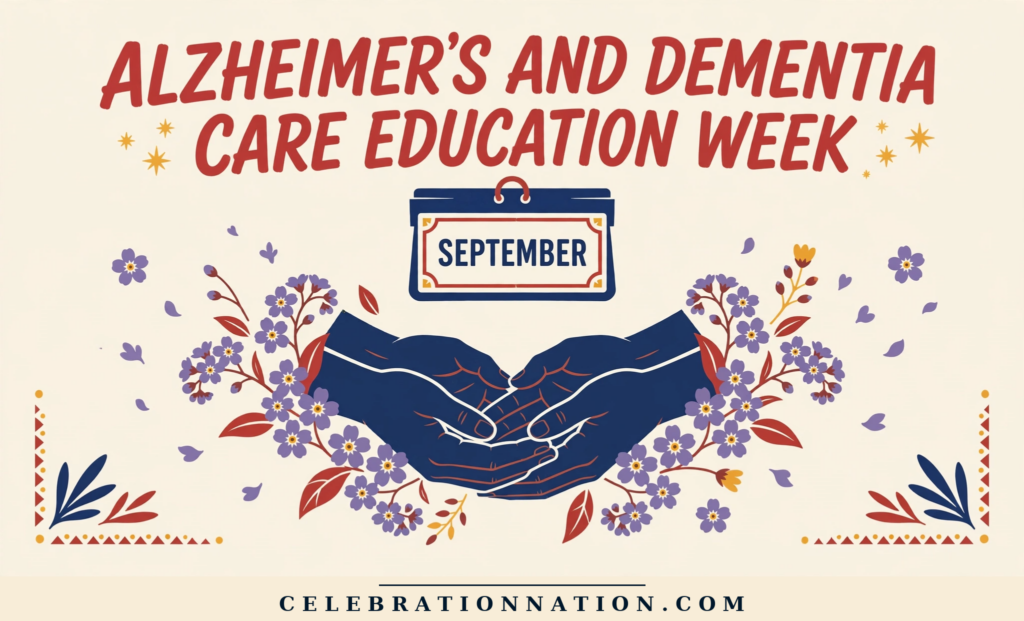
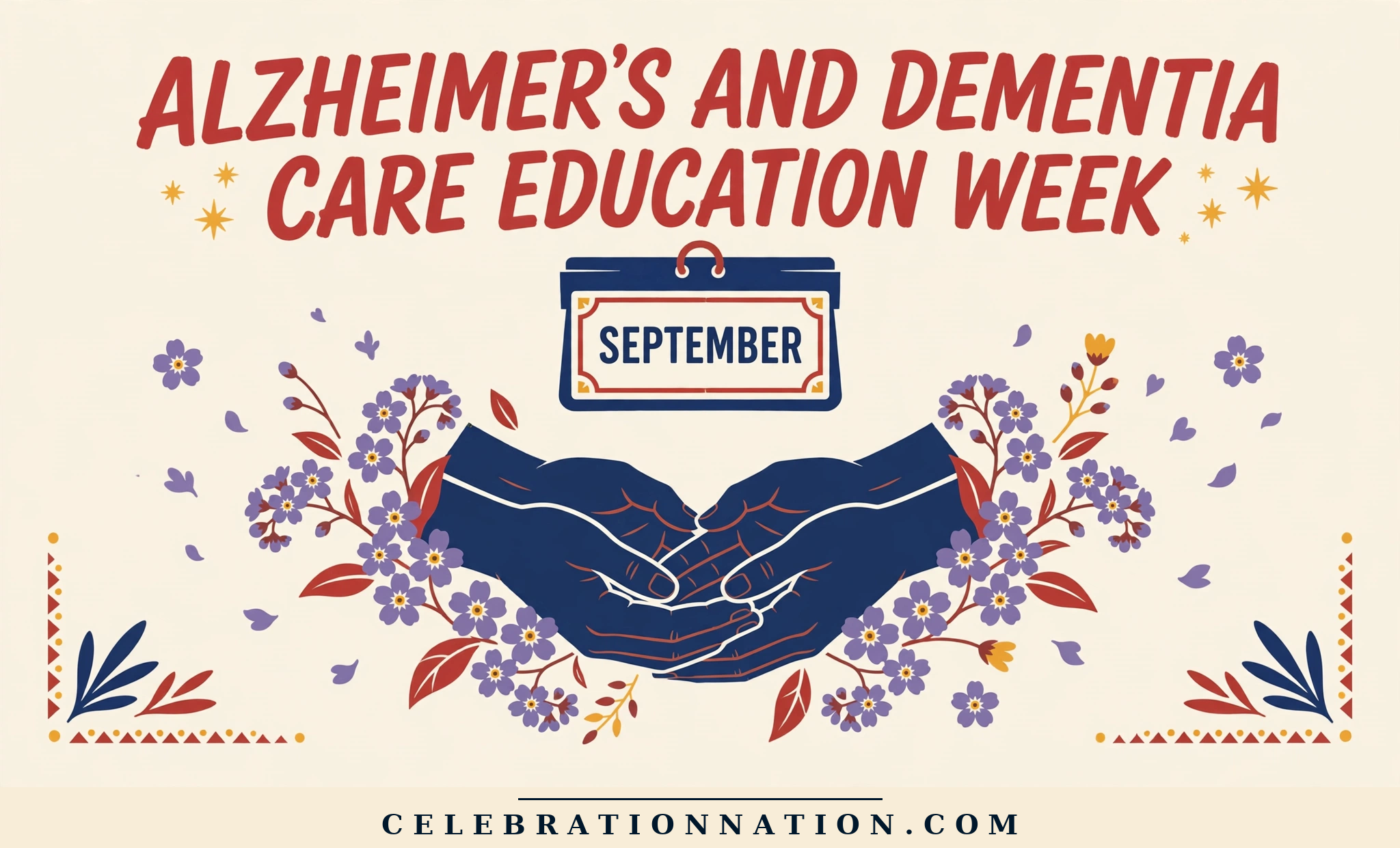
Alzheimer’s and Dementia Care Education Week
This week is a time to raise awareness about Alzheimer's and dementia, focusing on education and support for families and caregivers, highlighted through various activities.
- Roots
- Promoted by the National Council of Certified Dementia Practitioners
- Vibe
- Informative, supportive, community-driven
- Hashtag
- #Alzheimer8217sAndDementiaCareEducationWeek
Fast facts
The story
Alzheimer's and Dementia Care Education Week takes place each year from February 14-21, dedicated to raising awareness and educating the public about Alzheimer's disease and other forms of dementia. This initiative aims to provide resources for families, caregivers, and professionals who interact with those affected by these conditions. The National Council of Certified Dementia Practitioners promotes this important observance, seeking to foster understanding and support.
Read the full story
The impact of Alzheimer’s is profound, not only on the individuals diagnosed but also on their families and caregivers. Many caregivers face significant emotional and physical challenges, often leading to feelings of isolation. This week emphasizes the importance of community support and education, helping caregivers to navigate their roles more effectively. Various events and workshops take place across the country, allowing individuals to connect with experts and share their experiences.
During this week, participants are encouraged to engage with their communities, attending local events, sharing information, and supporting each other. The goal is to create a network of understanding and care, where families can find resources and hope. Various organizations are working tirelessly to provide training and support, making it easier for caregivers to manage their responsibilities.
Education is key to combating the stigma surrounding Alzheimer’s and dementia. By sharing knowledge, we can foster a more compassionate society. As we observe this week, let us remember the importance of empathy, patience, and understanding in caring for those we love. Every conversation, every resource shared, contributes to a community that values and uplifts those affected by these diseases.
Worth knowing
Understanding Alzheimer's
Learn about the stages and symptoms of Alzheimer's to better support loved ones facing this condition.
Support for Caregivers
Find resources and communities that offer support for caregivers, helping them navigate the challenges of care.
Educational Resources
Access literature and materials focused on Alzheimer's and dementia care to enhance your understanding.
Community Engagement
Participate in local events and discussions to raise awareness and foster community support.
Did you know?
Cognitive Impact
Alzheimer's primarily affects memory, thinking, and behavior.
Age Factor
Age is the most significant risk factor for Alzheimer's.
Global Reach
Over 50 million people worldwide live with dementia.
Research Progress
Significant funding is directed toward Alzheimer's research each year.
Family Role
Family members are often the primary caregivers for those with dementia.
Early Detection
Early detection can help in managing symptoms more effectively.
Support Networks
Support groups can significantly reduce caregiver stress.
Around the world
Every culture celebrates a little differently.
- USUnited StatesNumerous organizations across the U.S. host events and workshops.
- CACanadaCanada also recognizes the importance of Alzheimer’s education.
- GBUnited KingdomThe UK has various initiatives aimed at supporting dementia awareness.
- AUAustraliaAustralia promotes community events for Alzheimer's education.
- DEGermanyGermany hosts informational events during this week.
- ESSpainIn Spain, community support for dementia care is emphasized.
Coming up next
See the calendar

Celebrate every day, all year
Official gear from the people who track 1,700+ celebrations.
Browse the shop 2027 National Day Wall CalendarGet the 2026 edition free. 1,700+ observances.
Never miss a reason to celebrate.
One quick morning email with today's celebrations, ideas and posters. Free, unsubscribe anytime.
🎉 You're on the list! Watch your inbox for The Daily Confetti.