





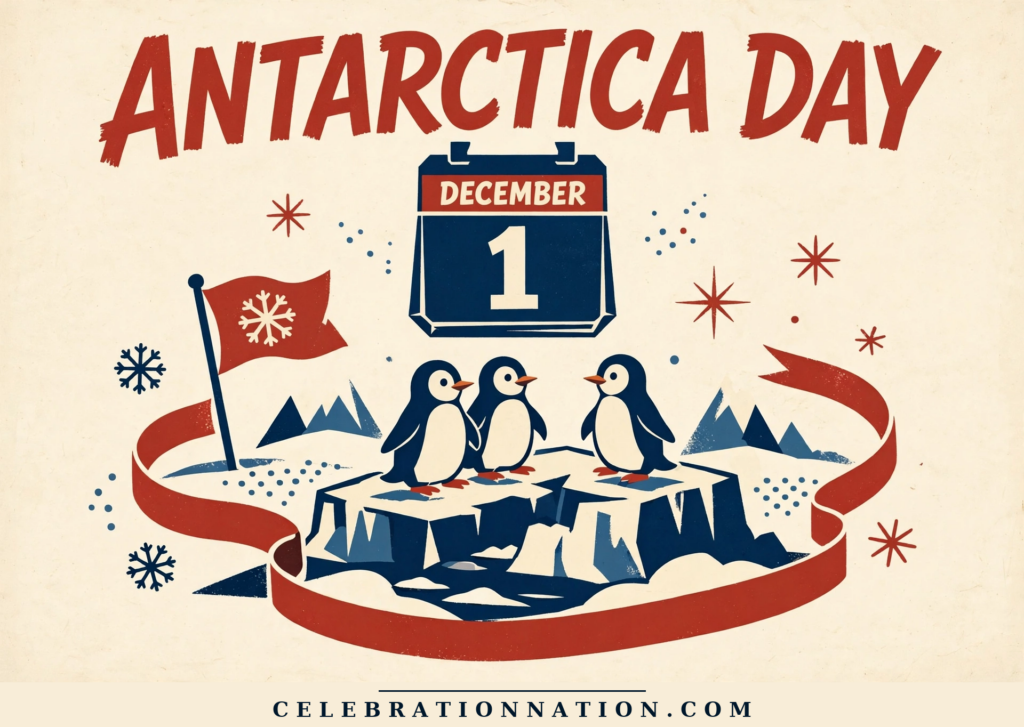
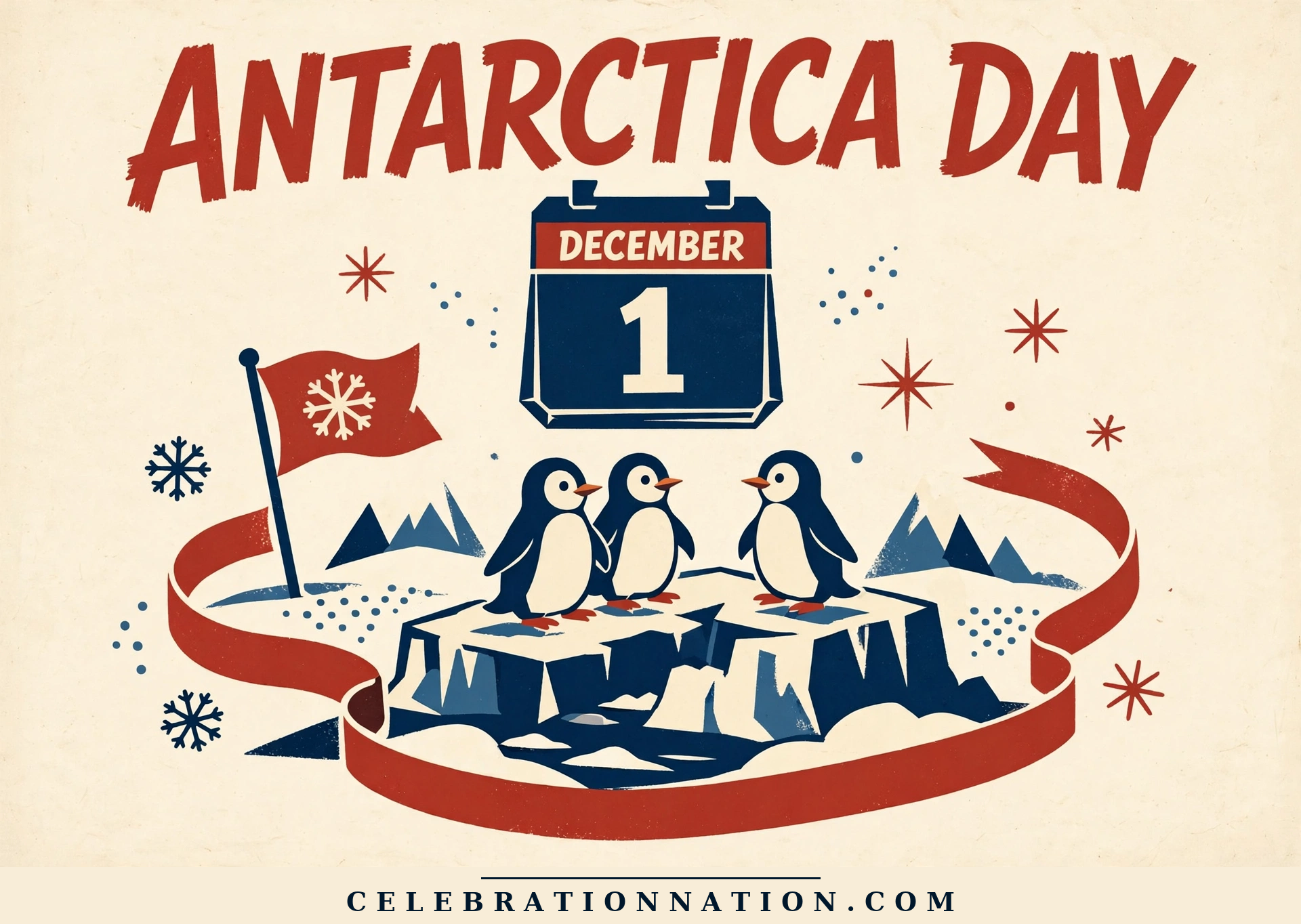
Antarctica Day
This day reminds us of the importance of international collaboration in preserving our planet's unique ecosystems.
- Roots
- Created after the 2009 Antarctic Treaty Summit
- Vibe
- A day dedicated to peace, science, and conservation
- Also on Dec 1
- Day of Giving · World Trick Shot Day · Bifocals at the Monitor Liberation Day
- Hashtag
- #AntarcticaDay
3 ways to celebrate
Explore from your couch
Watch a documentary on Antarctic research stations and the scientists who winter there.
Host a penguin night
Stream wildlife footage, quiz each other on polar animals and try a penguin craft.
Run a polar quiz
Test coworkers on Antarctic geography and wildlife, with a small prize.
Plan ahead
Antarctica Day is observed on December 1 every year. Here is where it lands for the next ten years, handy for planners, marketers and party people.
Fast facts
The story
Antarctica Day is an important observance aimed at raising awareness about the significance of the Antarctic Treaty, signed on December 1, 1959. This treaty set aside Antarctica as a zone free from military activity and dedicated to scientific research. It was the first arms control agreement of the Cold War era, showcasing how nations can unite for a common purpose.
Read the full story
The treaty has been instrumental in promoting peaceful collaboration among the countries involved, allowing scientists from different nations to conduct research without geopolitical tensions. Over the years, this collaboration has led to significant advancements in our understanding of climate change and the fragile ecosystems unique to Antarctica.
On this day, individuals and organizations across the globe participate in various activities to honor the treaty's legacy and reflect on our responsibility towards environmental protection. By engaging with educational programs and conservation initiatives, we can all contribute to preserving this pristine wilderness for future generations, making it a truly global effort.
As we celebrate Antarctica Day, it is crucial to recognize the challenges the continent faces, such as climate change and melting ice sheets. By fostering awareness and supporting research and conservation efforts, we can help safeguard the future of this remarkable region. Join the movement and make a difference this December 1.
Did you know?
First Explorer
Roald Amundsen was the first to reach the South Pole in December 1911.
Size Comparison
Antarctica is the fifth-largest continent, covering 14 million square kilometers.
Historic Whale Hunting
In the early 20th century, whale hunting drastically reduced the whale population in Antarctic waters.
Penguin Species
There are several penguin species that inhabit Antarctica, including the Emperor and Adélie penguins.
Research Stations
Many countries operate research stations in Antarctica.
Climate Change Indicator
Antarctica's ice sheets hold enough water to raise global sea levels dramatically if completely melted.
Tourism Growth
Antarctica has seen a rise in eco-tourism, with strict regulations to minimize environmental impact.
Around the world
Every culture celebrates a little differently.
- ARArgentinaArgentina maintains a significant presence in Antarctica, with multiple research bases and active participation in the Antarctic Treaty.
- AUAustraliaAustralia is one of the original signatories of the Antarctic Treaty and operates several research stations on the continent.
- USUnited StatesThe U.S. has been a leader in Antarctic research, conducting vital studies through the National Science Foundation and various research initiatives.
- GBUnited KingdomThe UK has a long history of research in Antarctica, contributing to scientific knowledge and environmental management.
- CACanadaCanada plays an active role in Antarctic governance and research, with a focus on climate change and ecosystem preservation.
- NZNew ZealandNew Zealand is committed to protecting the Antarctic environment and engages in collaborative research efforts with other nations.
Keep the party going
See the calendar


Celebrate every day, all year
Official gear from the people who track 1,700+ celebrations.
Browse the shop 2027 National Day Desk CalendarA new celebration every morning. Daily tear-off.
Never miss a reason to celebrate.
One quick morning email with today's celebrations, ideas and posters. Free, unsubscribe anytime.
🎉 You're on the list! Watch your inbox for The Daily Confetti.