



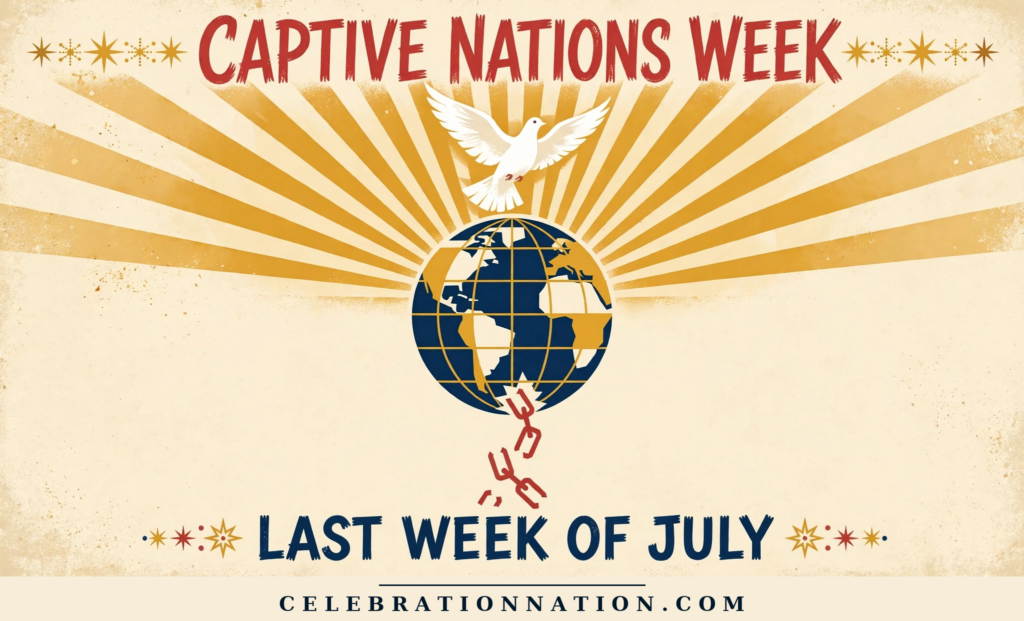
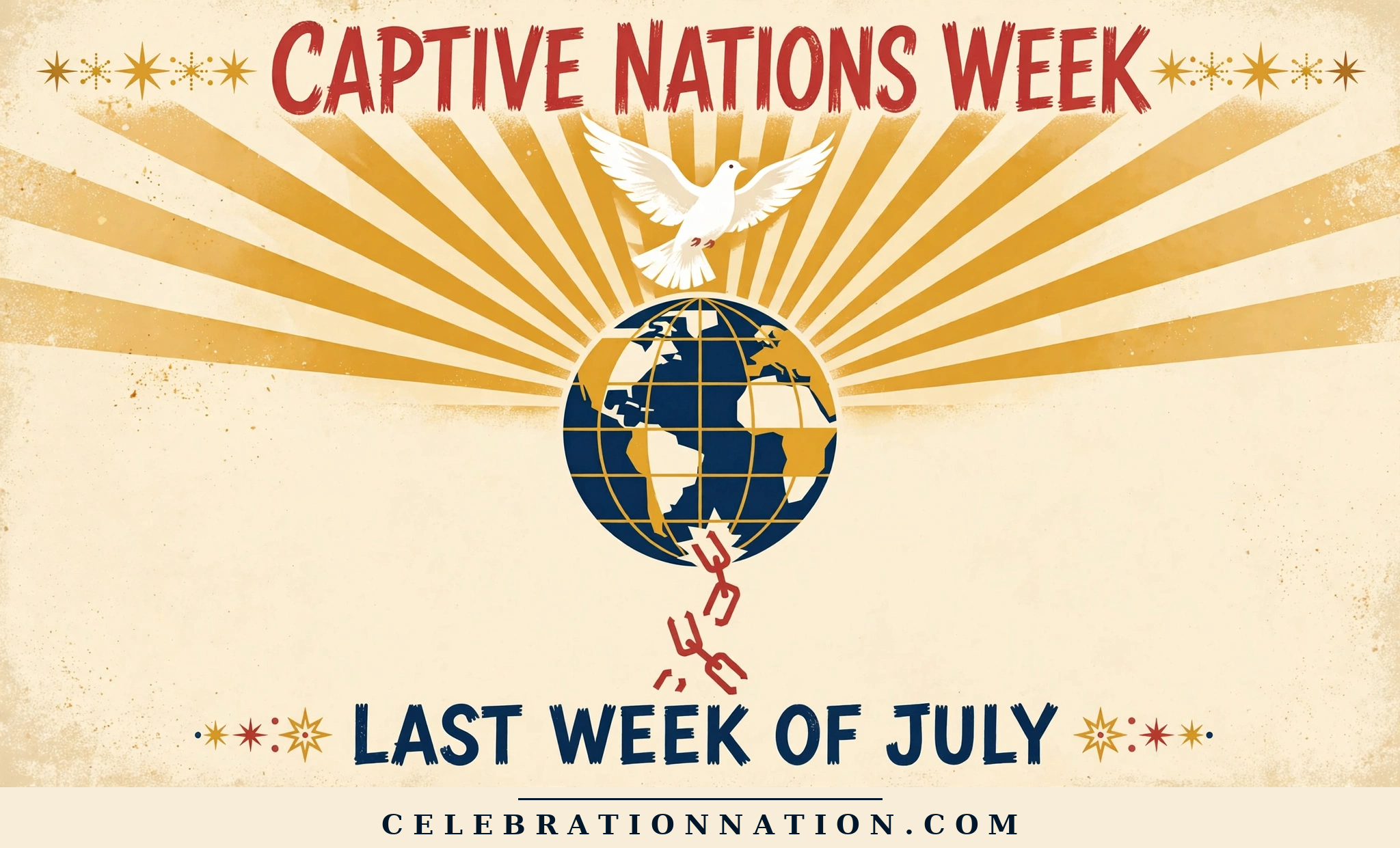
Captive Nations Week
Captive Nations Week serves to raise awareness about global oppression and the fight for freedom.
- Roots
- Established in 1959 by the U.S. Congress
- Vibe
- A somber reflection on tyranny and resilience
- Hashtag
- #CaptiveNationsWeek
Fast facts
The story
Captive Nations Week is observed annually during the third week of July, serving as a reminder of the struggles faced by nations under oppressive regimes. Established by the U.S. Congress in 1959, this week is dedicated to raising awareness about the plight of these nations and honoring their resilience. The observance encourages citizens to reflect on the values of freedom and human rights that are often taken for granted in the United States.
Read the full story
Many nations around the world are still subject to authoritarian rule, where dissent is silenced and basic human rights are denied. This week provides an opportunity to learn about the histories and cultures of these nations, from Eastern Europe to the Middle East, and to recognize the voices that are often unheard. Through education and advocacy, individuals can contribute to the global discourse on freedom and justice.
During Captive Nations Week, it's vital to remember the struggles of those who yearn for liberty. Communities can come together to discuss the importance of supporting movements for democracy and human rights worldwide. Events may include guest speakers, film screenings, and community discussions, all aimed at raising awareness and inspiring action.
As we observe this meaningful week, it’s essential to engage with the stories of those who fight against oppression. Whether through social media advocacy or participating in local events, every effort counts. By standing in solidarity with captive nations, we reaffirm our commitment to freedom and justice for all.
Worth knowing
Global Awareness
Engage with global issues by learning about the struggles faced by captive nations. Understanding history helps foster empathy and action.
Read and Learn
Dive into books and articles about the histories and cultures of nations under oppressive regimes. Knowledge is a powerful tool in advocating for change.
Speak Up
Use your voice to advocate for human rights. Share stories and raise awareness about the plight of oppressed nations on social media.
Support Organizations
Find and support nonprofits that work towards the freedom of captive nations, helping to amplify their voices and needs on a global stage.
Did you know?
U.S. Congressional Declaration
Captive Nations Week was officially recognized by the U.S. Congress in 1959.
Significance of the Date
Lev E. Dobriansky wrote the resolution's language, which became Public Law 86-90 in July 1959.
Global Impact
The week raises awareness of oppressed populations in countries such as China, North Korea, Vietnam, and Cuba.
Educational Efforts
Many organizations use this week to promote educational campaigns about human rights.
Annual Observance
Captive Nations Week is marked by various events across the United States.
Advocacy Groups
Numerous nonprofits focus on supporting the rights of captive nations during this week.
Cultural Celebrations
Some communities host cultural events to celebrate the heritage of oppressed nations.
Around the world
Every culture celebrates a little differently.
- HUHungaryHungary's fight for independence in the 1956 revolution highlights the struggle against Soviet influence.
- RURussiaDespite the challenges, many Russians continue to advocate for democracy and human rights today.
- CNChinaChina's citizens face strict government control and censorship, prompting ongoing calls for reform and freedom.
- AFAfghanistanAfghanistan remains a focal point for discussions on freedom following decades of conflict and oppression.
- AMArmeniaArmenia's historical struggles against oppression serve as a reminder of the ongoing fight for sovereignty.
- BYBelarusBelarus faces significant human rights challenges, with many citizens risking their lives for freedom.
Coming up next
See the calendar
Celebrate every day, all year
Official gear from the people who track 1,700+ celebrations.
Browse the shop National Day Celebration Card GameA party in a box, any day of the year.
Never miss a reason to celebrate.
One quick morning email with today's celebrations, ideas and posters. Free, unsubscribe anytime.
🎉 You're on the list! Watch your inbox for The Daily Confetti.