
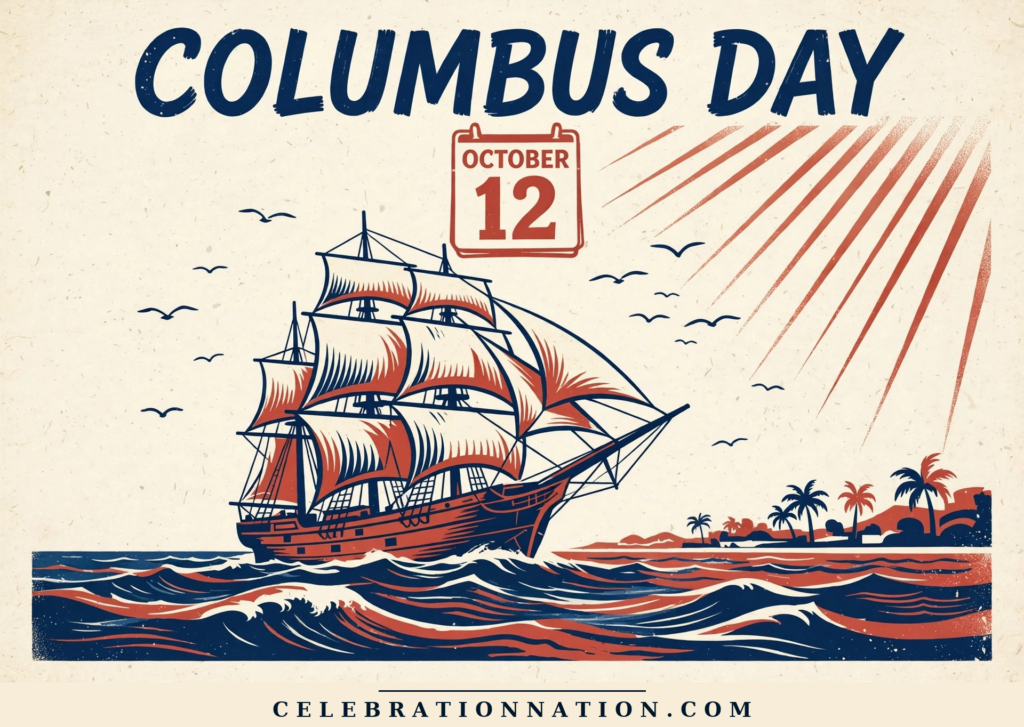
Columbus Day
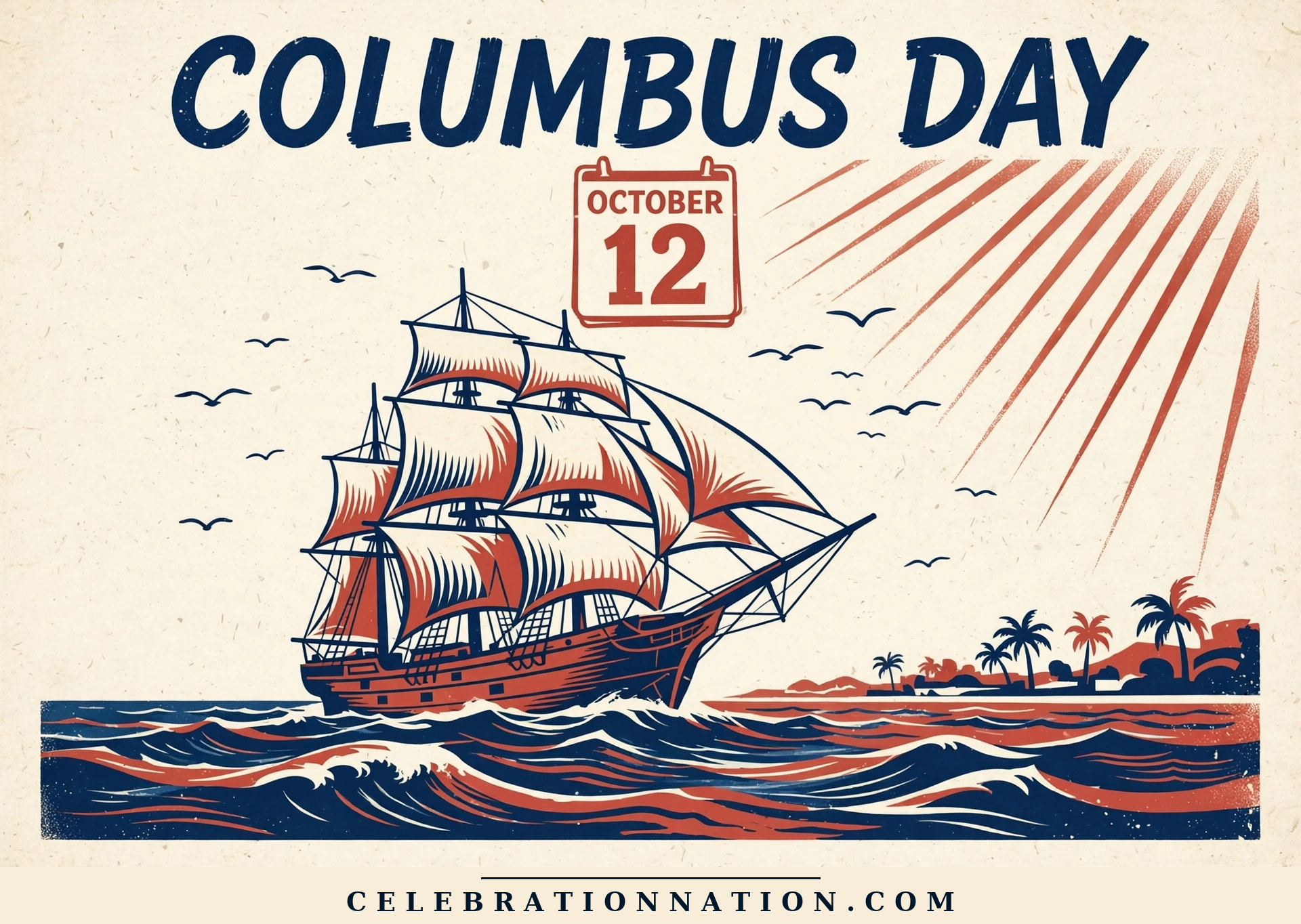
Columbus Day invites us to reflect on historical journeys and their lasting impacts on cultures.
- Roots
- Established as a federal holiday in 1937
- Vibe
- A mix of celebration and reflection on cultural history
- Also on Oct 12
- World Arthritis Day · Indigenous Peoples’ Day · Farmer’s Day
- Hashtag
- #ColumbusDay
3 ways to celebrate
Explore explorer history
Read about the age of exploration and its impact.
Discuss history together
Talk about exploration's legacy over coffee.
Visit a museum
Explore an exhibit on maritime history nearby.
Plan ahead
Columbus Day is observed on the second Monday in October. Here is where it lands for the next ten years, handy for planners, marketers and party people.
Fast facts
The story
Columbus Day, observed on the second Monday of October, commemorates Christopher Columbus's arrival in the Americas in 1492. The holiday serves as a reminder of the age of exploration and its profound effects on the indigenous populations of the Americas. It raises questions about the narratives we uphold in historical accounts and the contemporary understanding of exploration's legacy.
Read the full story
The holiday was first celebrated in the United States in 1792, marking the 300th anniversary of Columbus's landing. In 1937, it was officially declared a national holiday. Initially, Columbus Day was a celebration of Italian-American heritage, as Columbus became a symbol of pride for the community. However, it has evolved over the years to incorporate discussions about the impacts of colonization.
In recent years, many have called for a re-examination of what Columbus Day represents. The debate over its celebration has led to the rise of Indigenous Peoples' Day in various states, promoting recognition of the cultures and histories that predate Columbus's arrival. This shift reflects a growing awareness and appreciation for the diversity of narratives that shape our understanding of history.
As we celebrate Columbus Day, it is essential to engage in conversations that acknowledge both exploration and its consequences. Communities may hold events that honor indigenous cultures and promote inclusivity, fostering a spirit of unity. By reflecting on our past and recognizing various perspectives, we can ensure that exploration is celebrated in a way that honors all aspects of our shared history.
Did you know?
The First Voyage
Columbus made his first voyage to the Americas in 1492, landing in what is now the Bahamas.
Four Voyages
Columbus embarked on four voyages across the Atlantic Ocean, exploring parts of the Caribbean and Central America.
A Controversial Figure
Columbus's legacy is complex, with many viewing him as a hero while others criticize his role in colonization.
Indigenous Peoples' Day
Many states now observe Indigenous Peoples' Day instead of Columbus Day, honoring the history and cultures of native peoples.
Columbus's Ships
The three ships used by Columbus were the Nina, Pinta, and Santa Maria, each playing a crucial role in his voyages.
Cultural Exchange
Columbus's expeditions initiated a significant cultural exchange between Europe and the Americas, impacting food, culture, and trade.
Federal Holiday
Columbus Day became a federal holiday in the United States in 1937, although its observance varies across states.
Around the world
Every culture celebrates a little differently.
- USUnited StatesColumbus Day is a federal holiday celebrated nationwide, often marked by parades and educational events.
- ITItalyIn Italy, Columbus is celebrated as a national hero, with festivities reflecting on his contributions to exploration.
- DODominican RepublicThe Dominican Republic celebrates Discovery Day on December 5, commemorating Columbus's landing on its shores.
- ESSpainSpain observes Día de la Hispanidad, celebrating the cultural ties between Spain and Latin America, stemming from Columbus's voyages.
- ARArgentinaArgentina recognizes Columbus Day as Día del Respeto a la Diversidad Cultural, focusing on respect for cultural diversity.
- BRBrazilBrazil celebrates the day as Dia de Nossa Senhora Aparecida, intertwining religious observance with national identity.
Keep the party going
See the calendar

Celebrate every day, all year
Official gear from the people who track 1,700+ celebrations.
Browse the shop National Day Celebration Card GameA party in a box, any day of the year.
Never miss a reason to celebrate.
One quick morning email with today's celebrations, ideas and posters. Free, unsubscribe anytime.
🎉 You're on the list! Watch your inbox for The Daily Confetti.