





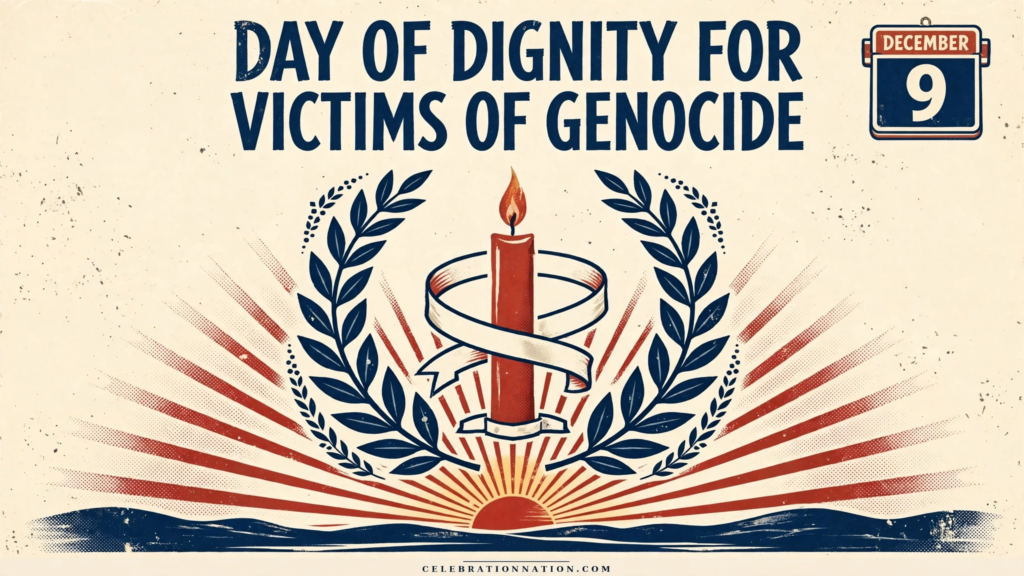
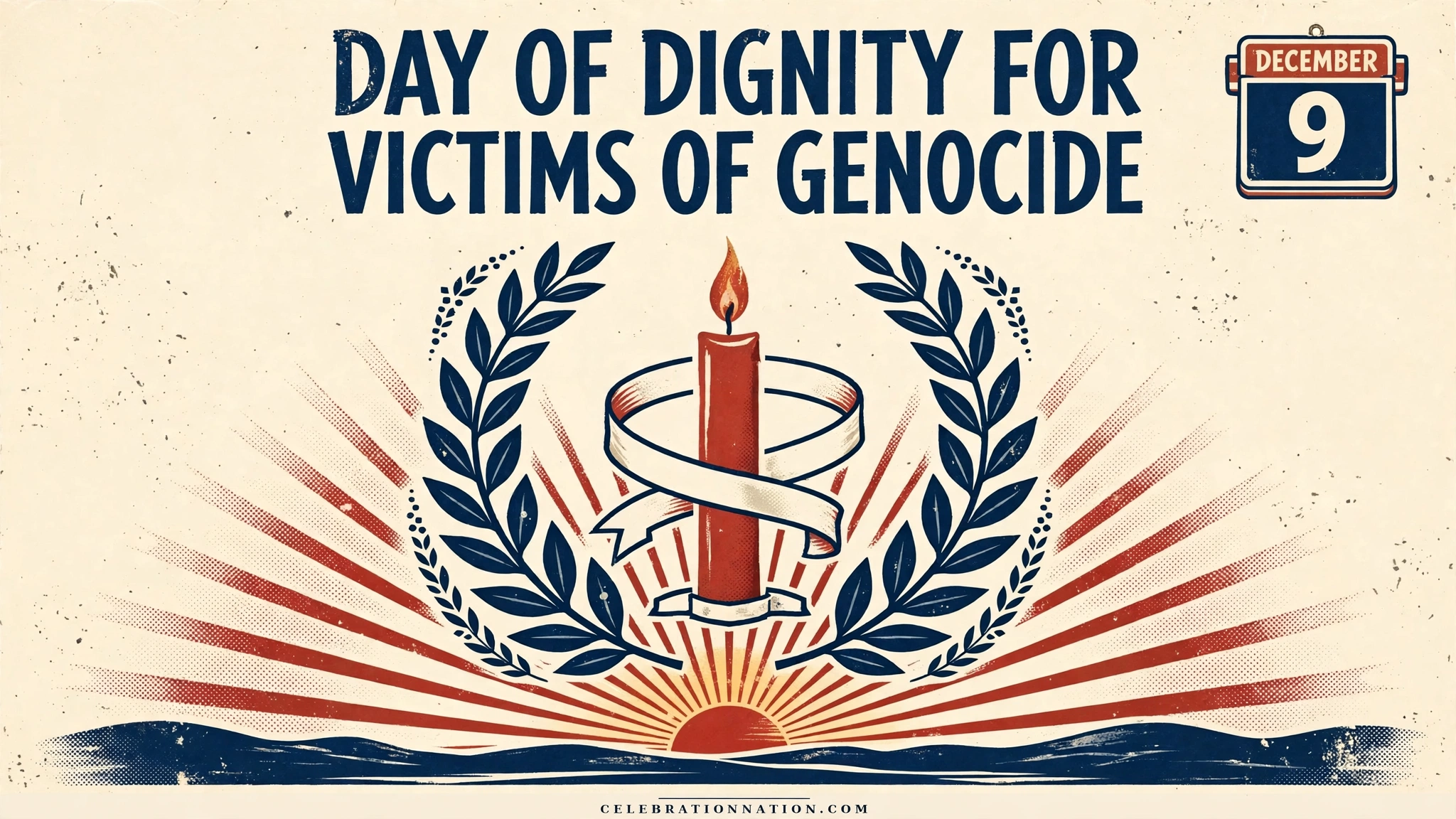
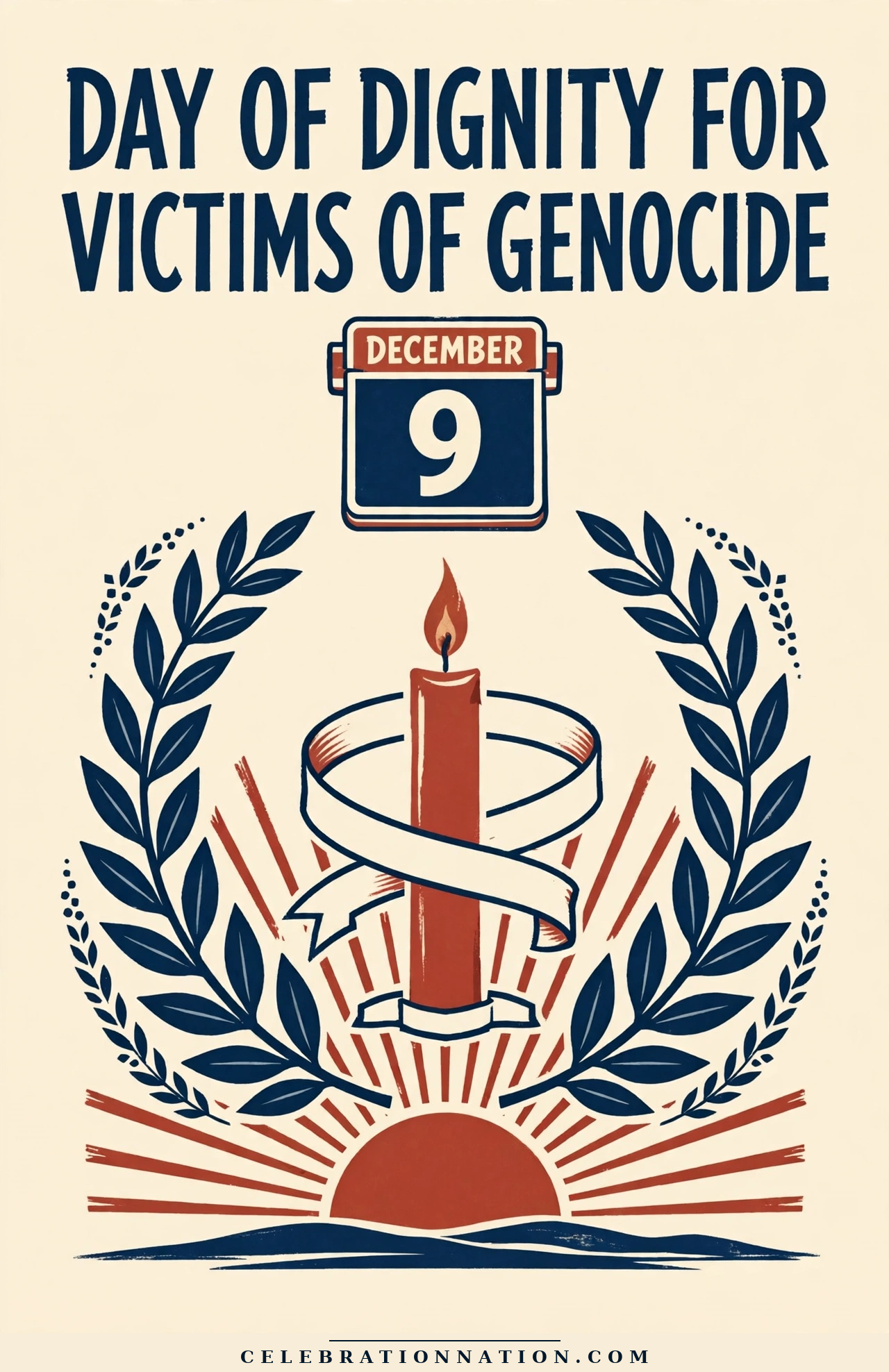
Day of Dignity for Victims of Genocide
This day emphasizes the importance of dignity for all who have suffered from genocide.
- Roots
- Established by the United Nations in 2015
- Vibe
- Reflective and respectful, focusing on dignity and justice
- Also on Dec 9
- Christmas Card Day · International Anti-Corruption Day · Lutefisk Day
- Hashtag
- #DayOfDignityForVictimsOfGenocide
3 ways to celebrate
Learn the history
Read about one genocide's victims at home and honor their memory.
Share stories
Gather friends to read survivor testimonies and reflect together.
Observe the day
Hold a moment of silence at work in remembrance of victims.
Plan ahead
Day of Dignity for Victims of Genocide is observed on December 9 every year. Here is where it lands for the next ten years, handy for planners, marketers and party people.
Fast facts
The story
The Day of Dignity for Victims of Genocide is observed on December 9 each year, a date chosen to honor the memory of those who have suffered from genocidal acts throughout history. This observance was established by the United Nations in 2015 as a means to promote awareness and foster discussions regarding the importance of human rights. Various organizations and communities come together to remember the victims and advocate for justice.
Read the full story
Genocide is a term that evokes deep sorrow and anger, as it refers to the deliberate and systematic destruction of a racial, ethnic, national, or religious group. From the Armenian Genocide in the early 20th century to the more recent atrocities in Darfur and Myanmar, the impacts have been devastating and far-reaching. Each case serves as a reminder of humanity's capacity for violence and the crucial need for vigilance in preventing future occurrences.
On this day, many people participate in memorial events, vigils, and educational programs aimed at remembering the victims and promoting awareness about ongoing injustices. These events often feature testimonies from survivors, providing a powerful reminder of the resilience of the human spirit. Engaging in conversations about genocide helps to ensure that the stories of those who suffered are not forgotten.
As we observe this important day, let us all reflect on our collective responsibility to advocate for human rights and ensure that the dignity of every individual is respected. By sharing knowledge and raising awareness, we can help to foster a world that is more just and compassionate, where such atrocities are prevented, and the voices of the marginalized are heard.
Did you know?
First Recognition
The term 'genocide' was coined by Polish-Jewish lawyer Raphael Lemkin in 1944.
UN Convention
The Convention on the Prevention and Punishment of the Crime of Genocide was adopted by the United Nations in 1948.
Genocide Studies
The field of genocide studies examines the causes, effects, and prevention of genocides.
Survivor Testimonies
Survivor testimonies are crucial for understanding the impact of genocides and can help educate future generations.
Difficult to Measure
It is challenging to determine the exact number of victims in genocides due to varying definitions and documentation.
Human Rights Day
The Day of Dignity aligns with the broader observance of Human Rights Day on December 10.
Ongoing Issues
Many regions still face threats of genocide today, emphasizing the need for ongoing vigilance and advocacy.
Around the world
Every culture celebrates a little differently.
- AMArmeniaCommemorates the Armenian Genocide, which occurred between 1915 and 1923.
- RURussiaRecognizes the suffering of various ethnic groups throughout its history.
- ARArgentinaHonors the victims of the Dirty War, a period of state terrorism from 1976 to 1983.
- TDSudanContinues to address the genocide in Darfur, which began in 2003.
- MMMyanmarHighlights the plight of the Rohingya people, who have faced severe persecution.
- RWRwandaRemembers the tragic genocide of 1994, which claimed hundreds of thousands of lives.
Keep the party going
See the calendar



Celebrate every day, all year
Official gear from the people who track 1,700+ celebrations.
Browse the shop 2027 Wall + Desk Calendar BundleCelebrate every day at home and at work.
Never miss a reason to celebrate.
One quick morning email with today's celebrations, ideas and posters. Free, unsubscribe anytime.
🎉 You're on the list! Watch your inbox for The Daily Confetti.