



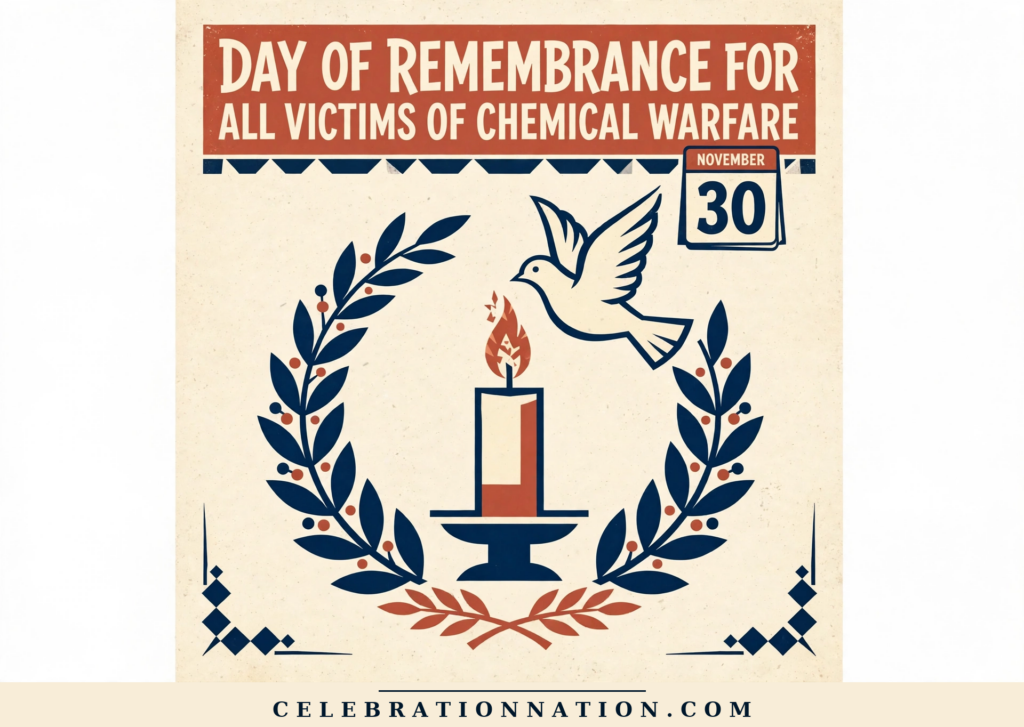
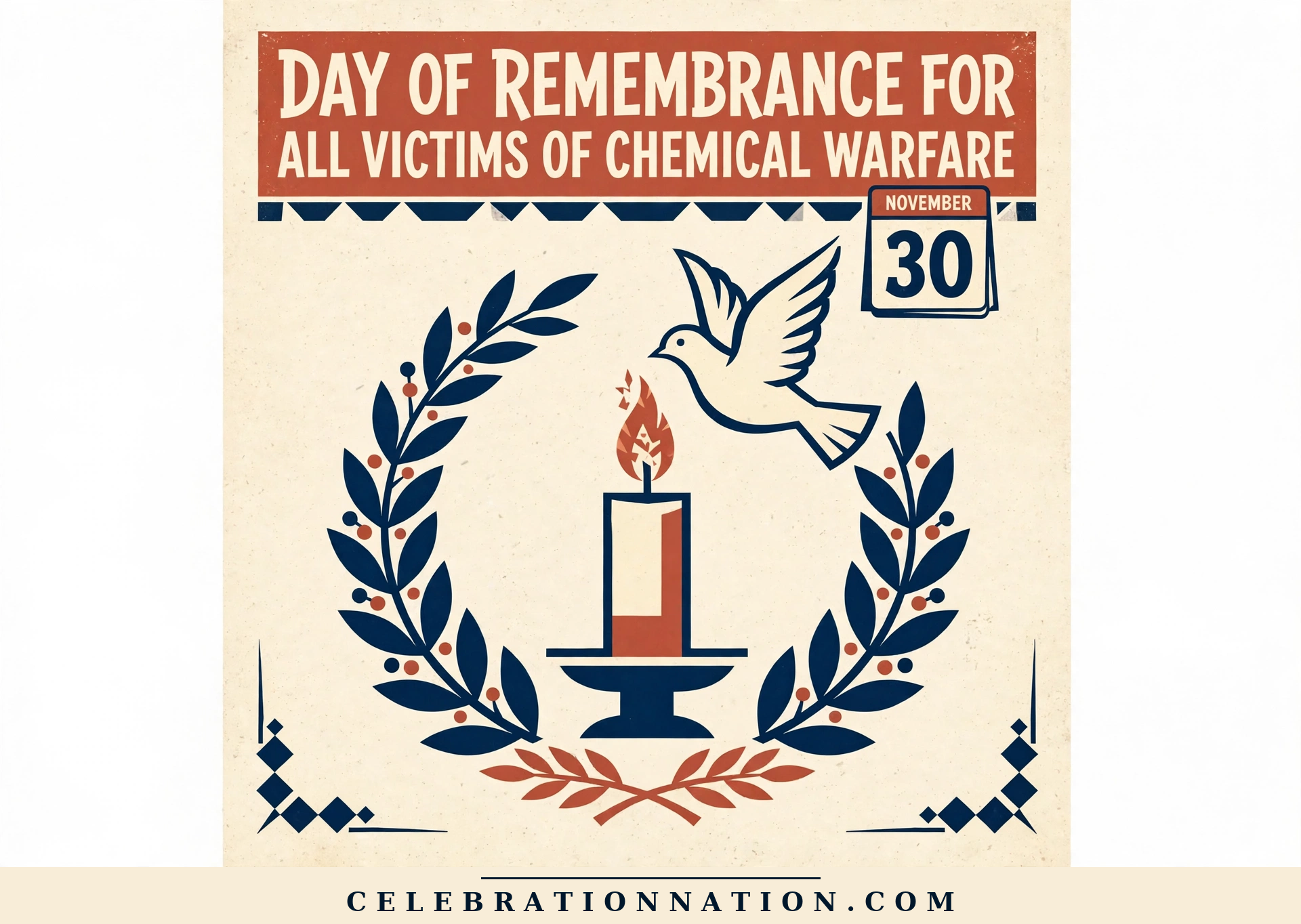
Day of Remembrance for All Victims of Chemical Warfare
Join us in this solemn occasion to honor all victims of chemical warfare and advocate for a safer world.
- Roots
- Established by the UN in 2005
- Vibe
- A somber reminder of the horrors of war
- Also on Nov 30
- Cyber Monday · Meth Awareness Day · Mississippi Day
- Hashtag
- #DayOfRemembranceForAllVictimsOfChemicalWarfare
3 ways to celebrate
Light a candle
Pause for a moment of quiet remembrance for those who suffered from chemical warfare.
Read and reflect
Share a respectful article about the day and talk together about why peace matters.
Observe a moment
Hold a brief moment of silence to honor the victims and support a world free of chemical weapons.
Plan ahead
Day of Remembrance for All Victims of Chemical Warfare is observed on November 30 every year. Here is where it lands for the next ten years, handy for planners, marketers and party people.
Fast facts
The story
The Day of Remembrance for All Victims of Chemical Warfare was established by the United Nations in 2005 to honor the lives lost and those affected by chemical weapons. This observance takes place annually on November 30, paying tribute to victims and reaffirming the commitment to eliminate chemical weapons. It serves as a solemn reminder of the need for continued advocacy against such atrocities.
Read the full story
Chemical warfare has left an indelible mark on global history, with its use during conflicts such as World War I and the Iran-Iraq War causing immense suffering. The legacy of these weapons continues to haunt survivors, many of whom deal with the long-term health effects of exposure. Events held on this day encourage reflection on both the past and the ongoing challenges faced by those affected.
As we commemorate this day, it is essential to recognize the impact of chemical warfare not just on the battlefield but on communities worldwide. Many victims are not only soldiers but also civilians caught in the crossfire. This includes children who have suffered the consequences of chemical attacks, many of whom continue to fight for their right to health and safety. We must strive for a world where such events are a distant memory rather than a present reality.
Advocating for disarmament and supporting survivors are crucial steps in preventing future atrocities. Various organizations work tirelessly to educate communities about the dangers of chemical weapons and promote peace-building initiatives. On November 30, individuals and groups around the world gather to honor those affected, fostering a sense of solidarity and hope for a future free of chemical weapons.
Did you know?
First Use in WWI
Chemical weapons were first used on a large scale during World War I, resulting in over a million casualties.
Chemical Weapons Convention
The Chemical Weapons Convention, which prohibits the use of chemical weapons, was opened for signature in 1993.
Ongoing Issues
Countries like Syria have faced allegations of chemical weapon use in recent conflicts, highlighting ongoing global challenges.
Survivor Stories
Survivors of chemical attacks often face long-term health issues, including respiratory problems and psychological trauma.
Global Awareness
November 30 serves as a day to raise awareness about the dangers of chemical weapons and the importance of disarmament.
Educational Programs
Many organizations use this day to launch educational programs aimed at preventing future chemical warfare.
UN Initiatives
The UN plays a crucial role in monitoring compliance with chemical weapons treaties worldwide.
Around the world
Every culture celebrates a little differently.
- USUnited StatesThe U.S. observes this day alongside other UN member states.
- GBUnited KingdomThe UK commemorates this day with various memorial events and educational programs.
- FRFranceFrance actively participates in international treaties aimed at banning chemical weapons.
- DEGermanyGermany has a historical context of chemical warfare that shapes its remembrance efforts.
- IRIranIran experienced devastating chemical attacks during the Iran-Iraq War, leading to ongoing health issues among survivors.
- ILIsraelIsrael engages in discussions on the implications of chemical weapons in regional conflicts.
Keep the party going
See the calendar

Celebrate every day, all year
Official gear from the people who track 1,700+ celebrations.
Browse the shop 2027 Wall Calendar, signed by Marlo AndersonSigned by the founder of National Day Calendar.
Never miss a reason to celebrate.
One quick morning email with today's celebrations, ideas and posters. Free, unsubscribe anytime.
🎉 You're on the list! Watch your inbox for The Daily Confetti.