
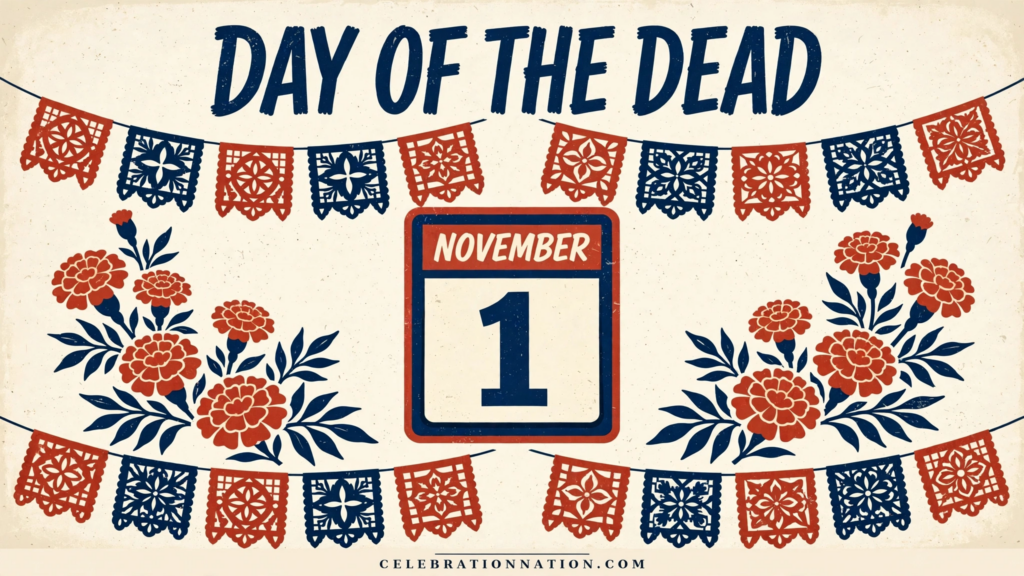
Day of the Dead
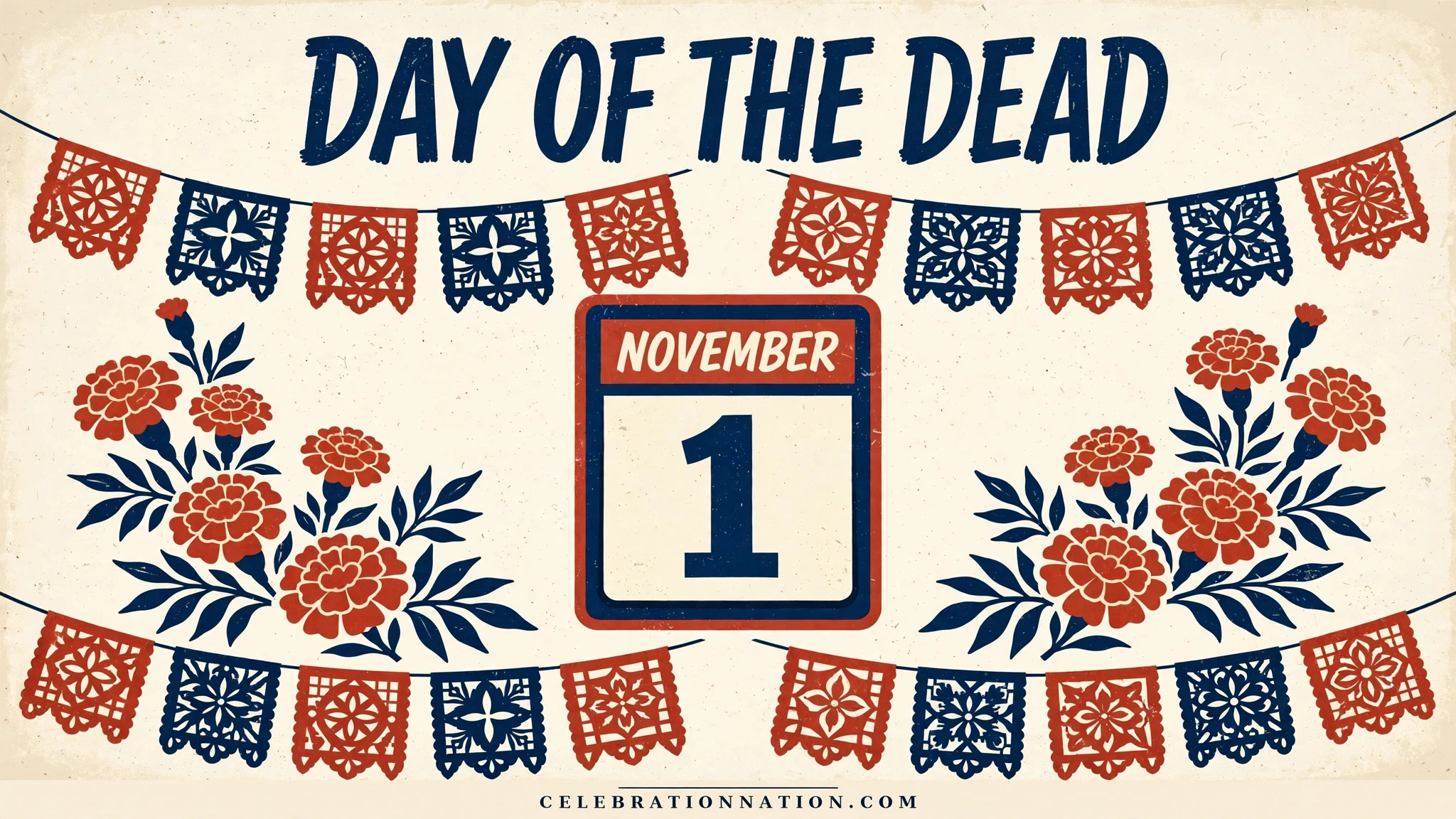
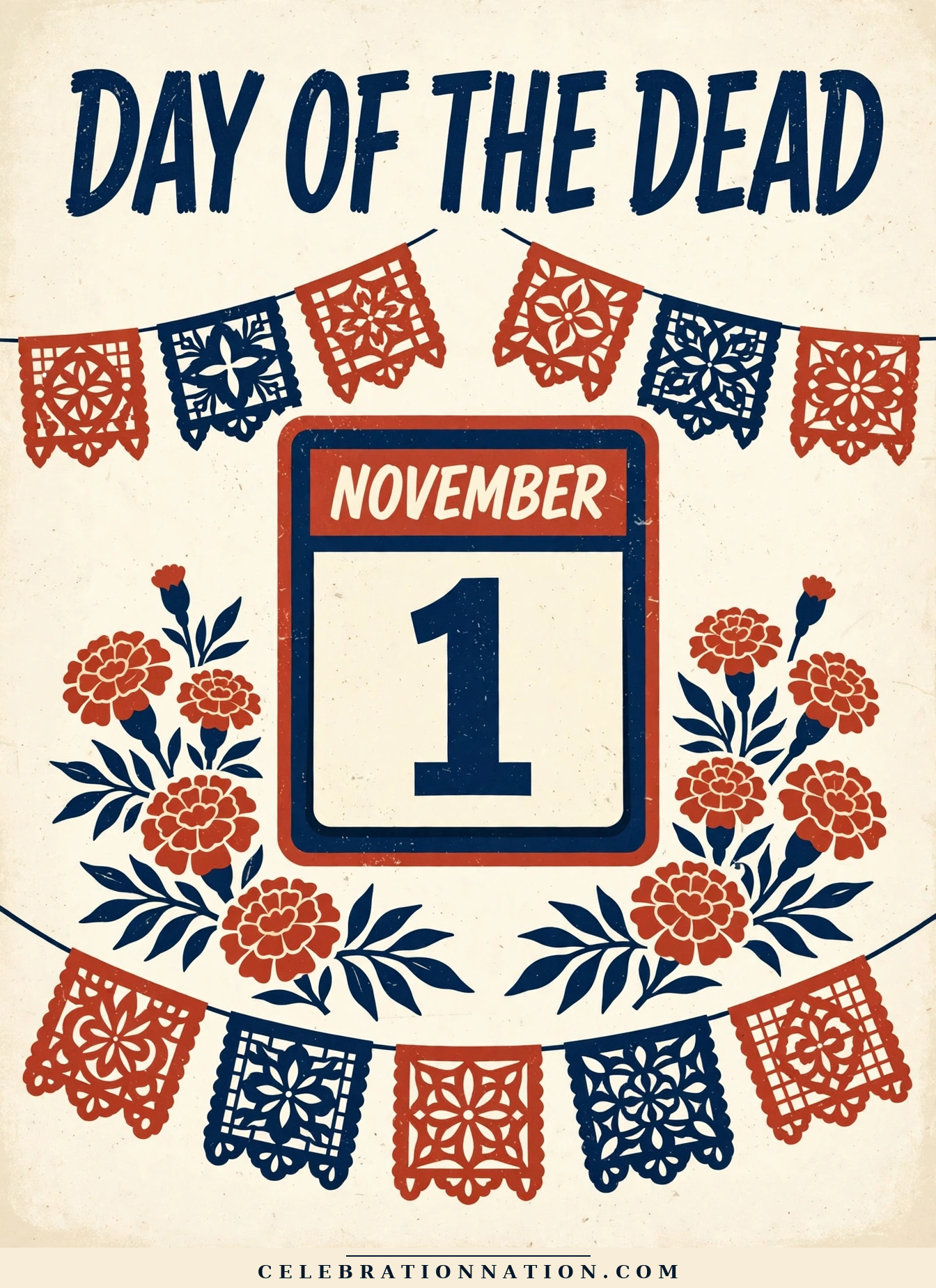
Join in the rich traditions of the Day of the Dead, a day to celebrate life and remember those who have passed.
- Roots
- Mexico, rooted in ancient indigenous cultures
- Vibe
- Joyful celebration of life and remembrance, often colorful and festive.
- Also on Nov 1
- World Vegan Day · Family Literacy Day · Vinegar Day
- Hashtag
- #DayOfTheDead
3 ways to celebrate
Build an ofrenda
Set up an altar with photos, candles and favorite foods.
Share family stories
Gather to remember loved ones with food and laughter.
Learn the traditions
Read about the meaning behind marigolds and altars.
Plan ahead
Day of the Dead is observed on November 1 every year. Here is where it lands for the next ten years, handy for planners, marketers and party people.
Fast facts
The story
Day of the Dead, or Día de los Muertos, is celebrated on November 1 and 2, coinciding with the Catholic observances of All Saints' Day and All Souls' Day. This holiday is a time for families to gather and remember loved ones who have passed away. Traditionally, offerings such as food, flowers, and personal mementos are placed on altars, or ofrendas, to welcome spirits back to the living world. The use of marigolds, known as cempasúchil, symbolizes the fragility of life and is believed to guide spirits home.
Read the full story
Originating from ancient Aztec rituals, Día de los Muertos blends indigenous beliefs with Catholic practices introduced by Spanish colonizers. Over the centuries, this celebration has evolved, incorporating various regional customs and flavors. In the United States, especially in areas with large Hispanic populations, Día de los Muertos has gained popularity, with public festivals, parades, and educational events highlighting its significance. The vibrant colors, intricate decorations, and joyful atmosphere are hallmarks of this unique cultural observance.
While the festivities may vary from region to region, the core theme remains the same: honoring those who have departed. Families share stories, reminisce, and celebrate their loved ones, often through music and dance. This celebration is not one of mourning, but rather a joyous recognition of life. The fusion of traditional customs with modern interpretations makes Día de los Muertos a living cultural tapestry, continuously evolving with each generation.
In recent years, Día de los Muertos has transcended its regional roots and is embraced by diverse communities across the United States. Cities like Los Angeles, San Antonio, and Chicago host grand celebrations, complete with parades, art exhibits, and community altars. This growing recognition highlights a broader appreciation for cultural heritage and the importance of remembering those who have shaped our lives. As more people engage with this vibrant tradition, the spirit of Día de los Muertos continues to flourish.
Did you know?
Cempasúchil
The marigold flower, known as cempasúchil, is traditionally used to adorn ofrendas.
UNESCO Recognition
Día de los Muertos was officially recognized by UNESCO in 2008 as an Intangible Cultural Heritage of Humanity.
Skull Symbolism
The sugar skulls symbolize the sweetness of life and are often personalized with names.
National Day
The Day of the Dead is celebrated not only in Mexico but in many Latin American countries.
Community Spirit
Many communities in the U.S. host public celebrations, bringing people together to honor the dead.
Traditional Foods
Food offerings on altars often include pan de muerto, a special bread enjoyed during this time.
Colorful Celebrations
The celebrations are characterized by vibrant colors, music, and dance, showcasing cultural heritage.
Around the world
Every culture celebrates a little differently.
- MXMexicoThe heart of Día de los Muertos, where ancient traditions blend with vibrant modern festivities.
- USUnited StatesCities across the U.S., especially in areas with large Latino populations, celebrate with parades and community events.
- GTGuatemalaIn Guatemala, the Day of the Dead is marked by colorful kite festivals that honor the spirits of the departed.
- COColombiaColombians celebrate their own version of Día de los Muertos, incorporating unique regional customs and flavors.
- PEPeruPeru observes a similar holiday called Día de los Muertos, with traditional foods and offerings for the deceased.
- BRBrazilIn Brazil, the celebration is known as Dia de Finados, where families visit cemeteries to honor their loved ones.
Keep the party going
See the calendar


Celebrate every day, all year
Official gear from the people who track 1,700+ celebrations.
Browse the shop 2027 Wall Calendar, signed by Marlo AndersonSigned by the founder of National Day Calendar.
Never miss a reason to celebrate.
One quick morning email with today's celebrations, ideas and posters. Free, unsubscribe anytime.
🎉 You're on the list! Watch your inbox for The Daily Confetti.