
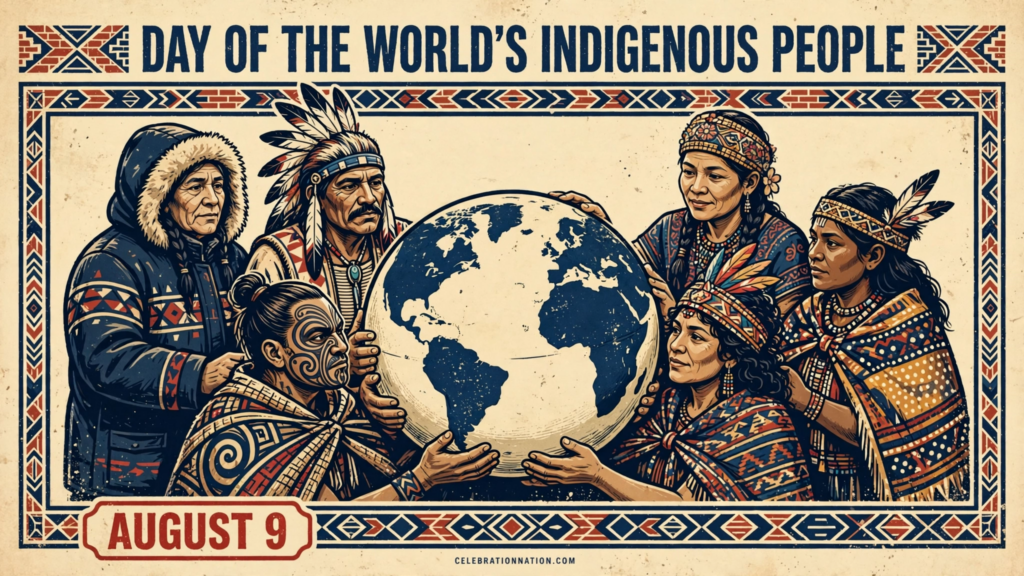
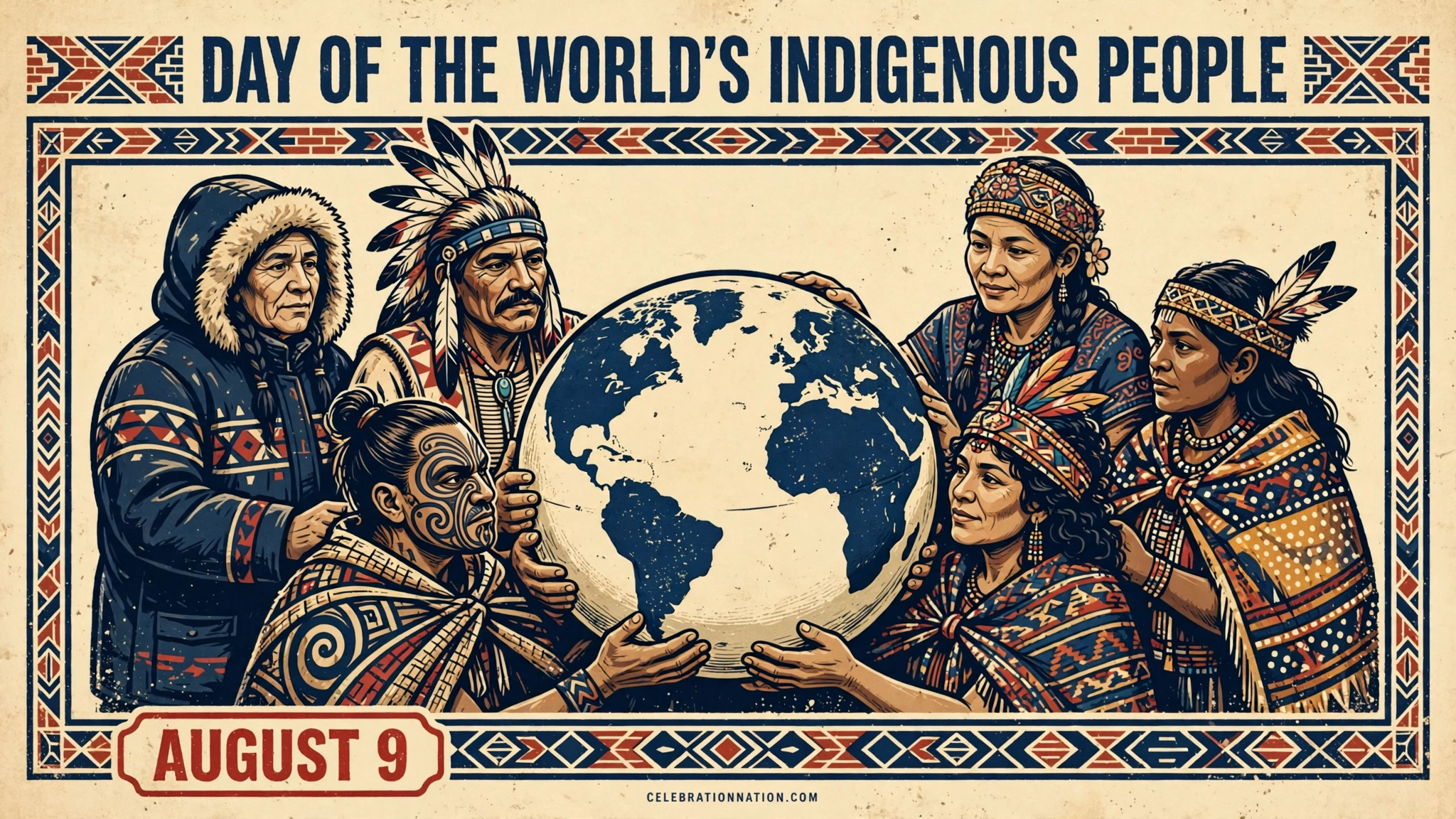
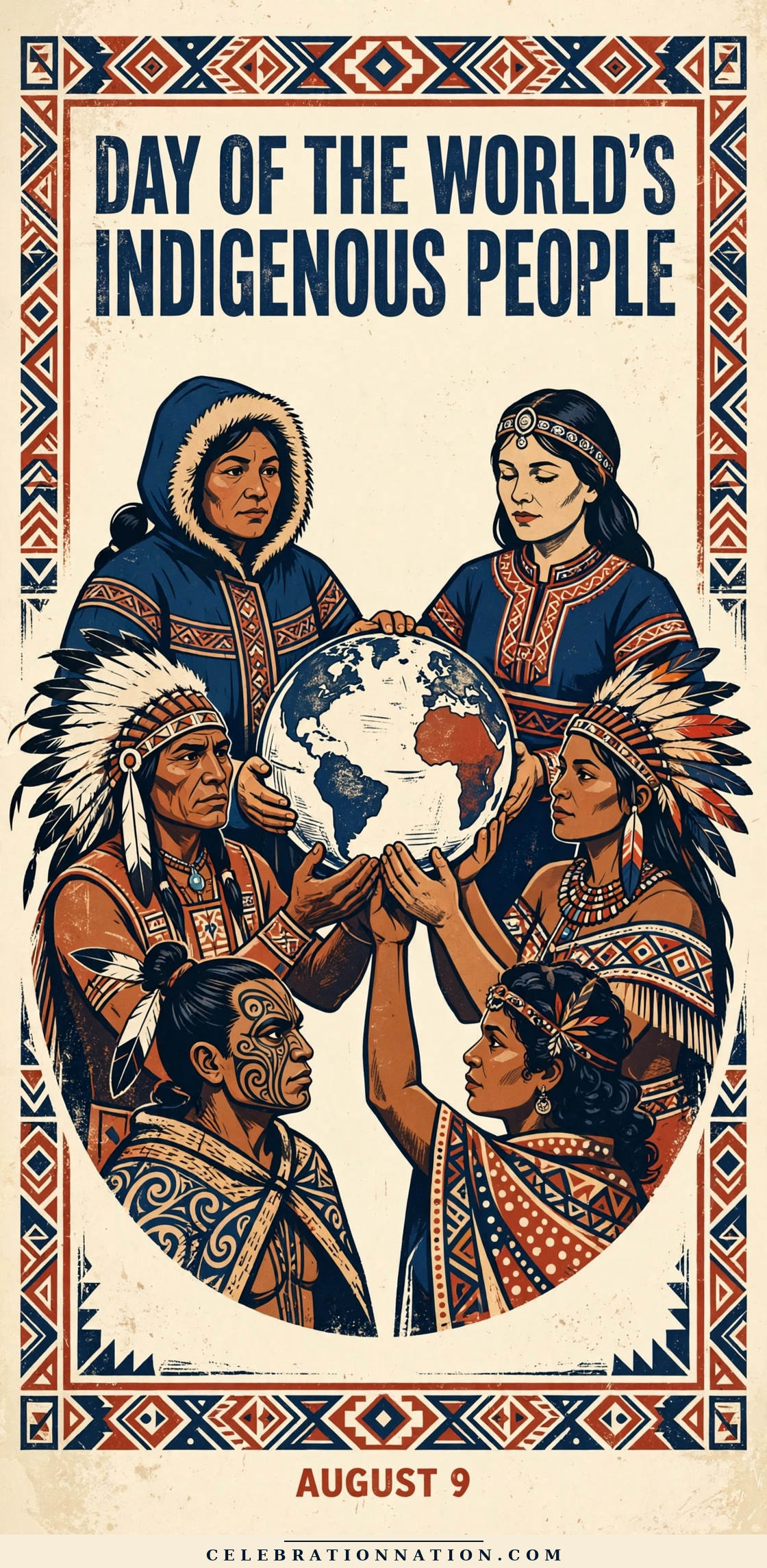
Day of the World’s Indigenous People
On this day, we take a moment to celebrate the resilience and contributions of Indigenous peoples worldwide.
- Roots
- Established by the United Nations in 1994
- Vibe
- A day of recognition, celebration, and education.
- Also on Aug 9
- Book Lovers Day · Passion Fruit Day · Rice Pudding Day
- Hashtag
- #DayOfTheWorld8217sIndigenousPeople
3 ways to celebrate
Learn first voices
Read works by Indigenous authors and storytellers.
Attend a cultural event
Visit a local exhibit or performance together.
Amplify Indigenous voices
Share Indigenous-led organizations with your team.
Plan ahead
Day of the World’s Indigenous People is observed on August 9 every year. Here is where it lands for the next ten years, handy for planners, marketers and party people.
Fast facts
The story
The Day of the World’s Indigenous Peoples, celebrated annually on August 9, was first established by the United Nations in 1994. This observance aims to promote and protect the rights of the world's Indigenous populations. With roots in the United Nations' efforts to address Indigenous rights, the day has become a focal point for raising awareness and advocating for the issues that affect these communities globally.
Read the full story
Indigenous peoples, who number an estimated 476 million across the globe, have unique cultures, languages, and traditions that contribute richly to the world's diversity. In the United States, Indigenous cultures encompass a wide array of tribes and nations, each with its own distinct heritage. Events held on this day often reflect the artistic, social, and historical significance of Indigenous peoples, encouraging broader recognition and appreciation.
This day serves as a reminder of the ongoing struggles faced by many Indigenous communities, including land rights, cultural preservation, and social justice. The importance of education about these issues cannot be understated, as understanding leads to advocacy and support for Indigenous rights.
As we observe the Day of the World's Indigenous Peoples, we are called to celebrate their contributions while also acknowledging the challenges they face. From art and music to governance and environmental stewardship, Indigenous cultures offer invaluable insights. Engaging with these communities and their stories can foster a deeper connection and commitment to justice and equity for all.
Did you know?
Indigenous Population
Indigenous peoples represent about 6% of the global population but account for 15% of the world's poorest.
Languages
There are approximately 7,000 languages spoken in the world, with many belonging to Indigenous communities.
Cultural Practices
Many Indigenous cultures have deep connections to the land, often viewing nature as sacred.
Land Rights
Indigenous peoples often face challenges in securing land rights, which are critical for their cultural survival.
Environmental Stewardship
Indigenous communities play a crucial role in protecting biodiversity and managing natural resources.
Art and Expression
Indigenous art often reflects cultural stories and traditions, providing insight into their worldviews.
Global Movements
Many Indigenous groups are part of international movements advocating for climate justice and human rights.
Around the world
Every culture celebrates a little differently.
- USUnited StatesHome to numerous Indigenous tribes, each with its own unique culture and history.
- CACanadaWith over 600 recognized Indigenous nations, Canada celebrates diverse Indigenous languages and traditions.
- AUAustraliaIndigenous Australians have rich cultural practices that include art, music, and storytelling.
- MXMexicoMexico's Indigenous communities have contributed significantly to the nation's cultural fabric.
- BRBrazilHome to various Indigenous groups, Brazil is known for its rich biodiversity and traditional knowledge.
- EUEuropean UnionSeveral Indigenous groups across Europe advocate for their rights and preservation of their languages and cultures.
Keep the party going
See the calendar
Celebrate every day, all year
Official gear from the people who track 1,700+ celebrations.
Browse the shop National Day Celebration Card GameA party in a box, any day of the year.
Never miss a reason to celebrate.
One quick morning email with today's celebrations, ideas and posters. Free, unsubscribe anytime.
🎉 You're on the list! Watch your inbox for The Daily Confetti.