





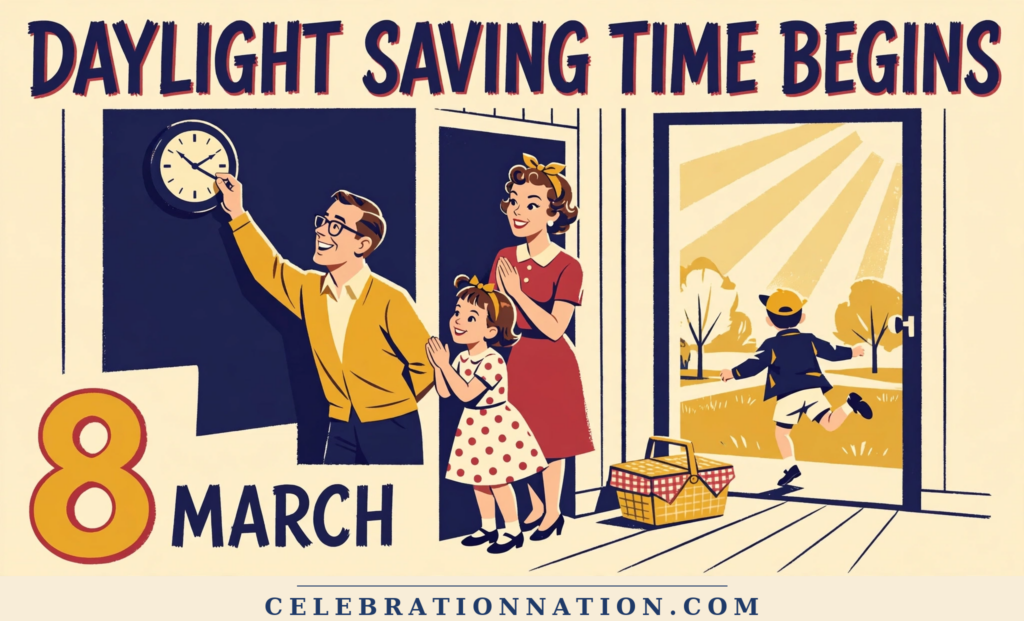
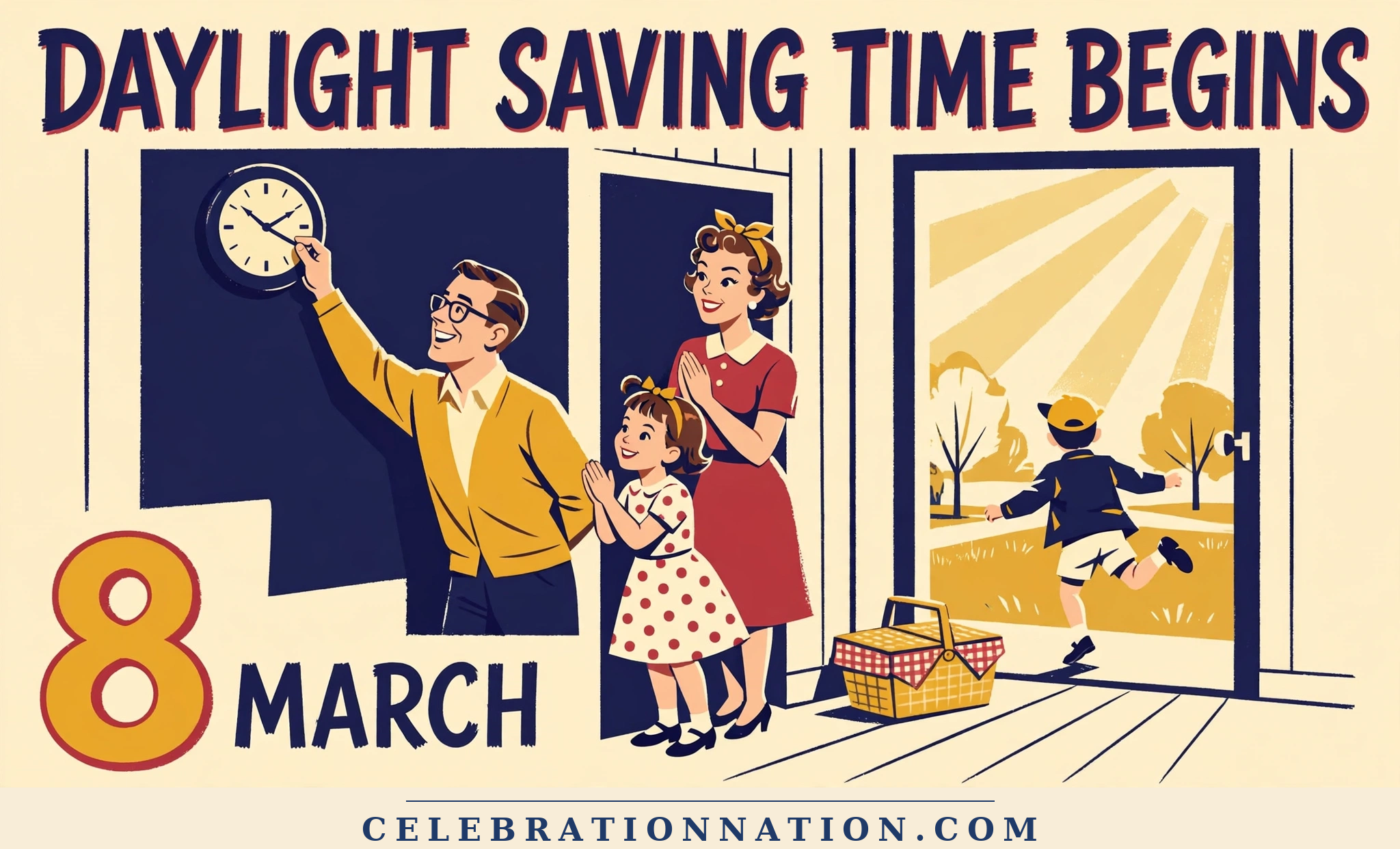
Daylight Saving Time Begins
Daylight Saving Time brings a much-anticipated change to our daily routine, inviting us to savor longer evenings.
- Roots
- First enacted in the U.S. in 1918 during World War I
- Vibe
- A time for outdoor activities and community events
- Also on Mar 8
- International Women’s Day · I Am Day · Oregon Day
- Hashtag
- #DaylightSavingTimeBegins
3 ways to celebrate
Do a clock sweep
Walk room to room and set every clock forward one hour.
Start the season early
Kick off spring plans with friends over the extra evening light.
Beat the grogginess
Grab morning sunlight and coffee to shake off the time change.
Plan ahead
Daylight Saving Time Begins is observed on March 8 every year. Here is where it lands for the next ten years, handy for planners, marketers and party people.
Fast facts
The story
Daylight Saving Time (DST) begins on March 8, 2026, at 2:00 AM local time across most of the United States. This annual tradition, which was first implemented in the U.S. during World War I to conserve energy, has evolved into a widely embraced practice. As clocks spring forward, Americans are encouraged to adjust their schedules and embrace the longer days ahead.
Read the full story
The concept of Daylight Saving Time is not unique to the United States. Many countries around the world, such as Canada and most of Europe, also observe this practice, albeit with varying start and end dates. The rationale behind DST is simple: by making better use of daylight during the longer days of spring and summer, communities can reduce reliance on artificial lighting and save energy.
As we transition into this new season, it is essential to recognize the positive effects of longer daylight. From improved mood to increased opportunities for outdoor activities, the benefits of DST extend beyond merely changing the clock. Families can gather for evening barbecues, friends can meet for sunset hikes, and communities can thrive as everyone takes advantage of the extra hour of light.
Despite its advantages, DST has faced criticism over the years. Some argue that the time change can disrupt sleep patterns and negatively impact health. Yet, as we prepare to adjust our clocks and welcome spring, it is vital to focus on the joy that longer days bring, allowing us to connect with nature and each other in meaningful ways.
Did you know?
Energy Conservation
The primary goal of DST is to save energy by extending daylight hours.
Health Effects
Studies have shown mixed effects of DST on sleep and health.
DST and Crime
Some studies suggest that longer daylight hours can reduce crime rates.
Global Observance
Around 40% of the world’s population participates in DST.
State Variations
Some U.S. states have proposed legislation to abolish DST.
Historical Roots
Benjamin Franklin first suggested the idea of DST in 1784.
Fall Back
In the fall, clocks revert one hour back, allowing for shorter daylight.
Around the world
Every culture celebrates a little differently.
- USUnited StatesMost states observe DST, with Hawaii and most of Arizona opting out.
- CACanadaMost provinces follow DST, with exceptions in certain areas.
- GBUnited KingdomThe UK observes British Summer Time, a form of DST.
- DEGermanyGermany was one of the first countries to adopt DST during World War I.
- AUAustraliaAustralia observes DST in some states, including New South Wales and Victoria.
- FRFranceFrance observes DST, aligning with the European Union's schedule.
Keep the party going
See the calendar


Celebrate every day, all year
Official gear from the people who track 1,700+ celebrations.
Browse the shop 2027 Wall Calendar, signed by Marlo AndersonSigned by the founder of National Day Calendar.
Never miss a reason to celebrate.
One quick morning email with today's celebrations, ideas and posters. Free, unsubscribe anytime.
🎉 You're on the list! Watch your inbox for The Daily Confetti.