




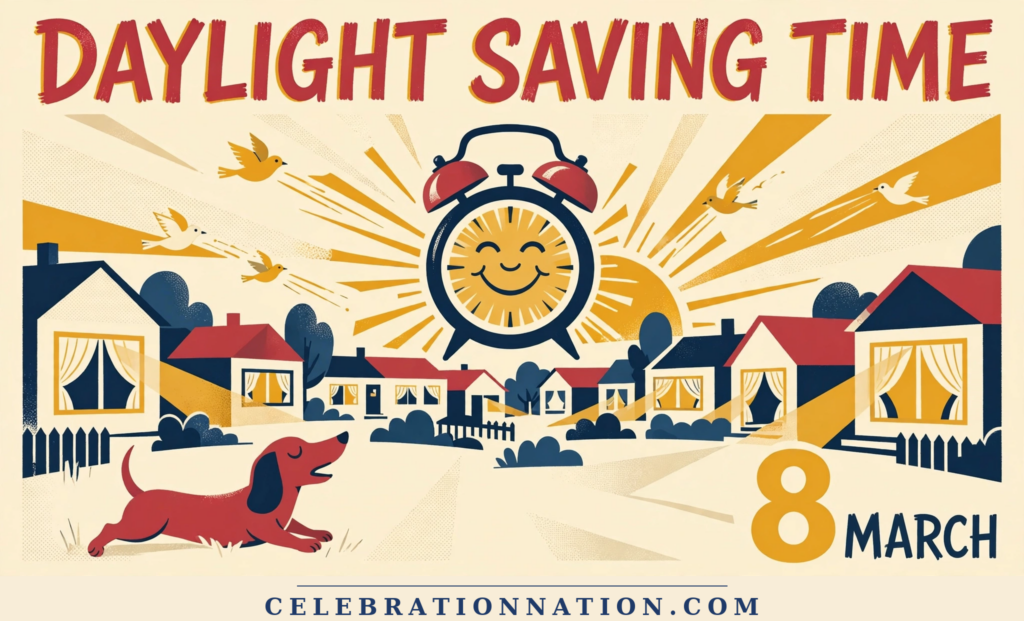
Daylight Saving Time
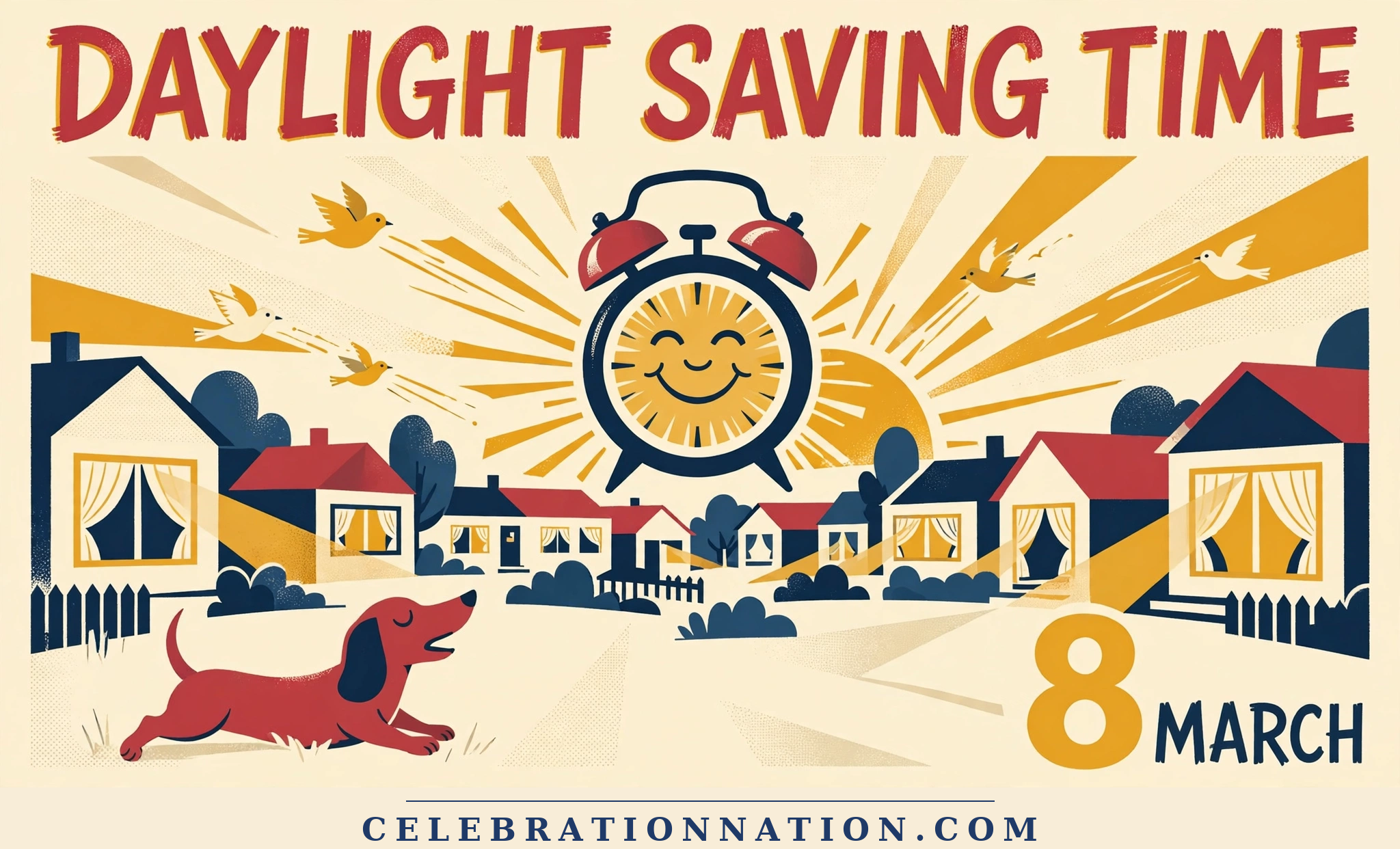
As we adjust our clocks, we also embrace the joy of longer days and the arrival of spring, a time for renewal and celebration.
- Roots
- First proposed by Benjamin Franklin in 1784
- Vibe
- A sense of renewal and outdoor activity
- Also on Mar 8
- Daylight Saving Time Begins · International Women’s Day · I Am Day
- Hashtag
- #DaylightSavingTime
3 ways to celebrate
Set clocks ahead
Move every clock forward and enjoy the extra evening light.
Plan an evening walk
Take advantage of the longer daylight with a sunset stroll.
Adjust your schedule
Shift meetings earlier so everyone leaves in daylight.
Plan ahead
Daylight Saving Time is observed on the second Sunday in March. Here is where it lands for the next ten years, handy for planners, marketers and party people.
Fast facts
The story
Daylight Saving Time (DST) begins annually on the second Sunday in March. In 2026, Americans will set their clocks forward one hour at 2:00 AM, marking the transition into longer days. This tradition, which has its roots in the early 20th century, aims to make better use of daylight during the warmer months. While it may mean losing an hour of sleep, the reward is more evening daylight for activities and gatherings.
Read the full story
The concept of Daylight Saving Time was first proposed by Benjamin Franklin in 1784, though it didn't gain traction until the 20th century. Germany was the first country to implement DST during World War I to conserve fuel. Today, many countries around the world have adopted this practice, with varying start and end dates. In the United States, DST is observed in most states, with Arizona and Hawaii as notable exceptions.
As we spring forward, communities across the nation celebrate the arrival of warmer weather and longer days. The sense of excitement that accompanies this time change is palpable. Parks fill with families, gardens spring to life, and neighborhoods come alive with outdoor gatherings. It’s a season that encourages both reflection and action, as we embrace the beauty of nature.
For many, Daylight Saving Time signifies more than just a change of clocks; it represents a cultural shift towards outdoor living and communal activities. As the evenings stretch longer, people are inspired to reconnect with nature, engage with their communities, and enjoy the simple pleasures of life. The extra hour of daylight can be a catalyst for creativity, relaxation, and enjoyment, making it a cherished tradition for many.
Did you know?
Benjamin Franklin's Proposal
Benjamin Franklin suggested DST in a letter to the editor of the Journal of Paris in 1784.
World War I Origins
Germany first implemented Daylight Saving Time in 1916 to conserve energy during WWI.
Economic Impact
Studies suggest that DST may lead to an increase in consumer spending due to longer daylight.
Health Effects
Some studies indicate that the time change can disrupt sleep patterns and affect health.
Spring Forward, Fall Back
The phrase 'spring forward, fall back' helps people remember how to adjust their clocks.
Global Variations
Not all countries observe DST, and those that do may have different start and end dates.
Historical Resurgence
DST saw a resurgence during the 1970s energy crisis as a way to save fuel.
Around the world
Every culture celebrates a little differently.
- USUnited StatesMost states observe Daylight Saving Time, with notable exceptions such as Arizona and Hawaii.
- CACanadaMost Canadian provinces participate in DST, aligning closely with U.S. practices.
- GBUnited KingdomIn the UK, DST is observed from the last Sunday in March to the last Sunday in October.
- AUAustraliaAustralia's DST is observed in some states, primarily from October to April.
- DEGermanyGermany initiated DST in World War I and continues to observe it from March to October.
- FRFranceFrance observes DST from the last Sunday in March to the last Sunday in October, aligning with EU regulations.
Keep the party going
See the calendar


Celebrate every day, all year
Official gear from the people who track 1,700+ celebrations.
Browse the shop 2027 National Day Wall CalendarGet the 2026 edition free. 1,700+ observances.
Never miss a reason to celebrate.
One quick morning email with today's celebrations, ideas and posters. Free, unsubscribe anytime.
🎉 You're on the list! Watch your inbox for The Daily Confetti.