
Disability Pride Month
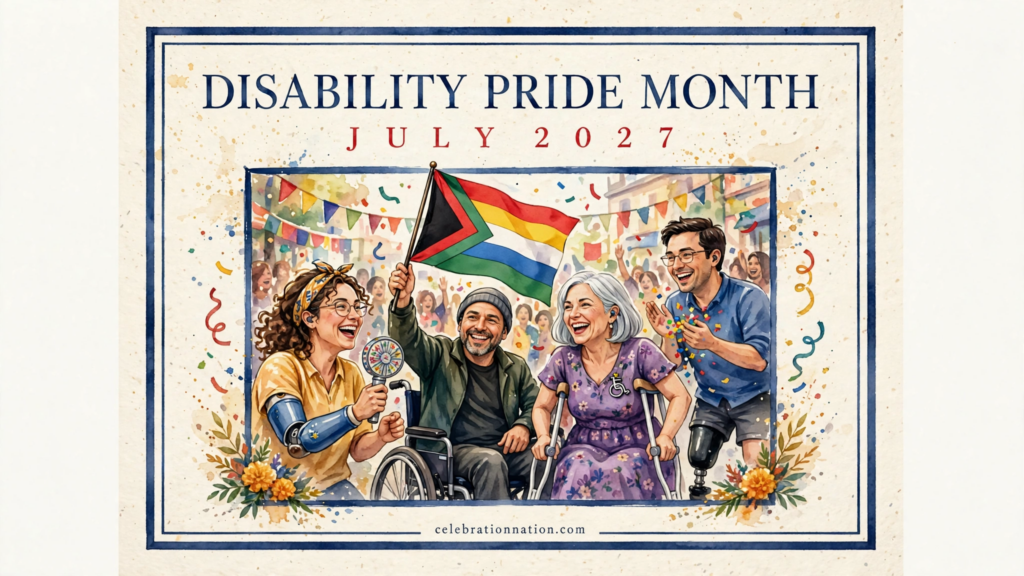
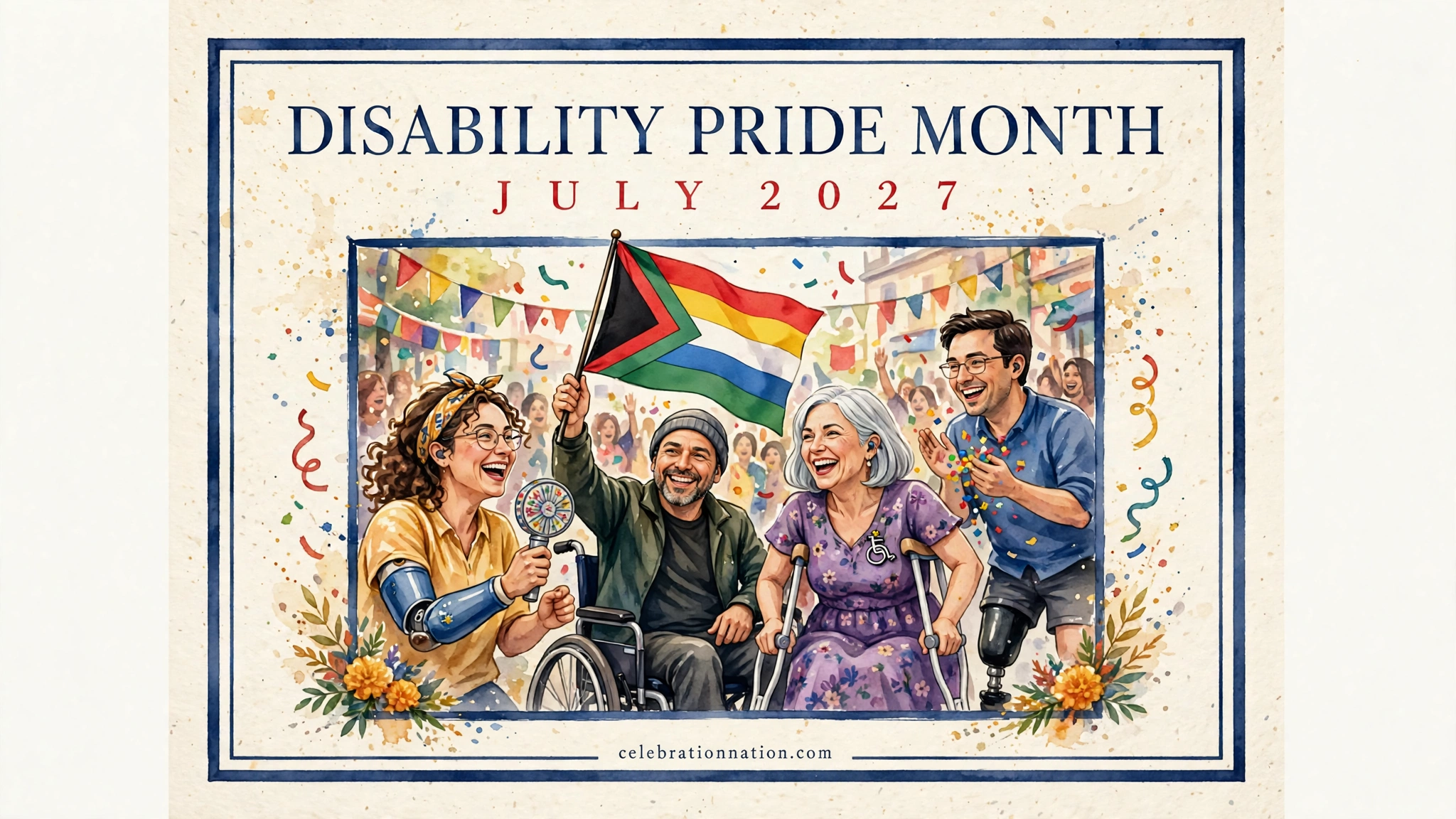
Every July, the disability community celebrates Disability Pride Month, honoring the day the Americans with Disabilities Act was signed into law on July 26, 1990, by President George H. W. Bush. It is a time to recognize disability as a natural part of human diversity, one to celebrate with pride. This month reminds us that disability is not a bad word.
- Hashtag
- #DisabilityPrideMonth
DISABILITY PRIDE MONTH
Every July, the disability community celebrates Disability Pride Month, honoring the day the Americans with Disabilities Act was signed into law on July 26, 1990, by President George H. W. Bush. It is a time to recognize disability as a natural part of human diversity, one to celebrate with pride. This month reminds us that disability is not a bad word.
Disability Pride Month is observed every July, honoring the day the Americans with Disabilities Act was signed into law on July 26, 1990, by President George H. W. Bush. The month is a time to recognize disability as a natural part of human diversity, one in which people living with disabilities can take pride. It is a chance for the community to come together and celebrate being themselves, and a chance to raise awareness of the challenges they still face every day to be treated equally. Pride here means exactly what it says: dignity, identity, and joy. It also seeks to change the way people think about and define disability, to end the stigma surrounding it, and to promote the belief that disability is a natural part of human diversity.
The ADA is one of the most sweeping civil rights laws in American history. Before it passed, people with disabilities had no federal legal protection from discrimination, including protections for employment, public services, transportation, telecommunications, and more. The law guarantees equal opportunities and access, ensuring that disabled individuals have the same rights as those without disabilities. Its signing was the culmination of decades of organizing by disabled activists who faced widespread discrimination and exclusion from public life. One of the significant milestones in the movement was the passage of the ADA itself: a comprehensive civil rights law that prohibits discrimination based on disability and ensures equal opportunities and access to employment, public accommodations, transportation, telecommunications, and government services.
The road to the ADA ran through one of the most famous acts of civil disobedience in American history. On March 12, 1990, over 1,000 people marched from the White House to the U.S. Capitol to demand that Congress pass the law. Upon arrival, about 60 activists, including eight-year-old Jennifer Keelan-Chaffins, got out of their wheelchairs or set aside their mobility aids and crawled up the Capitol steps, demonstrating the inaccessibility of public spaces. Police arrested 104 activists. The Capitol Crawl, as it became known, made the abstract concrete: the nation’s own front steps were closed to millions of its citizens. Following this legislation, Boston held the first-ever Disability Pride Day event, and Disability Pride Month was born. Since then, pride events have been held across the country and the world.
After the ADA was signed, celebration followed. The first Disability Pride Day took place in Boston in 1990, and Chicago hosted the first Disability Pride Parade in 2004. In 2015, marking the 25th anniversary of the ADA, New York City Mayor Bill de Blasio declared July as Disability Pride Month, and cities and states across the country have continued to proclaim it each year. The movement has grown from a single day of celebration into a month of parades, lectures, art, and community gatherings nationwide. In Minnesota, the 25th anniversary brought a Family Day kickoff at the Minnesota History Center and activities that ran from July into October, with shuttles from remote lots and a wide array of accommodations offered.
The movement has its own flag, created by Ann Magill, a disabled woman, and every element carries meaning. The black field represents disabled people who have lost their lives, not only to illness but also to negligence, suicide, and eugenics. The diagonal stripes each represent a part of the community: red for physical disabilities, yellow for cognitive and intellectual disabilities, white for invisible and undiagnosed disabilities, blue for mental illness, and green for sensory perception disabilities. Flying the flag is a declaration that every kind of disability belongs in the picture. Each color on the flag represents a different aspect of disability or impairment, and together they declare that disability identity is something to celebrate, not to hide.
The scale of the community is larger than many realize: more than 25 percent of adult Americans have a disability, including physical and mental disabilities, whether visible or invisible. Many who would fit the label do not use it, because of the negative connotations the word once carried. Disability Pride Month pushes back on that history with a simple insistence, voiced by activists across the country: disability is not a bad word. The month also carries an ongoing conversation about language itself, as the community weighs disability-first language against people-first language and what each choice says about identity. Healthcare workers, educators, employers, and friends all play a role in supporting disabled people and ensuring they receive equitable and inclusive care, and the month invites everyone to learn what ableism looks like in its everyday forms. Learning and promoting disability-first language, and understanding how it differs from people-first language, is another way the month deepens understanding.
The ADA is still young, and its protections continue to be tested, updated, and defended. That is why July matters: it honors how far the movement has come while keeping attention on how far remains. Every ramp built, every caption added, every hiring door opened began with someone insisting that access is a right. This July, join the celebration, learn the history, and carry the pride forward, because a world that includes everyone is a world made better for everyone. The ADA is only a few decades old, and its protections are still being tested, updated, and defended. This is part of why this month is so important to acknowledge and celebrate: the work of access is never truly finished.
THE STORY BEHIND DISABILITY PRIDE MONTH
📅 July 26, 1990
President George H. W. Bush signs the Americans with Disabilities Act into law, and July becomes the month of disability pride. The ADA is one of the most sweeping civil rights laws in American history.
🏳 The Pride Flag
Created by Ann Magill, the flag’s black field and diagonal stripes honor every part of the disability community. Red honors physical disabilities; yellow, cognitive and intellectual; white, invisible and undiagnosed; blue, mental illness; green, sensory perception.
👷 The Capitol Crawl
On March 12, 1990, activists crawled up the U.S. Capitol steps to demand passage of the ADA. Police arrested 104 of them.
👥 One in Four
More than 25 percent of adult Americans have a disability, including physical and mental disabilities, visible or invisible.
🎉 From Day to Month
The first Disability Pride Day was held in Boston in 1990; Chicago hosted the first Disability Pride Parade in 2004.
WAYS TO CELEBRATE
🏳 Fly the Flag
Learn the meaning of each color on the Disability Pride flag and display it in your window or on social media this July.
💭 Learn About Ableism
Read about ableism and the ways disabled people face discrimination, then have an honest conversation with friends.
🎉 Celebrate the ADA
Attend a July pride event or visit a local accessibility landmark and celebrate 37 years of the Americans with Disabilities Act.
Celebrate Disability Pride Month
All through July 2027, honor 37 years of the Americans with Disabilities Act and the community that made it possible. Fly the flag, learn the history, and celebrate disability as a natural part of human diversity. Pride is not just a word. It is a promise that everyone belongs. Celebrate it this July.
Keep the party going
See the calendar


Celebrate every day, all year
Official gear from the people who track 1,700+ celebrations.
Browse the shop 2027 Wall Calendar, signed by Marlo AndersonSigned by the founder of National Day Calendar.
Never miss a reason to celebrate.
One quick morning email with today's celebrations, ideas and posters. Free, unsubscribe anytime.
🎉 You're on the list! Watch your inbox for The Daily Confetti.