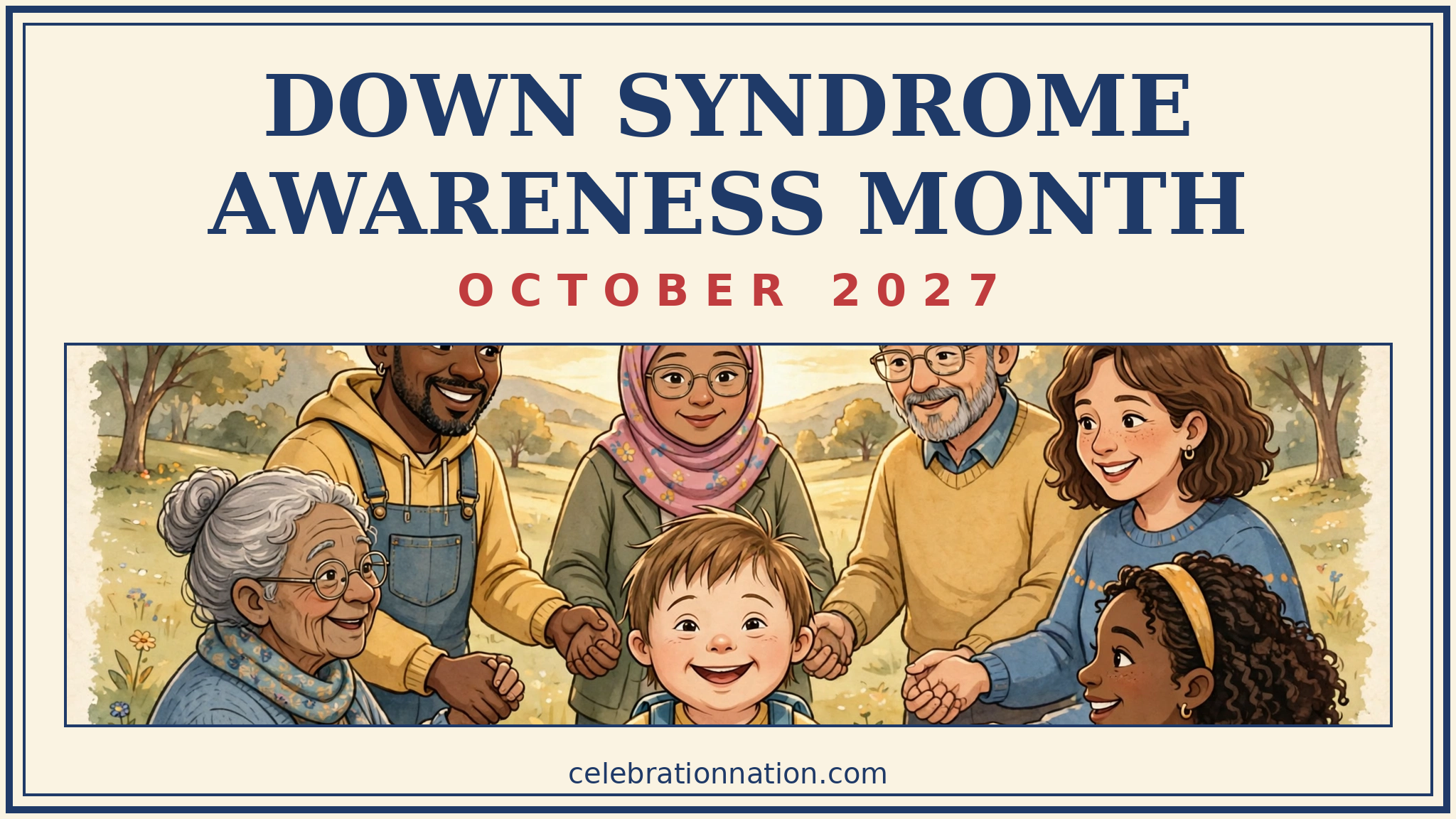
Down Syndrome Awareness Month
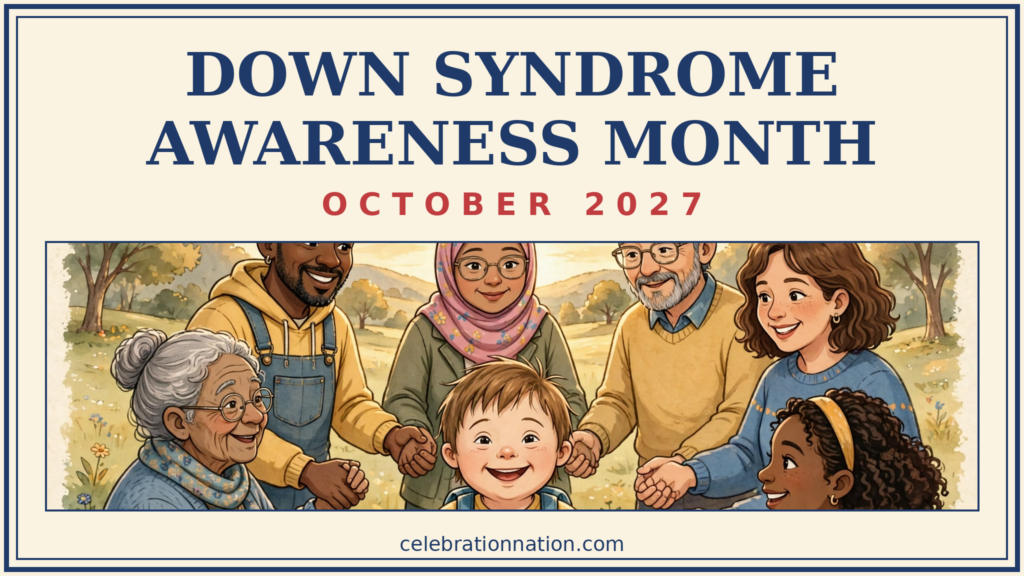
Every October, communities across the country come together for Down Syndrome Awareness Month, a time to honor the abilities, achievements, and everyday joy of people with Down syndrome. According to the National Down Syndrome Society, about 1 in every 772 babies born in the United States is diagnosed with Down syndrome, making it the most common chromosomal condition in the nation. This month reminds us that every person deserves to be seen first for who they are, not for a diagnosis.
- Hashtag
- #DownSyndromeAwarenessMonth
DOWN SYNDROME AWARENESS MONTH
Every October, communities across the country come together for Down Syndrome Awareness Month, a time to honor the abilities, achievements, and everyday joy of people with Down syndrome. According to the National Down Syndrome Society, about 1 in every 772 babies born in the United States is diagnosed with Down syndrome, making it the most common chromosomal condition in the nation. This month reminds us that every person deserves to be seen first for who they are, not for a diagnosis.
In the 1980s, the National Down Syndrome Society participated in the efforts to have October proclaimed Down Syndrome Awareness Month, known as DSAM, and that designation continues today. The month was created to raise awareness, break down barriers, and focus on promoting advocacy for people with Down syndrome. Each October, NDSS celebrates in a different way and invites everyone to get involved, share the message, and spread the word that people with Down syndrome are valued, capable members of their communities. It is a month built on a simple but powerful idea: awareness grows best when it is paired with celebration, and celebration grows best when it includes everyone.
Down syndrome is a genetic condition that occurs when a person has a full or partial extra copy of chromosome 21. The extra genetic material changes how the body grows and learns, and it can bring certain common traits, such as low muscle tone, small stature, an upward slant to the eyes, and a single deep crease across the center of the palm. It can happen to any family, regardless of race or economic status, although older mothers face a higher likelihood of having a child with the condition. In 1959, French researcher Jerome Lejeune identified the extra copy of chromosome 21 as the cause, a discovery that gave scientists a name for the condition and a direction for research that continues today. Medical care has advanced enormously since then, and with early intervention therapies, inclusive education, and strong family support, people with Down syndrome are living longer, healthier, and more independent lives than ever before.
What Down Syndrome Awareness Month celebrates most is ability. People with Down syndrome attend school, hold jobs, vote, drive, go to college, maintain meaningful relationships, and take part in the decisions that affect their lives. Self-advocates have been clear about what they want the world to hear: they have the same wants and dreams as everyone else, and they are more alike than different. As NDSS self-advocate and grassroots advocacy leader Kayla McKeon has expressed, people with Down syndrome want the same American dream as anyone else, the chance to work, to date, to marry, and to be seen as capable of anything they set their minds to. Friends who are differently abled play bagpipes, sing, teach Zumba, manage offices, and lobby Congress. The point, advocates say, is simple: everyone may take a different path to get there, but trying your best and hardest is what counts.
One of the most joyful traditions of the month is the National Buddy Walk Program, which NDSS has organized since 1995 to promote awareness and inclusion at the local level. Hundreds of walks take place in communities across the country each fall, raising funds for local and national organizations that support the Down syndrome community, and year after year they draw families, friends, classmates, and coworkers who show up to cheer. NDSS also hosts signature events, including the New York City Buddy Walk and the Times Square Video presentation, which puts the smiling faces of people with Down syndrome on one of the most famous screens in the world. Together, these gatherings turn awareness into something you can feel: footsteps, laughter, handmade signs, and neighbors walking side by side.
There are many simple ways to take part during October. NDSS offers 31 customizable fact cards, one for each day of the month, that can be shared on social media with the hashtag #DownSyndromeAwarenessMonth, and the organization encourages people to tag NDSS so the posts can be shared more widely. Families can make a donation and send a DSAM e-card in honor of a loved one, classrooms can download a free resource with ideas for celebrating and supporting students with Down syndrome at every age and stage, and anyone can learn from the NDSS preferred language guide, which explains how to speak about people with Down syndrome with respect and accuracy. Small actions, repeated across a whole month by thousands of people, add up to a culture that includes rather than excludes.
Another meaningful way to observe the month is to listen directly to the voices of people with Down syndrome. Self-advocates across the country use October to share their own stories, through writing, video, public speaking, and art, and their message is consistent: judge them by their abilities, not by assumptions. Schools can invite a speaker, libraries can feature books by authors with Down syndrome, and employers can review their hiring practices with inclusion in mind. When the people at the center of the observance lead the conversation, awareness becomes something deeper than a slogan. It becomes understanding.
The work of awareness is far from finished. People with Down syndrome still face outdated barriers in health care, education, employment, and even the laws that govern their independence, and advocates continue to push for reforms that let them live full, self-directed lives. Awareness months matter because they put a spotlight on those barriers while also celebrating how far inclusion has come. When a classroom welcomes a student with Down syndrome, when an employer hires for ability, and when a community walks together in October, the message is the same: every life has value, every dream is valid, and every person belongs.
THE STORY BEHIND DOWN SYNDROME AWARENESS MONTH
📆 The 1980s Proclamation
In the 1980s, the National Down Syndrome Society participated in the efforts to have October proclaimed Down Syndrome Awareness Month, or DSAM, and the designation continues to this day.
🔬 The 1959 Discovery
French geneticist Jerome Lejeune identified the extra copy of chromosome 21 as the cause of Down syndrome in 1959, giving researchers a name for the condition and a path forward.
👥 The Buddy Walk Tradition
Since 1995, the National Buddy Walk Program has brought hundreds of communities together each fall to walk for awareness, inclusion, and fundraising.
❤️ One in 772
About 1 in every 772 babies born in the United States is diagnosed with Down syndrome, making it the most common chromosomal condition in the country.
📢 Advocacy Takes Center Stage
DSAM seeks to break down barriers and promote advocacy, with self-advocates leading the conversation about their own abilities, dreams, and rights.
WAYS TO CELEBRATE
🏫 Share a Fact Card
Post one of the 31 daily DSAM fact cards on social media with #DownSyndromeAwarenessMonth and tag someone you love with Down syndrome.
👣 Join a Buddy Walk
Find a local Buddy Walk this October and walk alongside families and self-advocates who are celebrating abilities and inclusion.
💬 Learn Respectful Language
Read the NDSS preferred language guide and talk with friends about using person-first, respectful language every day.
Celebrate Down Syndrome Awareness Month
All through October 2027, take time to learn, include, and celebrate the people with Down syndrome who make our schools, workplaces, and neighborhoods kinder and brighter. Walk in a Buddy Walk, share a fact card, or simply take a moment to appreciate the abilities all around you. Awareness is only the beginning. Belonging is the goal, and it starts with each of us, this October and every month after.
Coming up next
See the calendar
Celebrate every day, all year
Official gear from the people who track 1,700+ celebrations.
Browse the shop 2027 National Day Wall CalendarGet the 2026 edition free. 1,700+ observances.
Never miss a reason to celebrate.
One quick morning email with today's celebrations, ideas and posters. Free, unsubscribe anytime.
🎉 You're on the list! Watch your inbox for The Daily Confetti.