




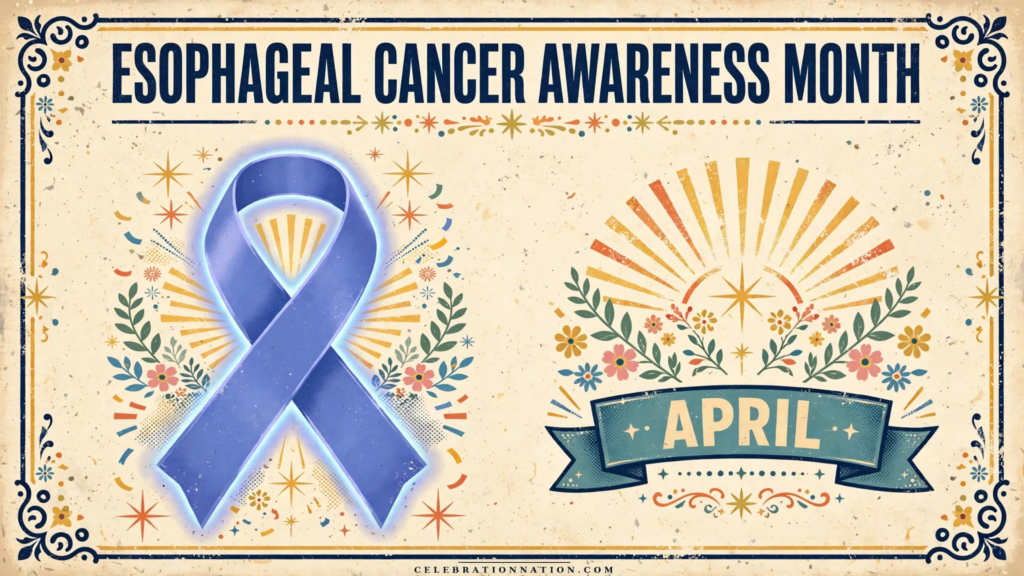
Esophageal Cancer Awareness Month
On Esophageal Cancer Awareness Month, we listen louder, learn more, and make sure no one feels invisible.
- Roots
- Founded by advocate Mindy Mintz Mordecai.
- Vibe
- A month dedicated to education, support, and advocacy.
- Hashtag
- #EsophagealCancerAwarenessMonth
Ways to celebrate
Small, doable ways to celebrate Esophageal Cancer Awareness Month.
- Share one reputable resource with your network.
- Donate to a patient-led organization working on esophageal cancer awareness.
- Check in on someone you know who's living with it.
- Book the screening or appointment you've been putting off.
- Listen more than you speak.
Fast facts
The story
Esophageal cancer, though less common than other cancers, has a profound impact on those diagnosed. It arises in the esophagus, the tube that carries food from the throat to the stomach. Unfortunately, many people are unaware of the symptoms and risk factors, which can delay diagnosis and treatment. This month, we aim to change that narrative, encouraging education and early detection to save lives.
Read the full story
Esophageal cancer is more common among men than among women. Risk factors include smoking, heavy alcohol consumption, and obesity. Additionally, conditions like gastroesophageal reflux disease (GERD) can increase the risk. Awareness is crucial; understanding these factors can lead individuals to seek help sooner.
During Esophageal Cancer Awareness Month, organizations across the nation host events to raise funds and provide support for research. Community gatherings, educational seminars, and online campaigns promote the importance of understanding this disease. Together, we can make strides toward improved detection and treatment options, this is an opportunity for everyone to contribute.
As we observe this month, we encourage everyone to engage in conversations about esophageal cancer. Sharing personal experiences or stories can help demystify the condition and foster a supportive environment. Whether through social media or community events, every effort counts in raising awareness and advocating for those affected.
Worth knowing
Get Involved
Join local organizations dedicated to raising awareness about esophageal cancer. Your participation can make a difference in the lives of those affected.
Educate Yourself
Knowledge is power. Learn about the symptoms, risk factors, and treatment options for esophageal cancer through reputable sources.
Share Stories
Personal stories can inspire and educate others. Share your journey or insights to help raise awareness about esophageal cancer.
Promote Healthy Living
Encourage healthy lifestyle choices, such as a balanced diet and regular exercise, to reduce the risk of esophageal cancer and other health issues.
Did you know?
U.S. Perspective
Esophageal cancer makes up about 1% of all cancers diagnosed in the U.S.
Dietary Influence
A low-fiber diet and a sedentary lifestyle are among the risk factors.
Survival Rates
Survival rates for esophageal cancer have improved slightly over the past few decades.
Screening Recommendations
There are currently no standard screening guidelines for esophageal cancer, making awareness crucial.
Global Impact
Esophageal cancer is more common in parts of the world such as Iran, northern China, India, and southern Africa.
Research Advances
Ongoing research is focused on improving treatment options and understanding the biology of esophageal cancer.
Support Networks
Support groups for patients and families play a critical role in coping with the challenges of a cancer diagnosis.
Around the world
Every culture celebrates a little differently.
- USUnited StatesEsophageal cancer awareness initiatives are increasing in the U.S., with a focus on early detection.
- GBUnited KingdomThe UK has also seen rising awareness campaigns, promoting research and patient support.
- CACanadaIn Canada, local charities engage in fundraising and educational efforts to combat esophageal cancer.
- AUAustraliaAustralia's health organizations are active in spreading awareness and providing resources for affected individuals.
- DEGermanyGerman hospitals and clinics emphasize the importance of screening and early detection for esophageal cancer.
- NLNetherlandsIn the Netherlands, awareness events are held to educate the public about the risks and symptoms of esophageal cancer.
Coming up next
See the calendar


Celebrate every day, all year
Official gear from the people who track 1,700+ celebrations.
Browse the shop National Day Celebration Card GameA party in a box, any day of the year.
Never miss a reason to celebrate.
One quick morning email with today's celebrations, ideas and posters. Free, unsubscribe anytime.
🎉 You're on the list! Watch your inbox for The Daily Confetti.