



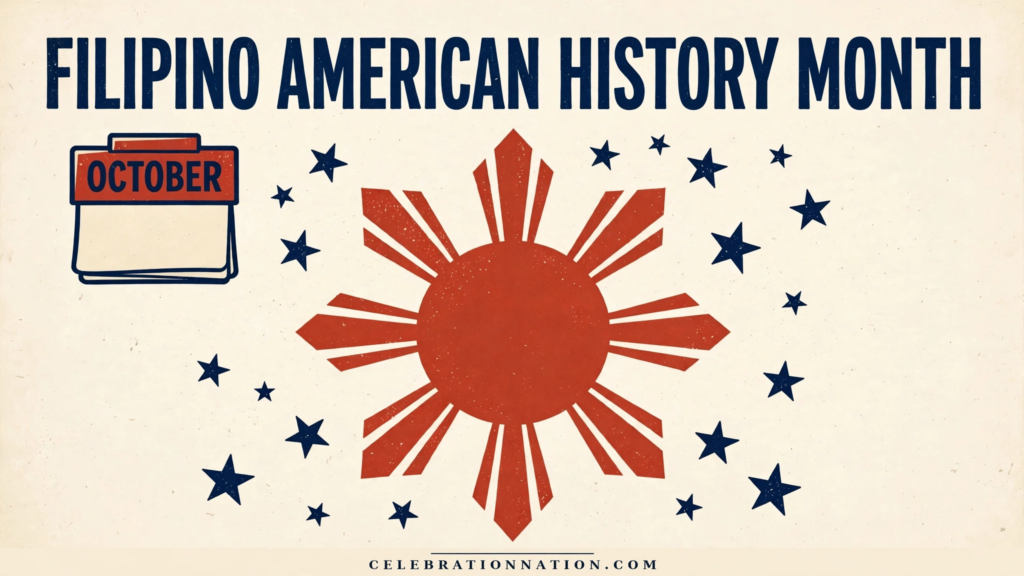
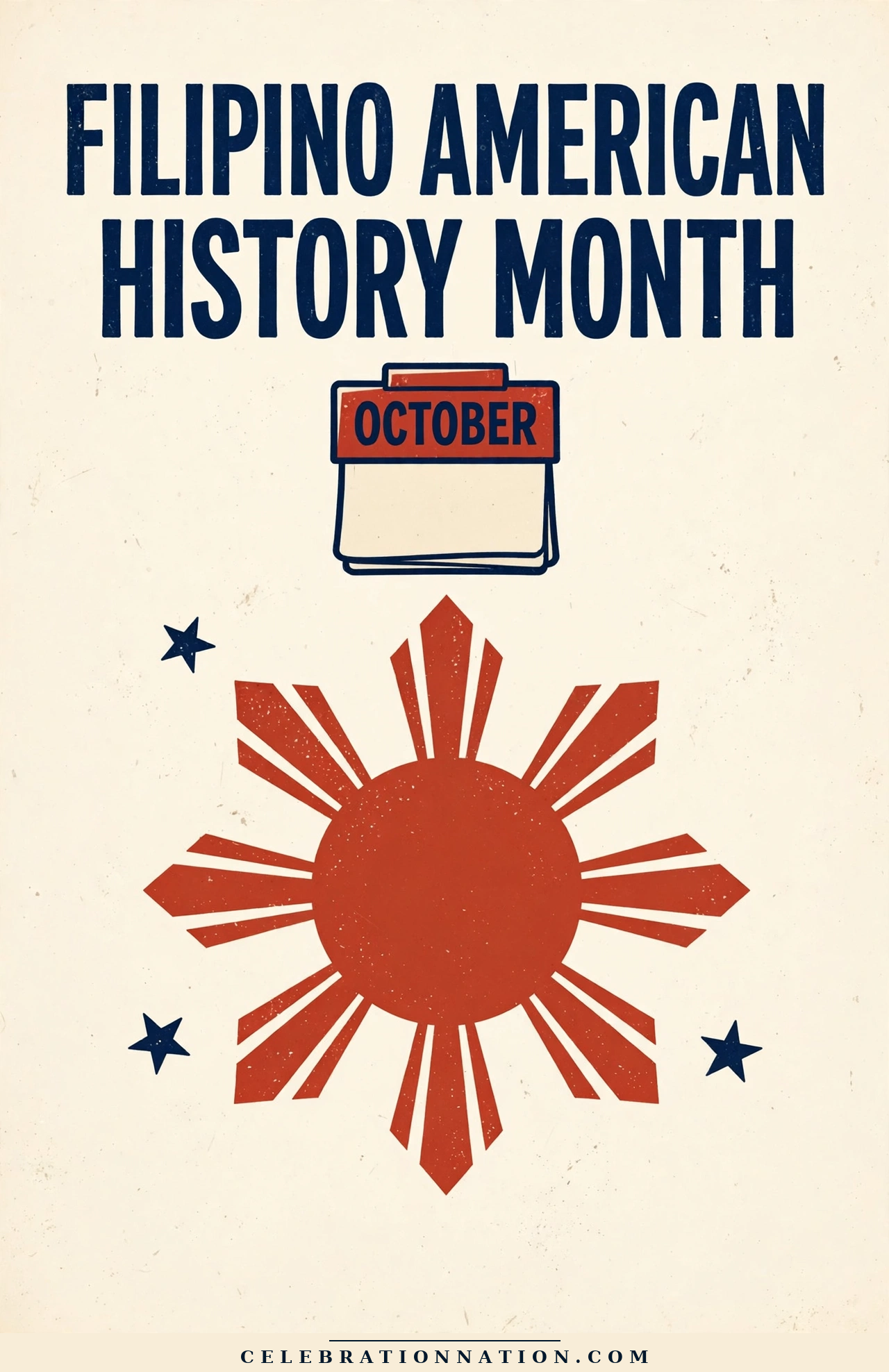
Filipino American History Month
This October, we honor the vibrant contributions of Filipino Americans, whose impact resonates throughout our society.
- Roots
- Established in 2009 by Congress
- Vibe
- A celebration of resilience, culture, and community
- Hashtag
- #FilipinoAmericanHistoryMonth
Fast facts
The story
Filipino American History Month was officially recognized in 2009, thanks to a resolution passed by the U.S. Congress. The month of October was chosen to commemorate the arrival of the first Filipinos in the United States, who landed in Morro Bay, California, in 1587. This event marked the beginning of a long and rich history of Filipino contributions to American society.
Read the full story
Throughout the years, Filipino Americans have made significant impacts in various fields, including healthcare, education, arts, and politics. Notable figures such as Dr. Jose Rizal, a national hero of the Philippines, and current leaders like Senator Tammy Duckworth highlight the diverse achievements of this community. Their stories inspire future generations to continue forging their paths in American culture.
The Filipino American experience is marked by resilience and cultural richness, stemming from a blend of traditions that reflect both Filipino roots and American values. Families often celebrate with traditional festivities that showcase music, dance, and food during this month. Events across the country serve as reminders of the vibrant heritage that Filipino Americans bring to the cultural tapestry of the United States.
As we celebrate Filipino American History Month, it is essential to recognize the ongoing contributions of Filipino Americans in shaping the nation. From the labor movement led by the Delano grape workers to contemporary achievements in various sectors, their stories are woven into the fabric of American history. This month serves as a time to reflect, educate, and uplift the Filipino American narrative.
Worth knowing
Cultural Events
Participate in local festivals celebrating Filipino culture. Events often feature traditional performances, food, and art, showcasing the vibrant heritage of the community.
Educational Resources
Explore books, documentaries, and online resources that highlight Filipino American history. Knowledge is a powerful tool for understanding and appreciation.
Filipino Cuisine
Cook and share traditional dishes like adobo or lumpia with friends and family. Food is a beautiful way to connect and celebrate cultural heritage.
Community Support
Support local Filipino American businesses and artists. Engaging with the community helps foster connections and celebrate its contributions to society.
Did you know?
First Philippine Republic
The Philippines declared independence from Spain on June 12, 1898, and established the First Philippine Republic.
Labor Movement
Filipino Americans played a crucial role in the U.S. labor movement, especially in agriculture during the 1960s.
Cultural Icons
Filipino Americans have made significant contributions to the arts, including notable figures like Lea Salonga and Bruno Mars.
Bayanihan Spirit
The concept of 'Bayanihan' reflects the Filipino value of communal unity and cooperation, often illustrated by community efforts.
Major Festivals
Filipino American festivals often include events like the Pistahan Parade and Festival in San Francisco.
Historical Migration
The first large wave of Filipino migration to the U.S. occurred in the early 20th century, primarily for work.
Cultural Heritage
Filipino culture is a blend of indigenous traditions and influences from Spanish, American, and Asian cultures.
Around the world
Every culture celebrates a little differently.
- USNorth AmericaHome to the largest Filipino American population, particularly in states like California and Hawaii.
- PHSoutheast AsiaThe Philippines is the ancestral home of many Filipino Americans, rich in culture and history.
- AUOceaniaAustralia has a growing Filipino community, contributing to its multicultural landscape.
- CACanadaCanada is home to a significant number of Filipino immigrants, especially in urban areas.
- GBEuropeThe UK and other European countries have seen an increase in Filipino migrants, particularly in healthcare.
- JPAsiaCountries like Japan have a notable presence of Filipino workers, especially in caregiving roles.
Coming up next
See the calendar

Celebrate every day, all year
Official gear from the people who track 1,700+ celebrations.
Browse the shop 2027 National Day Wall CalendarGet the 2026 edition free. 1,700+ observances.
Never miss a reason to celebrate.
One quick morning email with today's celebrations, ideas and posters. Free, unsubscribe anytime.
🎉 You're on the list! Watch your inbox for The Daily Confetti.