


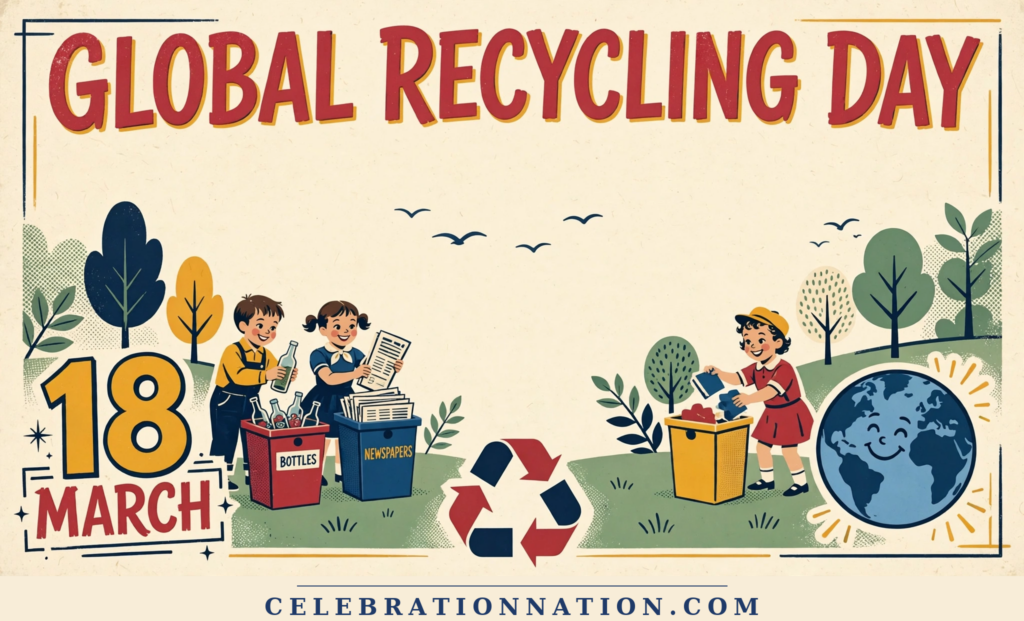
Global Recycling Day
Global Recycling Day invites everyone to take part in a shared commitment to sustainability.
- Roots
- Established in 2018 by the Global Recycling Foundation
- Vibe
- A global call to action for sustainability and environmental awareness.
- Also on Mar 18
- Awkward Moments Day · Biodiesel Day · Lacy Oatmeal Cookie Day
- Hashtag
- #GlobalRecyclingDay
3 ways to celebrate
Sort your bins
Audit your recycling bins and learn what your town actually accepts.
Do a cleanup
Pick up litter at a park or beach together this afternoon.
Start a recycling drive
Set up collection bins and challenge everyone to fill them.
Plan ahead
Global Recycling Day is observed on March 18 every year. Here is where it lands for the next ten years, handy for planners, marketers and party people.
Fast facts
The story
Global Recycling Day was established in 2018 by the Global Recycling Foundation to raise awareness about the importance of recycling. This day serves as a reminder of the critical role that recycling plays in conserving natural resources and reducing waste. Each year, communities around the world join forces to celebrate and promote recycling efforts, making it a truly global event.
Read the full story
Recycling is not just a personal responsibility; it’s a collective effort that requires participation from individuals, businesses, and governments alike. Communities are encouraged to host local events, educational workshops, and recycling drives to foster a culture of sustainability. By working together, we can increase recycling rates and decrease the amount of waste sent to landfills.
In the United States, roughly a third of municipal waste is recycled, which is an improvement, but still far from optimal. On this day, organizations and individuals are encouraged to highlight innovative recycling solutions and share success stories. These efforts not only benefit the environment but also create jobs and boost local economies.
As we observe Global Recycling Day, let us remember that every action counts. Whether it's recycling a bottle or advocating for better recycling programs in your community, your efforts contribute to a larger movement. Together, we can cultivate a sustainable future for generations to come, ensuring that our planet remains vibrant and healthy.
Did you know?
First Recycling Law
Federal waste legislation in the U.S. dates back to the 1960s.
Recycling Symbols
The recycling symbol was created in 1970 by a 23-year-old design student.
Plastic Waste
Over 300 million tons of plastic are produced annually, with a significant portion ending up in landfills.
Economic Benefits
Recycling and reuse activities contribute billions to the U.S. economy.
Global Participation
People in countries around the world take part in Global Recycling Day activities.
Electronic Waste
Only 20% of electronic waste is recycled globally, raising concerns about hazardous materials.
Historical Roots
Recycling dates back to ancient civilizations, including the Romans and Greeks.
Around the world
Every culture celebrates a little differently.
- USUnited StatesThe U.S. promotes recycling through various initiatives at the local and state levels.
- CACanadaCanada's commitment to recycling includes extended producer responsibility programs.
- GBUnited KingdomIn the UK, recycling rates have increased significantly due to public awareness campaigns.
- AUAustraliaAustralia encourages recycling with government initiatives and community programs.
- DEGermanyGermany leads the world in recycling rates, thanks to its comprehensive waste management policies.
- FRFranceFrance has implemented strict regulations to improve recycling and reduce waste.
Keep the party going
See the calendar


Celebrate every day, all year
Official gear from the people who track 1,700+ celebrations.
Browse the shop 2027 Wall Calendar, signed by Marlo AndersonSigned by the founder of National Day Calendar.
Never miss a reason to celebrate.
One quick morning email with today's celebrations, ideas and posters. Free, unsubscribe anytime.
🎉 You're on the list! Watch your inbox for The Daily Confetti.