

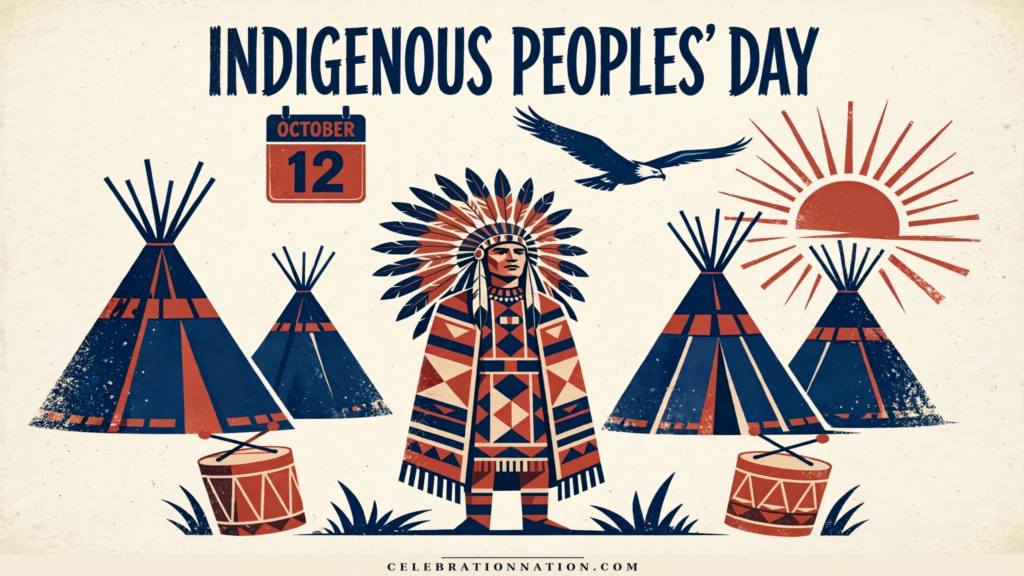
Indigenous Peoples’ Day
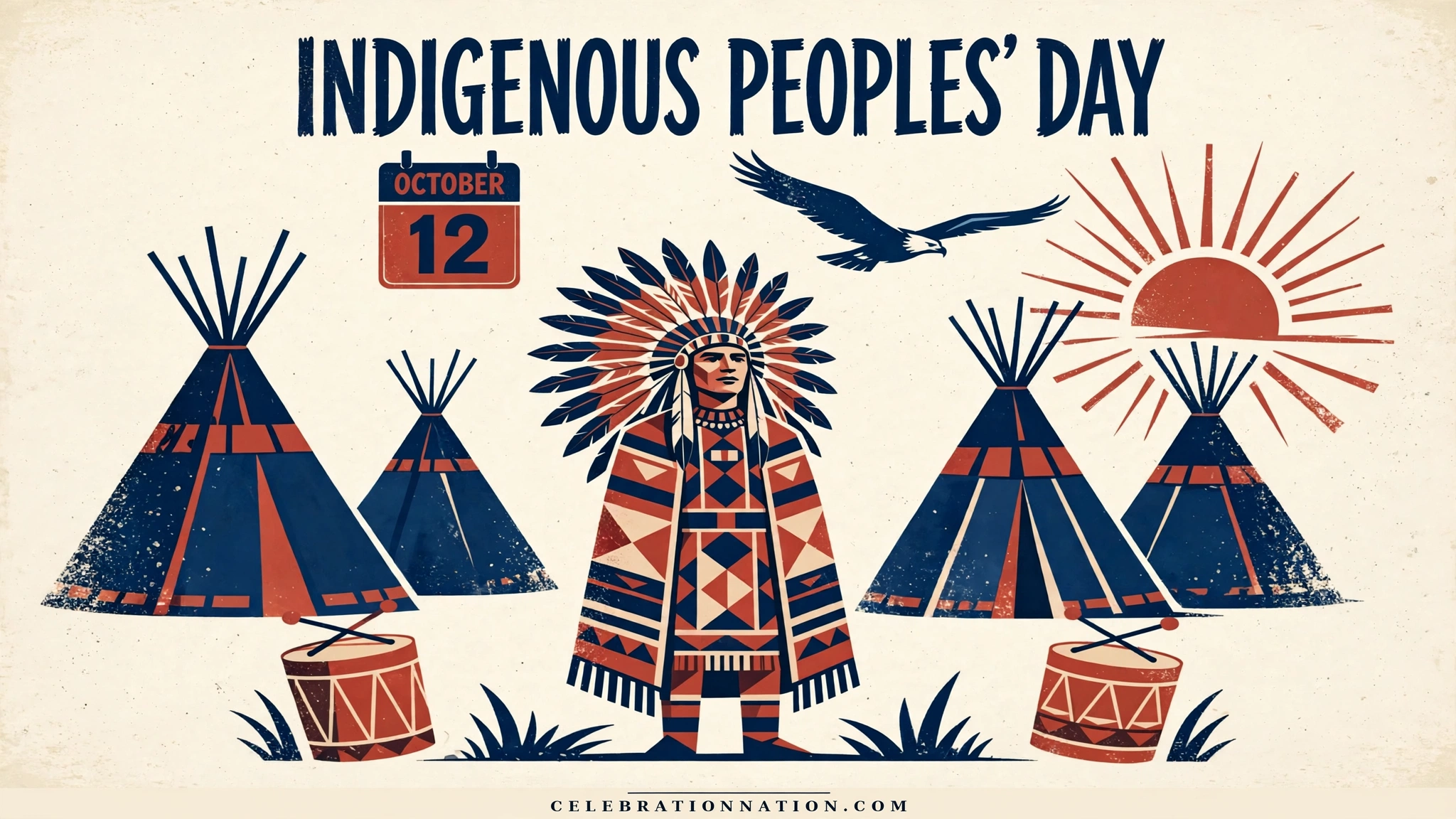
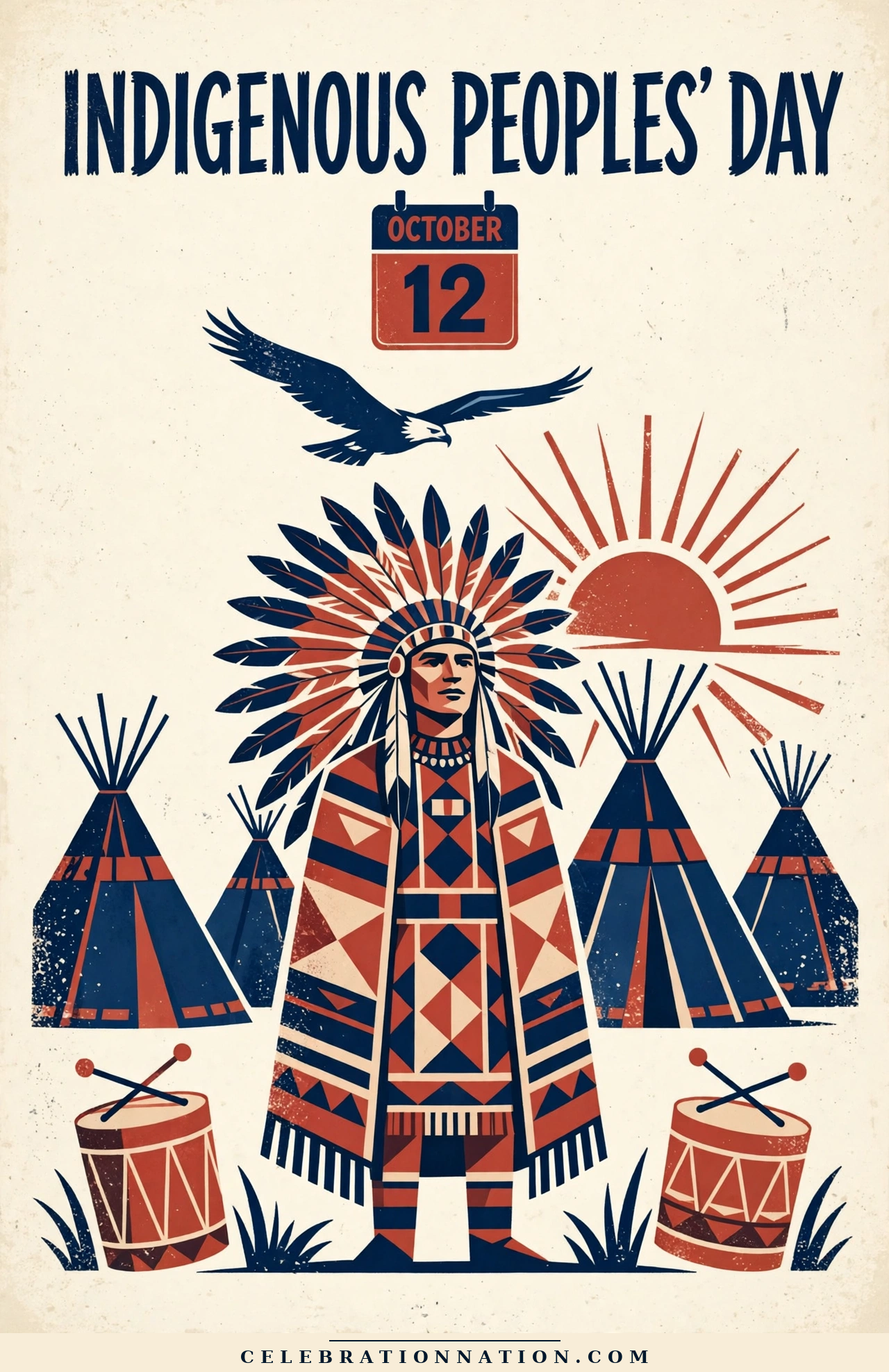
Indigenous Peoples' Day is a time to celebrate and acknowledge the resilience of Indigenous communities.
- Roots
- Proposed in 1977 at a United Nations-sponsored conference.
- Vibe
- A day of reflection, education, and celebration.
- Also on Oct 12
- World Arthritis Day · Columbus Day · Farmer’s Day
- Hashtag
- #IndigenousPeoples8217Day
3 ways to celebrate
Learn local history
Research the Indigenous peoples native to your area.
Support Indigenous artists
Buy art, books or crafts from Indigenous creators.
Share native stories
Highlight Indigenous voices in the classroom or office.
Plan ahead
Indigenous Peoples’ Day is observed on the second Monday in October. Here is where it lands for the next ten years, handy for planners, marketers and party people.
Fast facts
The story
Indigenous Peoples' Day serves as an alternative to Columbus Day, which has been a subject of controversy due to Columbus's role in the colonization and oppression of Indigenous peoples. The day encourages a shift in perspective, recognizing the resilience and contributions of Indigenous communities while confronting the historical injustices they faced. Established as a day of remembrance, it allows individuals to learn about the rich cultures that existed long before European contact.
Read the full story
The first official observance of Indigenous Peoples' Day took place in 1992, in Berkeley, California. Since then, the day has gained momentum, with numerous states and cities adopting it as a legal holiday. Activists continue to advocate for its recognition, emphasizing the importance of education about Indigenous history and culture. Local events often include cultural performances, educational workshops, and discussions on Indigenous rights.
As communities come together to celebrate, it is essential to understand the diverse experiences and histories of Indigenous peoples. These events are not just celebrations; they are opportunities to reflect on the past and advocate for justice and equality. Many organizations also use this day to highlight issues such as land rights and environmental justice, reminding us of the ongoing struggles faced by Indigenous communities.
In the spirit of Indigenous Peoples' Day, individuals are encouraged to engage in meaningful conversations and actions that support Indigenous rights. Whether it’s attending local events, reading literature by Indigenous authors, or sharing resources online, there are numerous ways to honor the day. By fostering understanding and respect, we can contribute to a more inclusive society that acknowledges the contributions and significance of Indigenous peoples.
Did you know?
Cultural Significance
Indigenous Peoples' Day promotes awareness of the rich cultural heritage that exists across Native communities.
Historical Context
The day acknowledges the impact of colonization on Indigenous populations and advocates for reparative justice.
Educational Focus
Many educational institutions use this day to teach students about Indigenous histories and cultures.
Art and Expression
Art created by Indigenous peoples is often showcased during celebrations, highlighting traditional techniques and modern interpretations.
Resilience and Survival
The observance underscores the resilience of Indigenous peoples, who continue to thrive despite historical challenges.
Global Recognition
Indigenous Peoples' Day is celebrated in various forms around the globe, reflecting a growing recognition of Indigenous rights.
Community Engagement
Local communities often organize events that foster dialogue and understanding between Indigenous and non-Indigenous peoples.
Around the world
Every culture celebrates a little differently.
- USUnited StatesMany states honor Indigenous Peoples' Day, with celebrations reflecting local Indigenous cultures.
- CACanadaCanada observes National Indigenous Peoples Day on June 21, celebrating the heritage and contributions of First Nations, Inuit, and Métis peoples.
- MXMexicoMexico recognizes Indigenous cultures through various events that highlight the country's rich Indigenous heritage.
- BRBrazilBrazil marks Dia dos Povos Indígenas each April 19 with events promoting awareness of Indigenous rights.
- AUAustraliaAustralia observes NAIDOC Week each July to celebrate the history and culture of Aboriginal and Torres Strait Islander peoples.
- EUEuropean UnionVarious EU countries celebrate Indigenous cultures, recognizing their historical significance and promoting cultural diversity.
Keep the party going
See the calendar

Celebrate every day, all year
Official gear from the people who track 1,700+ celebrations.
Browse the shop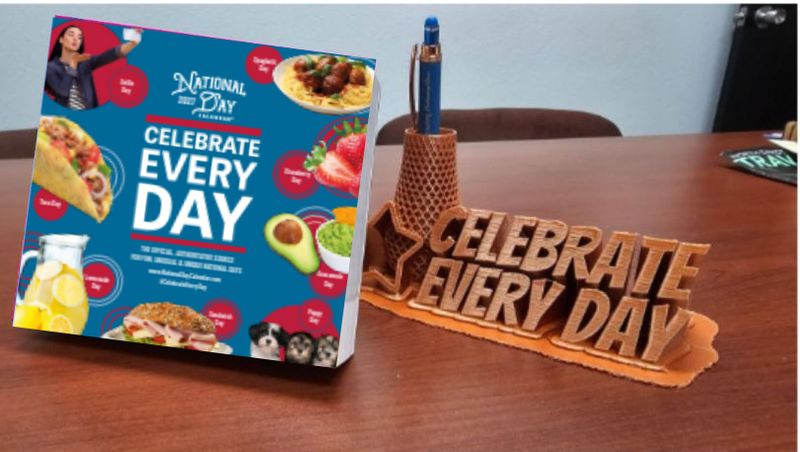 2027 National Day Desk CalendarA new celebration every morning. Daily tear-off.
Never miss a reason to celebrate.
One quick morning email with today's celebrations, ideas and posters. Free, unsubscribe anytime.
🎉 You're on the list! Watch your inbox for The Daily Confetti.