





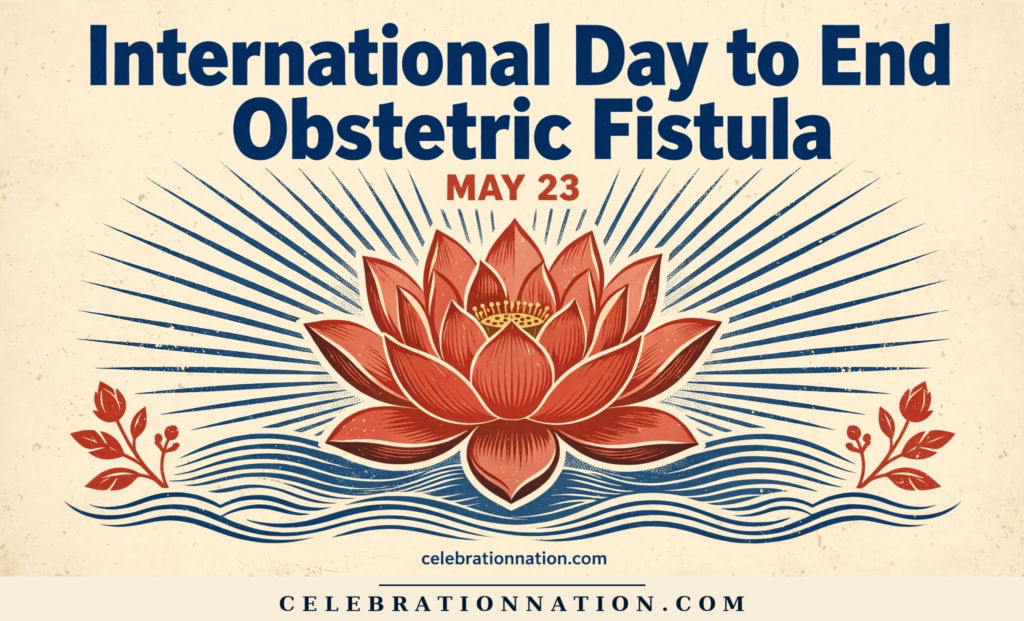
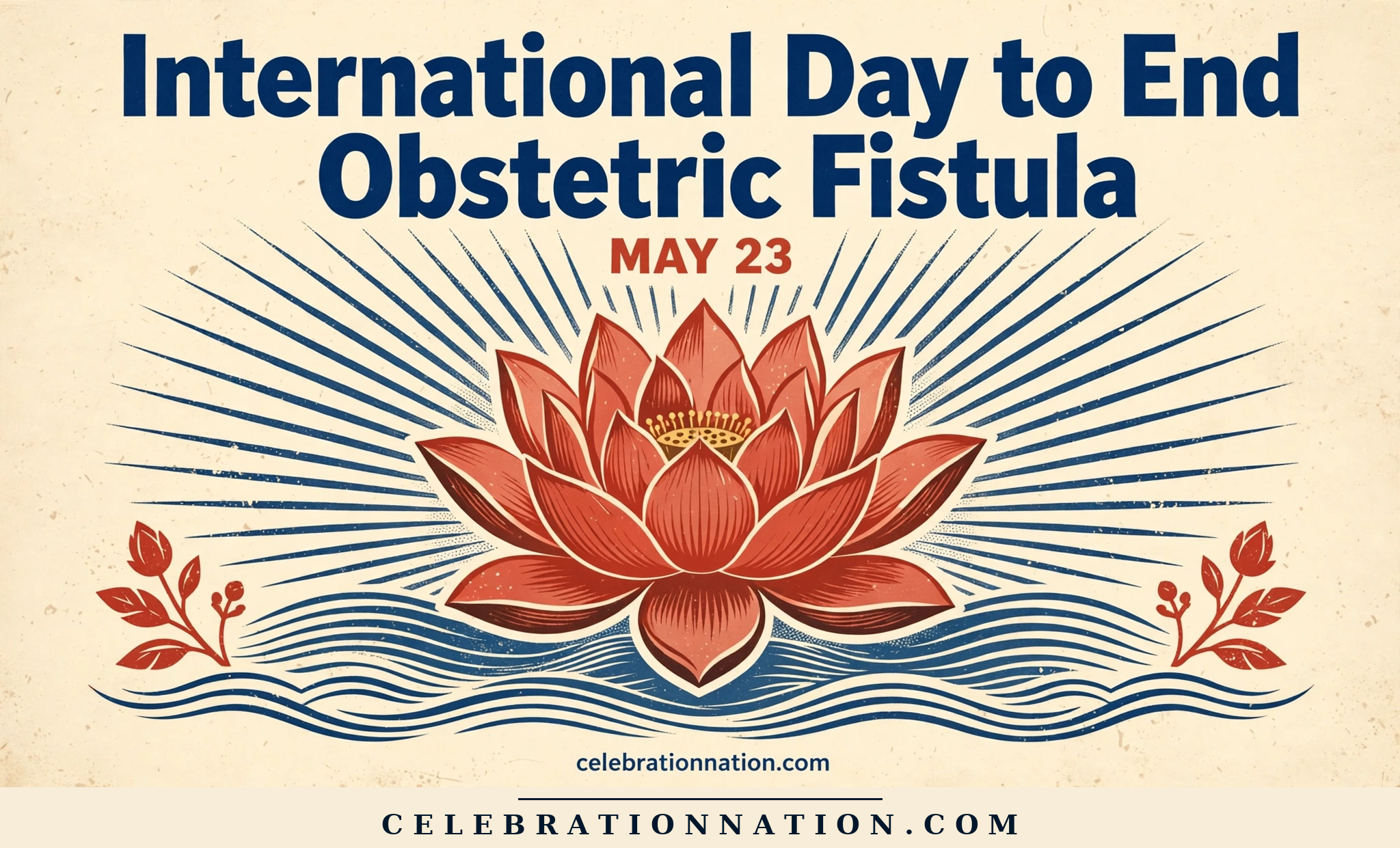
International Day to End Obstetric Fistula
International Day to End Obstetric Fistula isn't about diagnosis — it's about dignity. About showing up, showing support, and pushing for change.
- Roots
- Established by the United Nations in 2013
- Vibe
- Awareness and advocacy for women's health
- Also on May 23
- Lucky Penny Day · Taffy Day
- Hashtag
- #InternationalDayToEndObstetricFistula
Ways to celebrate
Small, doable ways to celebrate International Day to End Obstetric Fistula.
- Share one reputable resource with your network.
- Donate to a patient-led organization working on day to end obstetric fistula.
- Check in on someone you know who's living with it.
- Book the screening or appointment you've been putting off.
- Listen more than you speak.
Make it your kind of celebration
Family
Have the real conversation at the table — stigma-free, no lecture.
Kids
Answer questions honestly and age-appropriately.
Couples
Check in with each other's appointments, screenings, and follow-ups.
Office
Share vetted resources and encourage people to use their benefits.
School
Bring in an expert, survivor, or advocate to speak for a class period.
Community
Run a donation drive, a walk, or a listening session for those affected.
Just me
Reach out to someone you know is living with it. Ask how they're doing for real.
Plan ahead
International Day to End Obstetric Fistula is observed on May 23 every year. Here is where it lands for the next ten years, handy for planners, marketers and party people.
Fast facts
The story
Obstetric fistula is a severe condition that arises during childbirth, often due to prolonged labor without access to timely medical intervention. Women suffering from this condition often face stigma and isolation, compounding their health challenges. The International Day to End Obstetric Fistula, celebrated annually on May 23, aims to shed light on this issue and advocate for the rights of affected women worldwide.
Read the full story
The day not only raises awareness but also calls for action to ensure that all women have access to quality maternal healthcare. In many parts of the world, particularly in low-income countries, obstetric fistula remains a significant public health issue. Education and advocacy are crucial in mobilizing communities to address the barriers that lead to fistula, including lack of access to skilled birth attendants and emergency obstetric care.
Various organizations work tirelessly to combat obstetric fistula. They provide medical treatment, rehabilitation, and social reintegration for women affected. Their efforts underscore the importance of comprehensive healthcare access and support systems that empower women to reclaim their lives. Communities are encouraged to engage in discussions and initiatives that promote maternal health rights.
As we observe this day, it is essential to remember that obstetric fistula is preventable and treatable. By raising awareness and supporting policies that prioritize maternal health, we can collectively work towards a future where no woman suffers from this condition. The fight against obstetric fistula is a fight for dignity, health, and rights.
Did you know?
Historical Context
Obstetric fistula has been documented for centuries, yet it remains a significant issue in modern healthcare.
Treatment
Surgical repair is the main treatment for obstetric fistula, with high success rates.
Cultural Stigma
Women with fistula often face social stigma, making recovery and reintegration challenging.
Global Initiatives
Various international agencies focus on maternal health, including WHO and UNFPA.
Education Importance
Educating communities about safe childbirth practices can prevent fistula cases.
Personal Stories
Sharing stories of women affected by fistula helps humanize this public health issue.
Future Goals
The aim is to eliminate obstetric fistula by improving healthcare access and education.
Around the world
Every culture celebrates a little differently.
- USUnited StatesIn the U.S., awareness days like this highlight the importance of maternal health.
- UGUgandaUganda has made strides in addressing fistula, but challenges remain in rural areas.
- INIndiaIndia has numerous initiatives aimed at eliminating obstetric fistula through education and healthcare access.
- KEKenyaKenya's healthcare system is focusing on reducing maternal mortality and improving care for fistula patients.
- ZASouth AfricaSouth Africa is working to raise awareness and provide treatment for obstetric fistula.
- VNVietnamVietnam is addressing maternal health issues through community health initiatives.
Keep the party going
See the calendar



Celebrate every day, all year
Official gear from the people who track 1,700+ celebrations.
Browse the shop 2027 Wall + Desk Calendar BundleCelebrate every day at home and at work.
Never miss a reason to celebrate.
One quick morning email with today's celebrations, ideas and posters. Free, unsubscribe anytime.
🎉 You're on the list! Watch your inbox for The Daily Confetti.