



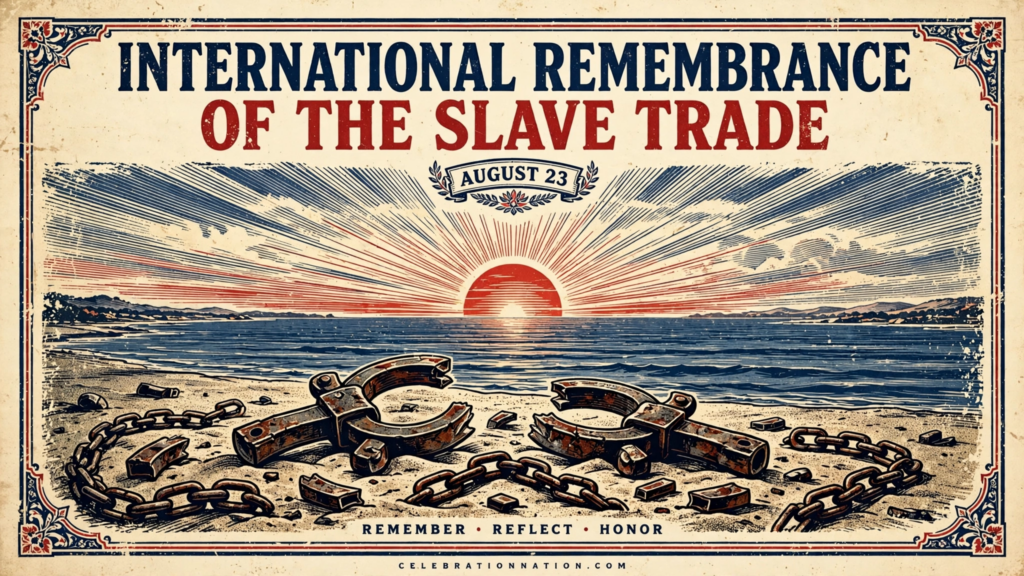
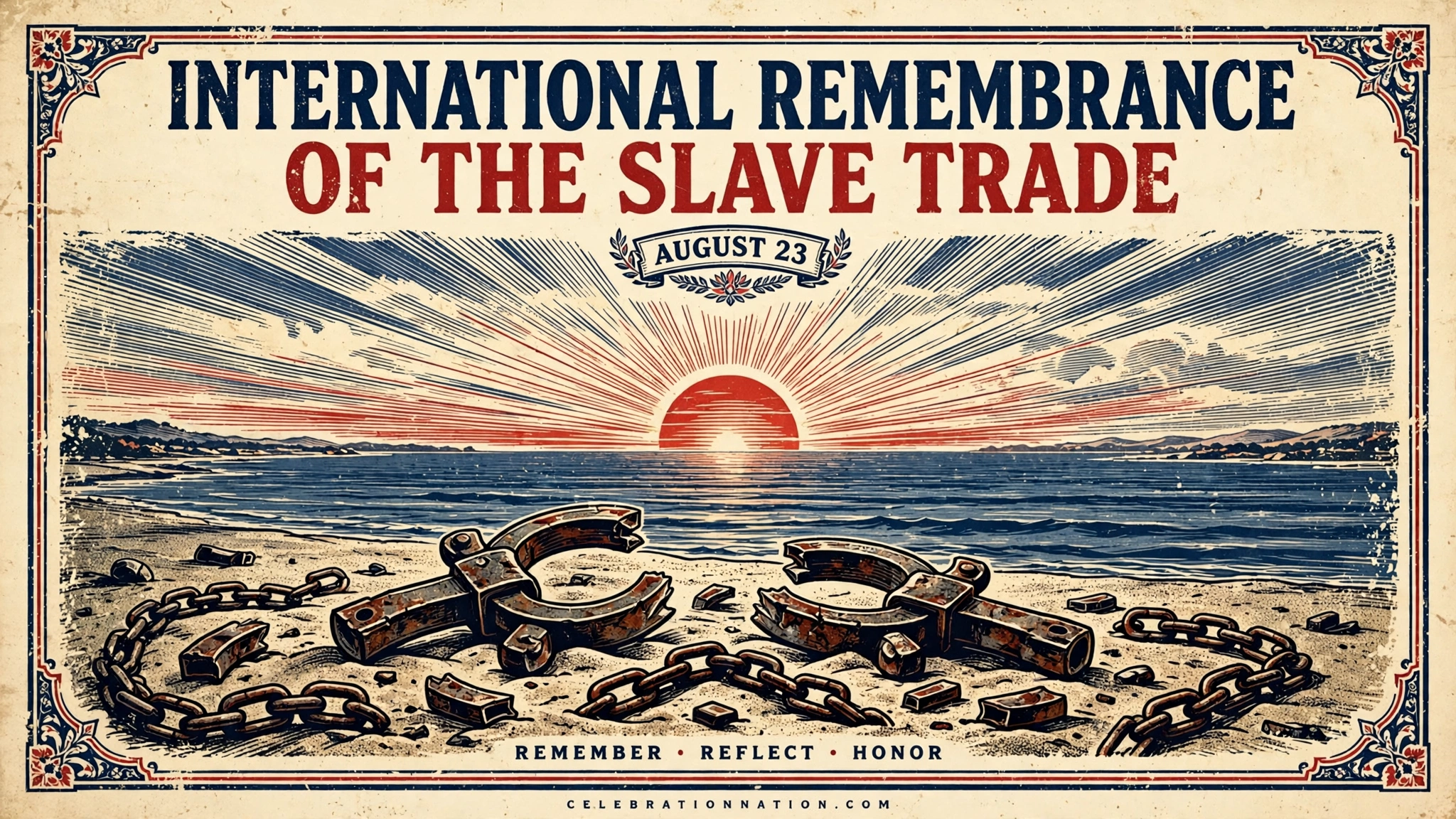
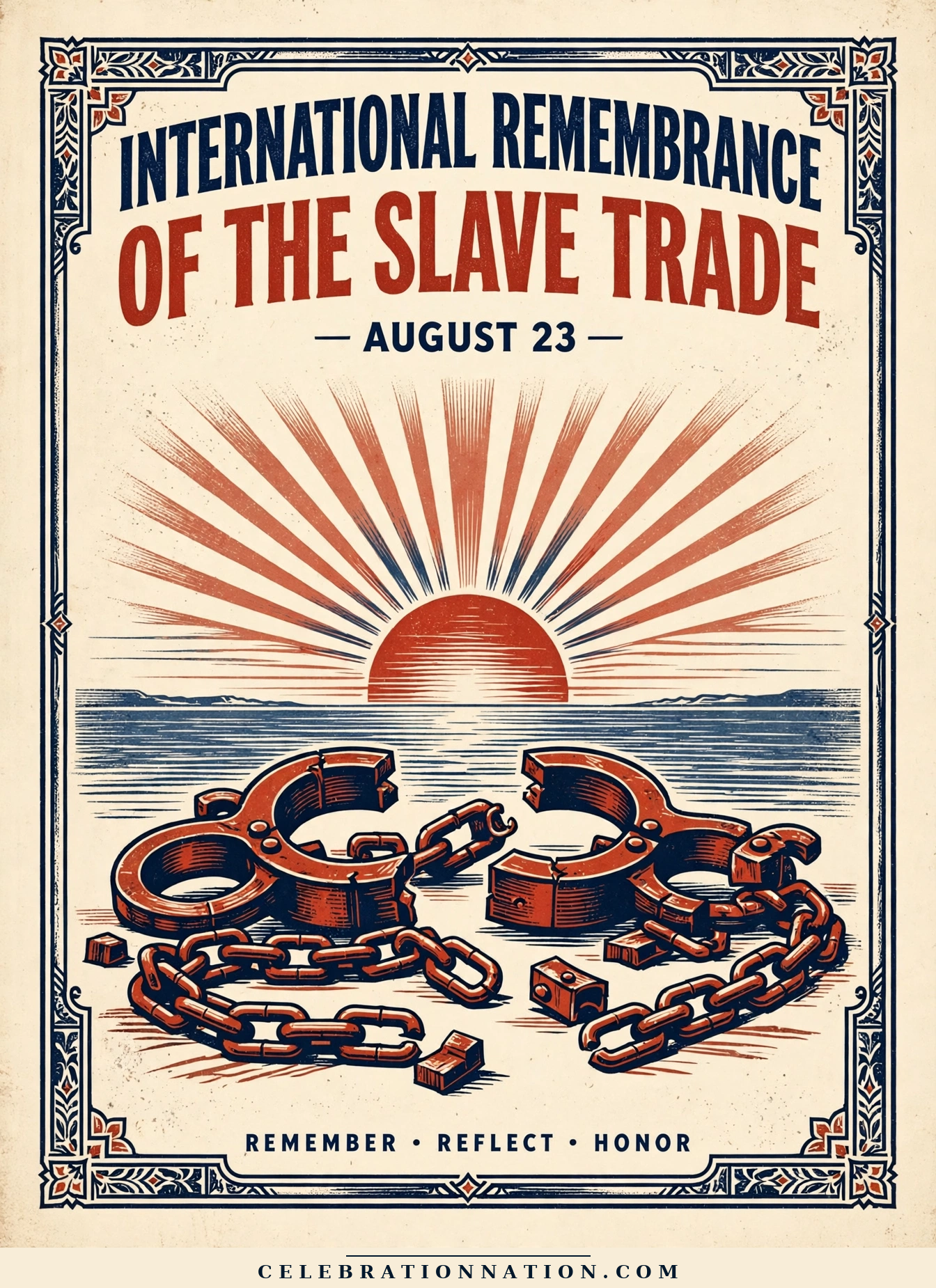
International Remembrance of the Slave Trade
This day serves as a powerful reminder of the painful legacy of the slave trade.
- Roots
- Established by UNESCO in 1997
- Vibe
- A solemn and reflective observance worldwide.
- Also on Aug 23
- Black Ribbon Day · Find Your Inner Nerd Day · Cuban Sandwich Day
- Hashtag
- #InternationalRemembranceOfTheSlaveTrade
3 ways to celebrate
Read firsthand accounts
Learn from the writings of people who lived through enslavement.
Visit a memorial together
Tour a museum or memorial site and reflect on what you learn.
Share educational resources
Post books and documentaries that teach this history.
Plan ahead
International Remembrance of the Slave Trade is observed on August 23 every year. Here is where it lands for the next ten years, handy for planners, marketers and party people.
Fast facts
The story
The International Remembrance of the Slave Trade is a poignant observance that prompts individuals and communities to reflect on the atrocities committed during the transatlantic slave trade. This day, celebrated annually on August 23, was established by UNESCO in 1997 to honor the memory of those who suffered and to educate future generations about the impacts of slavery. It serves as a reminder of the resilience of those who endured unimaginable hardships.
Read the full story
The transatlantic slave trade forcibly displaced over 12 million Africans from their homes between the 16th and 19th centuries, leading to a profound cultural and social impact across the Americas and beyond. As families were torn apart and cultures were suppressed, the legacy of this dark chapter in history remains deeply felt today. The observance encourages reflection on the importance of acknowledging this past as a means to foster understanding and healing.
In the United States, the effects of the slave trade are still evident in systemic inequalities and cultural dynamics. Educational institutions, communities, and individuals are encouraged to participate in activities that promote awareness and understanding. By engaging in dialogue and learning about this history, we can better appreciate the struggles and contributions of those affected by slavery.
As we commemorate this day, it is essential to not only remember the past but also to advocate for social justice and equality. Supporting organizations that focus on racial equity, participating in discussions, and educating ourselves about the ongoing impact of this history can contribute to a more just society. In remembrance, we honor the resilience of those who suffered and pledge to continue the fight against racism and injustice.
Did you know?
First Slave Ships
The first recorded slave ship to reach English North America was the White Lion in 1619.
Abolition Movements
Abolition movements gained momentum in the 18th and 19th centuries, advocating for the end of slavery.
Cultural Heritage
Many cultural practices in the Americas have roots in African traditions brought by enslaved people.
UNESCO's Role
UNESCO's designation of August 23 as a day of remembrance highlights global recognition of this history.
Legacy of Resistance
Resistance against slavery took many forms, including revolts, escapes, and cultural preservation.
Transatlantic Routes
Slave ships traveled the brutal Middle Passage, often facing high mortality rates among captives.
Ongoing Impact
The legacy of slavery continues to affect social and economic structures in modern societies.
Around the world
Every culture celebrates a little differently.
- USUnited StatesCommemorations often include educational programs and community discussions.
- GBUnited KingdomEvents are organized to educate about the historical context and its modern implications.
- CACanadaRemembrance activities focus on acknowledging the contributions of Black Canadians.
- HTHaitiHaiti's history of revolution against slavery is celebrated in remembrance.
- BRBrazilBrazil recognizes the cultural contributions of African descendants, honoring their history.
- DODominican RepublicReflective events highlight the impact of the slave trade on Dominican culture.
Keep the party going
See the calendar

Celebrate every day, all year
Official gear from the people who track 1,700+ celebrations.
Browse the shop National Day Celebration Card GameA party in a box, any day of the year.
Never miss a reason to celebrate.
One quick morning email with today's celebrations, ideas and posters. Free, unsubscribe anytime.
🎉 You're on the list! Watch your inbox for The Daily Confetti.