


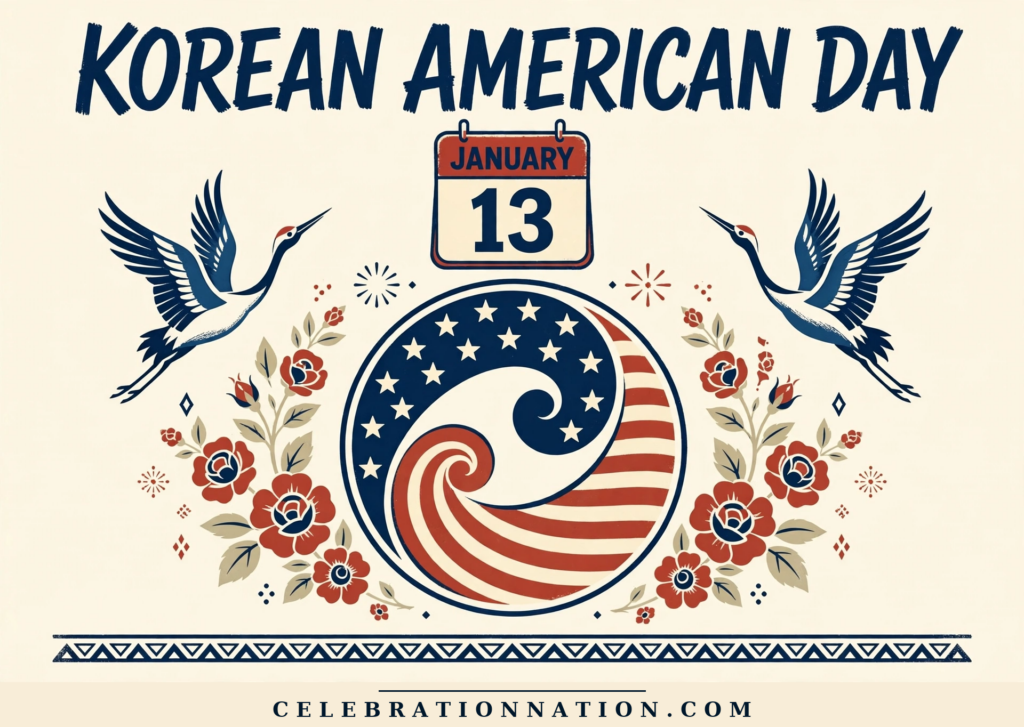
Korean American Day
Korean American Day is a time to honor the enduring contributions of Korean Americans to our nation.
- Roots
- Recognized in 2005 by the U.S. Congress
- Vibe
- A celebration of cultural exchange and community building
- Also on Jan 13
- Stephen Foster Memorial Day · Peach Melba Day · Rubber Ducky Day
- Hashtag
- #KoreanAmericanDay
3 ways to celebrate
Cook a Korean dish
Try bulgogi, bibimbap or kimchi pancakes from a trusted recipe.
Korean feast night
Order or cook a spread and share it family-style.
Share a story
Learn about a Korean American figure and share their story.
Plan ahead
Korean American Day is observed on January 13 every year. Here is where it lands for the next ten years, handy for planners, marketers and party people.
Fast facts
The story
Korean American Day is an annual observance that commemorates the arrival of the first Korean immigrants to the United States in 1903. This day serves as a reminder of the contributions that Korean Americans have made to the cultural, economic, and social fabric of the nation. It highlights the resilience and spirit of those who sought a better life in America.
Read the full story
The first significant wave of Korean immigration occurred during the early 20th century, driven by economic hardship and political unrest in Korea. The initial group of 102 immigrants settled in Hawaii, where they worked on sugar plantations. This migration laid the groundwork for future generations of Korean Americans who would continue to enrich the community.
In the decades that followed, Korean Americans have made significant strides in various fields, from business to the arts. Today, the community continues to thrive, with a strong presence in cities like Los Angeles, New York, and Washington, D.C. This vibrant cultural exchange is celebrated on Korean American Day, showcasing the importance of cultural diversity.
As we observe Korean American Day, it's crucial to reflect on the stories and experiences that shape this community. Celebrations often include food, music, and cultural events that foster understanding and appreciation. By honoring Korean American history, we embrace the rich tapestry of our nation's multicultural identity.
Did you know?
First Korean Immigrants
The first group of Korean immigrants arrived in the U.S. in 1903.
Major Cities
Los Angeles has one of the largest Korean populations outside of Korea.
Cultural Contributions
Korean Americans have significantly influenced the U.S. culinary scene with dishes like kimchi.
K-Pop Phenomenon
The global rise of K-Pop has helped elevate Korean culture worldwide.
Korean Language
Hangul, the Korean alphabet, was created in the 15th century and is celebrated for its simplicity.
Korean War Impact
The Korean War significantly affected Korean American families and their stories.
Festivals
Korean American Day often coincides with various cultural festivals across the U.S.
Around the world
Every culture celebrates a little differently.
- KRSouth KoreaThe homeland of many Korean Americans, South Korea has a rich history and vibrant culture.
- USUnited StatesHome to about 2 million Korean Americans, the U.S. is where diverse cultures converge.
- AUAustraliaA growing community of Korean Australians adds to the multicultural fabric of Australia.
- CACanadaCanada hosts a significant Korean population, particularly in urban centers.
- GBUnited KingdomThe UK has a vibrant Korean community, contributing to its cultural diversity.
- BRBrazilA smaller Korean community exists in Brazil, showcasing the global reach of Korean culture.
Keep the party going
See the calendar



Celebrate every day, all year
Official gear from the people who track 1,700+ celebrations.
Browse the shop 2027 Wall Calendar, signed by Marlo AndersonSigned by the founder of National Day Calendar.
Never miss a reason to celebrate.
One quick morning email with today's celebrations, ideas and posters. Free, unsubscribe anytime.
🎉 You're on the list! Watch your inbox for The Daily Confetti.