





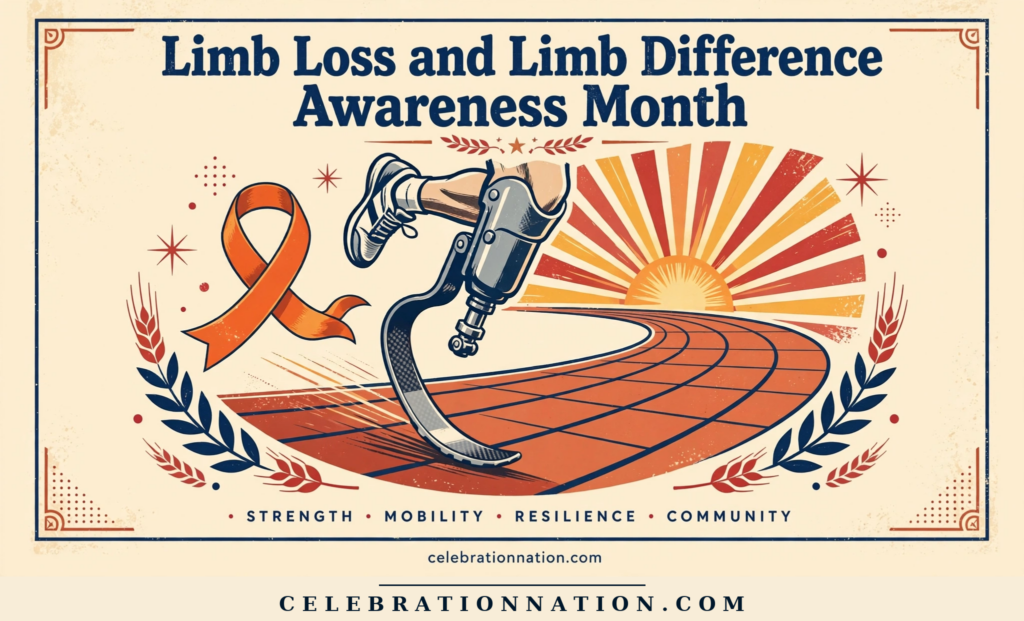
Limb Loss and Limb Difference Awareness Month
On Limb Loss and Limb Difference Awareness Month, we listen louder, learn more, and make sure no one feels invisible.
- Roots
- Established in 2010 by the Amputee Coalition
- Vibe
- A month of awareness, education, and community support.
- Hashtag
- #LimbLossAndLimbDifferenceAwarenessMonth
Ways to celebrate
Small, doable ways to celebrate Limb Loss and Limb Difference Awareness Month.
- Share one reputable resource with your network.
- Donate to a patient-led organization working on limb loss and limb difference awareness.
- Check in on someone you know who's living with it.
- Book the screening or appointment you've been putting off.
- Listen more than you speak.
Fast facts
The story
Limb Loss and Limb Difference Awareness Month, observed every April, serves as a crucial opportunity to shed light on the experiences of individuals living with limb differences. This observance not only promotes awareness but also fosters community support and understanding. The Amputee Coalition, the driving force behind this initiative, aims to empower individuals and their families through education and advocacy.
Read the full story
Limb loss can occur due to various reasons, including trauma, disease, and congenital conditions. Each story is unique, and while challenges abound, many individuals demonstrate remarkable resilience. Throughout this month, numerous events and activities across the country aim to highlight these stories, bringing together communities in support of those facing limb loss.
As we reflect on the journeys of those with limb differences, it is essential to acknowledge the importance of inclusion. Organizations and individuals alike engage in outreach efforts to educate the public, promoting understanding and acceptance. By sharing experiences, we can break down barriers and foster a sense of belonging within society.
Advocacy plays a critical role in improving the lives of those affected by limb loss. From advancements in prosthetic technology to better healthcare access, awareness can lead to meaningful change. As we observe Limb Loss and Limb Difference Awareness Month, let us commit to supporting individuals with limb differences and celebrating their contributions to our communities.
Worth knowing
Community Support
Engaging with local organizations helps build a supportive environment for those with limb differences. Get involved and make a difference.
Educational Resources
Explore books, documentaries, and online resources to deepen your understanding of limb loss and the experiences of those affected.
Global Awareness
Limb differences are a worldwide issue. Learn about international initiatives that enhance support and awareness around the globe.
Creative Expression
Encourage artistic outlets for individuals with limb differences to express their thoughts and feelings, fostering healing and community connection.
Did you know?
First Amputation
The first recorded amputation dates back to approximately 31,000 years ago.
Prosthetic History
The earliest known prosthetic device was found in ancient Egypt, made of wood.
Modern Prosthetics
Advancements in technology have significantly improved the functionality of modern prosthetics.
Preventable Amputations
More than half of the amputations that occur each year in the U.S. are preventable.
Limb Difference Types
Limb differences can be congenital (present at birth) or acquired through injury or illness.
Youth Amputations
Limb loss and limb difference affect people of all ages, including children.
Awareness Impact
Increased awareness can lead to improved healthcare policies and support systems.
Around the world
Every culture celebrates a little differently.
- USUnited StatesHome to numerous organizations dedicated to limb health and support.
- GBUnited KingdomThe UK hosts various events and campaigns promoting awareness and inclusion.
- CACanadaCanadian advocacy groups work tirelessly to enhance support for individuals with limb differences.
- AUAustraliaAustralia's limb health initiatives focus on both education and community engagement.
- DEGermanyGermany fosters innovation in prosthetic technology and support networks.
- FRFranceFrench organizations emphasize awareness and inclusivity for individuals with limb differences.
Coming up next
See the calendar


Celebrate every day, all year
Official gear from the people who track 1,700+ celebrations.
Browse the shop 2027 Wall Calendar, signed by Marlo AndersonSigned by the founder of National Day Calendar.
Never miss a reason to celebrate.
One quick morning email with today's celebrations, ideas and posters. Free, unsubscribe anytime.
🎉 You're on the list! Watch your inbox for The Daily Confetti.