




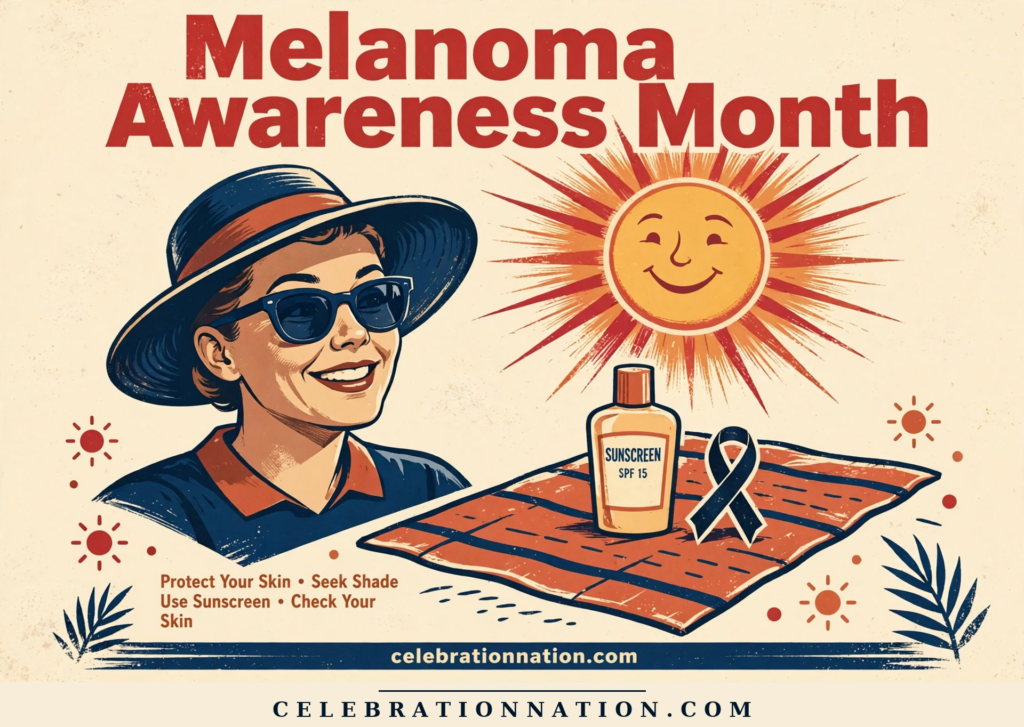
Melanoma Awareness Month
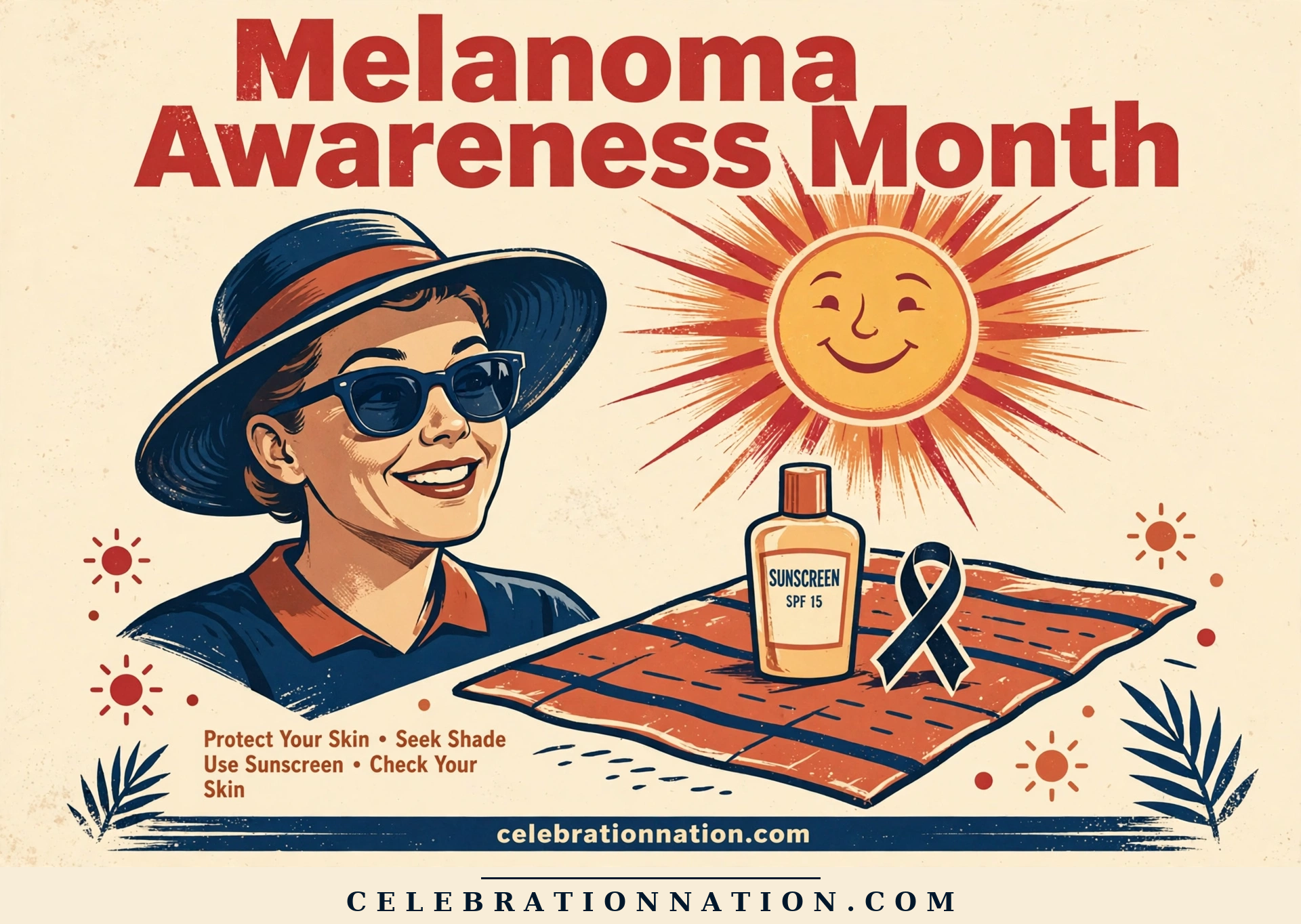
Melanoma Awareness Month isn't about diagnosis — it's about dignity. About showing up, showing support, and pushing for change.
- Roots
- Established to increase awareness and education on melanoma.
- Vibe
- Promoting sun safety and regular skin checks is vital.
- Hashtag
- #MelanomaAwarenessMonth
Ways to celebrate
Small, doable ways to celebrate Melanoma Awareness Month.
- Share one reputable resource with your network.
- Donate to a patient-led organization working on melanoma awareness.
- Check in on someone you know who's living with it.
- Book the screening or appointment you've been putting off.
- Listen more than you speak.
Fast facts
The story
Melanoma Awareness Month, observed every May, highlights the importance of skin health and proactive measures against skin cancer. Melanoma, the most serious form of skin cancer, can be deadly if not detected early. It is essential for individuals to educate themselves about risk factors and preventive strategies, especially as rates continue to rise in the United States.
Read the full story
The month-long observance encourages regular skin examinations, awareness campaigns, and community involvement. Organizations like the American Academy of Dermatology and the Skin Cancer Foundation provide resources for individuals to learn about melanoma and skin protection. These initiatives aim to foster awareness and promote healthier habits, such as using sunscreen and wearing protective clothing.
A strong emphasis is placed on educating the public about the ABCDEs of melanoma detection: Asymmetry, Border, Color, Diameter, and Evolving. Recognizing these signs can lead to earlier detection and better outcomes. Community events, such as free skin screenings, are often organized to provide individuals with access to professional evaluations.
As we observe Melanoma Awareness Month, it is crucial to engage in discussions about skin health and the impact of UV exposure. Taking proactive measures, like staying informed and spreading awareness, can lead to a healthier community. Together, we can make strides in reducing melanoma rates and ensuring that everyone has the knowledge to protect themselves.
Worth knowing
Understanding Melanoma
Melanoma is a type of skin cancer that arises from melanocytes, the cells that produce pigment. Awareness is vital for early detection and treatment.
Get Screened
Regular skin checks by a dermatologist can help catch melanoma early. Schedule your appointment this month to prioritize your skin health.
Educate Yourself
Learn about the risk factors of melanoma, including UV exposure and family history. Knowledge can empower you to take action.
Global Impact
Melanoma is not just a national issue; it affects people worldwide. Join global efforts to raise awareness and promote sun safety.
Did you know?
Melanoma's Growth
Some melanomas can change quickly, so new or changing spots should be checked promptly.
Tanning Beds Risk
People who first use a tanning bed before age 35 increase their melanoma risk by 75%.
Skin Types
Fair-skinned individuals are at a higher risk for developing melanoma.
Sunburns Matter
On average, having more than five sunburns doubles a person's melanoma risk.
Genetic Factors
Certain genetic mutations can significantly increase melanoma risk.
Men at Risk
From age 50 on, significantly more men develop melanoma than women.
Survival Rates
The five-year survival rate for melanoma detected early is over 99%.
Around the world
Every culture celebrates a little differently.
- USUnited StatesHome to numerous melanoma awareness initiatives and events throughout May.
- AUAustraliaOne of the countries with the highest rates of melanoma, emphasizing sun safety education.
- GBUnited KingdomPromotes skin health awareness, particularly in sunny months.
- CACanadaEngages in community screenings and awareness efforts for skin cancer.
- NZNew ZealandFocuses on preventing skin cancer through public health campaigns.
- DEGermanyParticipates in melanoma awareness events and educational programs.
Coming up next
See the calendar


Celebrate every day, all year
Official gear from the people who track 1,700+ celebrations.
Browse the shop 2027 National Day Wall CalendarGet the 2026 edition free. 1,700+ observances.
Never miss a reason to celebrate.
One quick morning email with today's celebrations, ideas and posters. Free, unsubscribe anytime.
🎉 You're on the list! Watch your inbox for The Daily Confetti.