




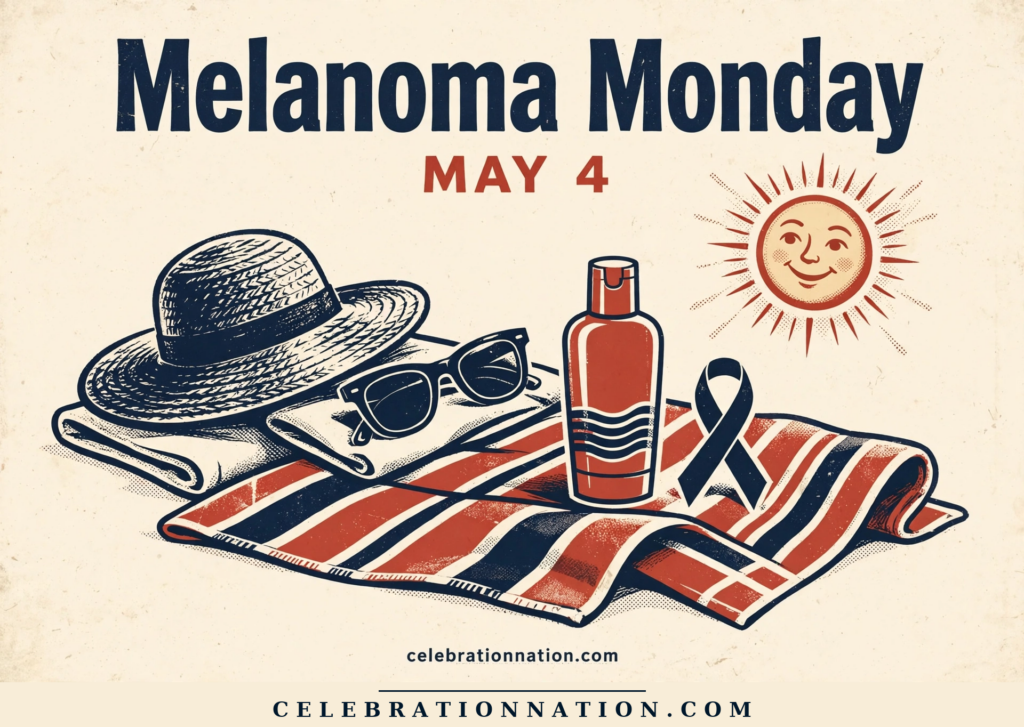
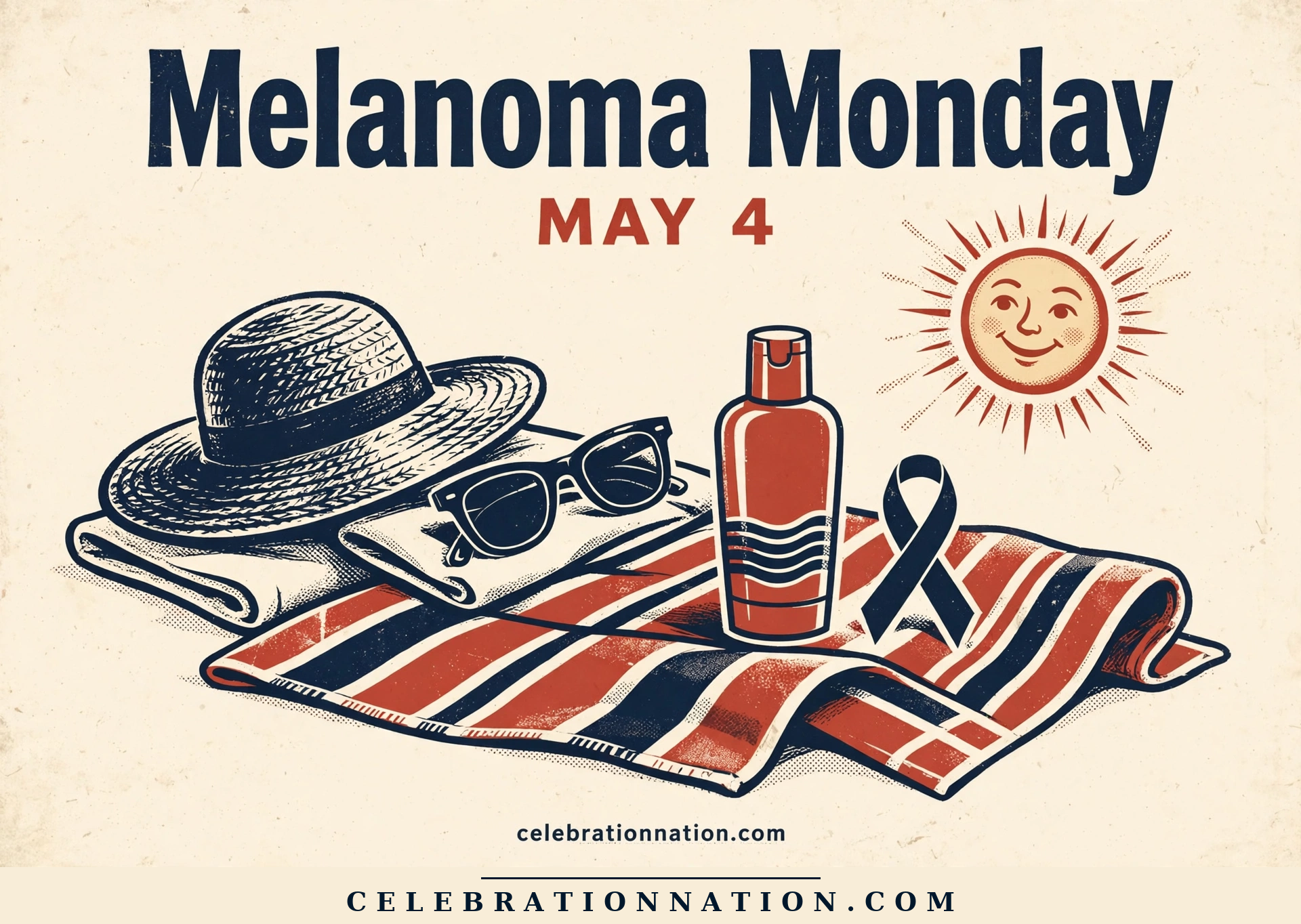
Melanoma Monday
Melanoma Monday is a hand extended — to the patients, caregivers, researchers, and families living with melanoma mon.
- Roots
- Established by the American Academy of Dermatology in 1995
- Vibe
- A day dedicated to skin cancer awareness and prevention
- Also on May 4
- Bird Day · International Firefighters’ Day · Candied Orange Peel Day
- Hashtag
- #MelanomaMonday
Ways to celebrate
Small, doable ways to celebrate Melanoma Monday.
- Share one reputable resource with your network.
- Donate to a patient-led organization working on melanoma mon.
- Check in on someone you know who's living with it.
- Book the screening or appointment you've been putting off.
- Listen more than you speak.
Make it your kind of celebration
Family
Have the real conversation at the table — stigma-free, no lecture.
Kids
Answer questions honestly and age-appropriately.
Couples
Check in with each other's appointments, screenings, and follow-ups.
Office
Share vetted resources and encourage people to use their benefits.
School
Bring in an expert, survivor, or advocate to speak for a class period.
Community
Run a donation drive, a walk, or a listening session for those affected.
Just me
Reach out to someone you know is living with it. Ask how they're doing for real.
Plan ahead
Melanoma Monday is observed on the first Monday in May. Here is where it lands for the next ten years, handy for planners, marketers and party people.
Fast facts
The story
Melanoma Monday was initiated in 1995 by the American Academy of Dermatology to raise awareness about skin cancer and the importance of early detection. This observance has grown significantly, encouraging millions across the United States and beyond to take proactive steps in monitoring their skin health and understanding the risks associated with UV exposure.
Read the full story
Melanoma, while less common than other skin cancers, is known for its aggressive nature. It can spread rapidly if not detected early, making awareness and education critical. This day serves as a reminder for individuals to assess their skin regularly and consult a dermatologist if they notice any unusual changes, such as moles that are asymmetrical or have irregular borders.
In addition to regular skin checks, prevention strategies are vital. Wearing sunscreen with an SPF of 30 or higher, seeking shade during peak sun hours, and wearing protective clothing are essential practices. Engaging communities through campaigns and sharing personal stories can further amplify the message of sun safety.
As Melanoma Monday approaches, numerous organizations and individuals will come together to promote skin health initiatives. Community events, educational workshops, and fundraising drives for research are just a few ways that people can participate. By focusing on awareness and prevention, we can help reduce the incidence of melanoma and empower others to take charge of their skin health.
Did you know?
Melanoma's Growth
Melanoma can develop in existing moles or appear as new growths, making regular monitoring essential.
Global Incidence
Melanoma rates are rising globally, particularly in fair-skinned populations who are more susceptible.
Risk Factors
Risk factors for melanoma include family history, excessive sun exposure, and a weakened immune system.
Survival Rates
The five-year survival rate for melanoma, when detected early, is about 99%.
Personal Stories
Many melanoma survivors share their experiences to raise awareness and encourage others to prioritize skin checks.
Skin Type
People with fair skin, freckles, and light hair are at a higher risk for melanoma.
Tanning Beds
Using tanning beds increases the risk of developing melanoma, especially in young people.
Around the world
Every culture celebrates a little differently.
- USUnited StatesMelanoma Monday is recognized nationwide, with various events promoting skin health.
- AUAustraliaAustralia has one of the highest rates of melanoma globally, making awareness campaigns especially vital.
- GBUnited KingdomThe UK participates in skin cancer awareness initiatives, aligning with Melanoma Monday's mission.
- CACanadaIn Canada, skin cancer awareness is promoted through community health programs.
- DEGermanyGermany has seen increased initiatives focusing on melanoma awareness, especially among youth.
- NZNew ZealandNew Zealand's high UV exposure rates necessitate ongoing public health campaigns regarding skin safety.
Keep the party going
See the calendar


Celebrate every day, all year
Official gear from the people who track 1,700+ celebrations.
Browse the shop 2027 Wall + Desk Calendar BundleCelebrate every day at home and at work.
Never miss a reason to celebrate.
One quick morning email with today's celebrations, ideas and posters. Free, unsubscribe anytime.
🎉 You're on the list! Watch your inbox for The Daily Confetti.