


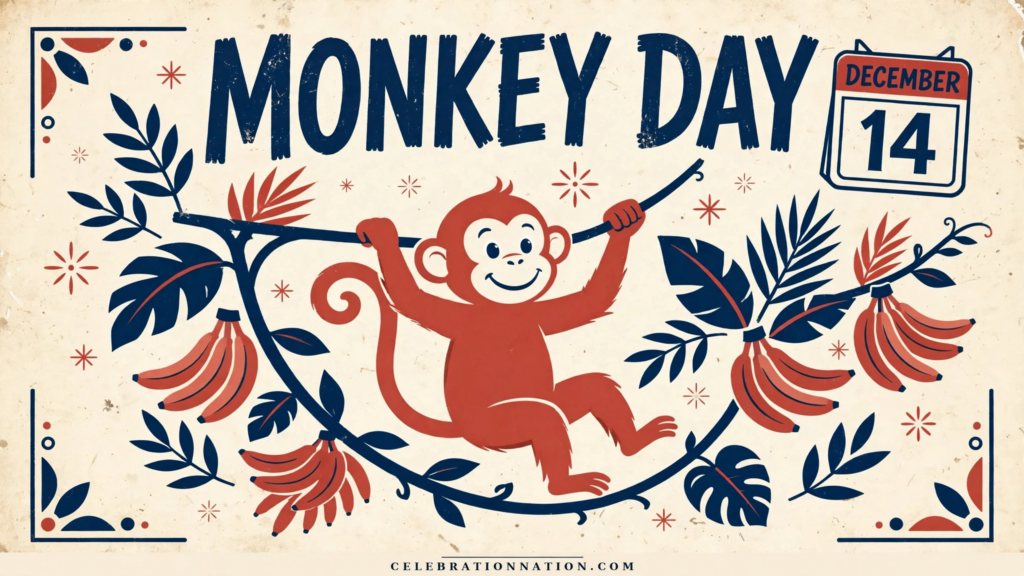
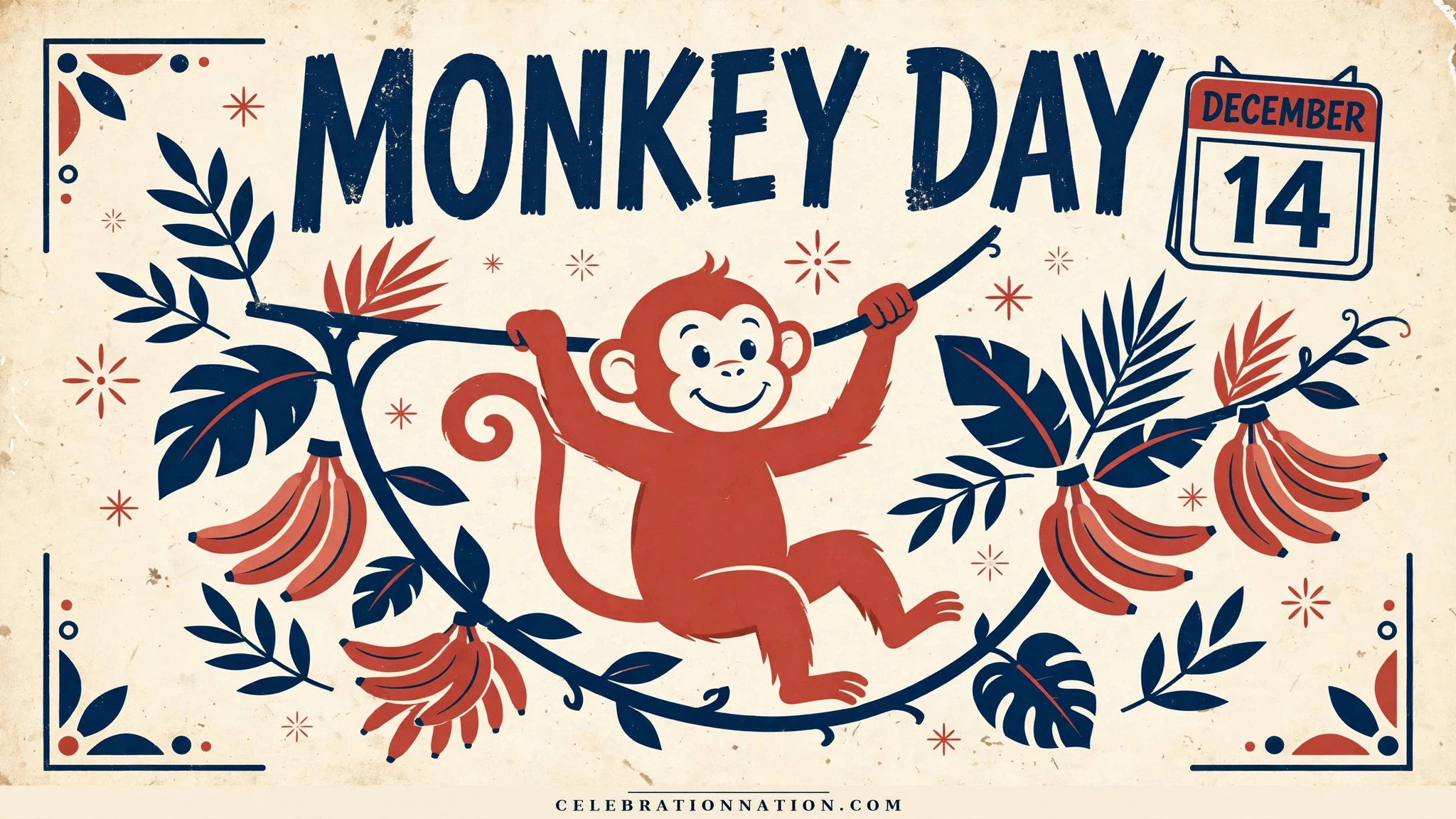
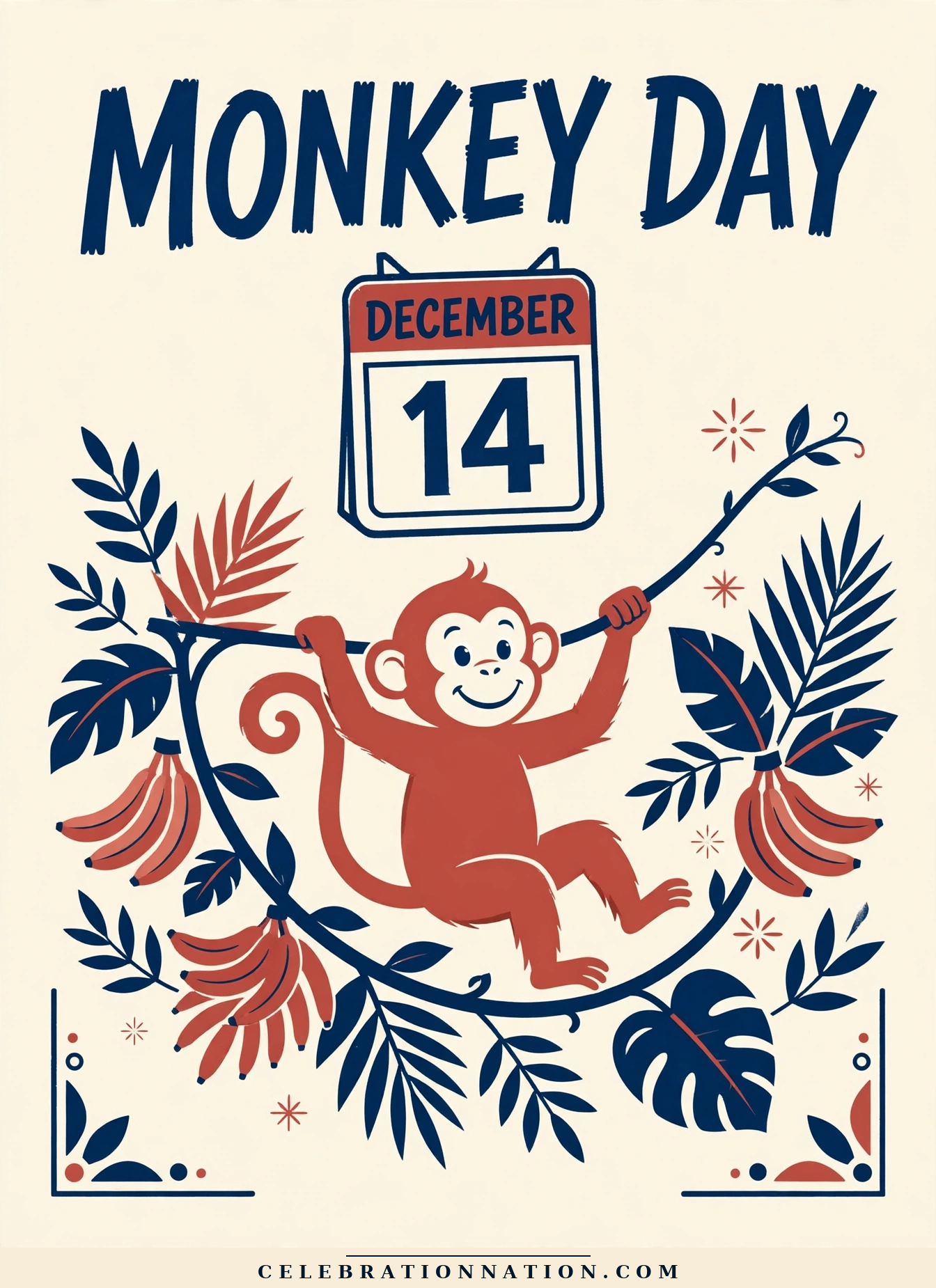
Monkey Day
Join us as we recognize our primate friends with a day of fun and education.
- Roots
- First celebrated in 2000
- Vibe
- A day of fun, education, and awareness.
- Also on Dec 14
- Geminid Meteor Shower Peak · Martyred Intellectuals Day · Alabama Day
- Hashtag
- #MonkeyDay
3 ways to celebrate
Visit the primates
Watch monkey documentaries or plan a trip to see them at the zoo.
Go bananas
Host a banana-themed snack night with smoothies, splits, and trivia.
Share monkey facts
Post fun primate facts in the office and brighten the hallway.
Plan ahead
Monkey Day is observed on December 14 every year. Here is where it lands for the next ten years, handy for planners, marketers and party people.
Fast facts
The story
Monkey Day was first celebrated in 2000, created by artists Casey Sorrow and Eric Millikin as a light-hearted way to appreciate monkeys and their role in the ecosystem. This day aims to raise awareness about the importance of primate conservation and the threats they face due to habitat destruction and poaching. Many schools and communities use this opportunity to educate people about the different species of monkeys and their behaviors.
Read the full story
Across the globe, Monkey Day encourages people to engage with wildlife conservation efforts. Zoos often host special events, and many organizations dedicate their work to protecting these fascinating creatures. In various cultures, monkeys have been symbols of playfulness, intelligence, and mischief, traits that make them beloved by many.
Celebrated primarily in the United States, Monkey Day has gained traction in other countries as well, leading to various international events. Some zoos offer educational programs, while online communities spread awareness through social media posts and fundraising campaigns. Many people take this day to reflect on the importance of biodiversity and the role that each species plays in their habitat. A celebration of life and conservation, Monkey Day inspires individuals to take action for the environment.
In addition to educational activities, Monkey Day serves as a reminder of the planet's diverse wildlife. Art, literature, and film often depict monkeys, showcasing their unique traits and cultural significance. By sharing stories and facts about monkeys, we can foster a deeper connection to nature and inspire future generations to advocate for wildlife conservation. As we celebrate this day, let us remember the importance of protecting these remarkable animals.
Keep the party going
See the calendar


Celebrate every day, all year
Official gear from the people who track 1,700+ celebrations.
Browse the shop 2027 Wall Calendar, signed by Marlo AndersonSigned by the founder of National Day Calendar.
Never miss a reason to celebrate.
One quick morning email with today's celebrations, ideas and posters. Free, unsubscribe anytime.
🎉 You're on the list! Watch your inbox for The Daily Confetti.