






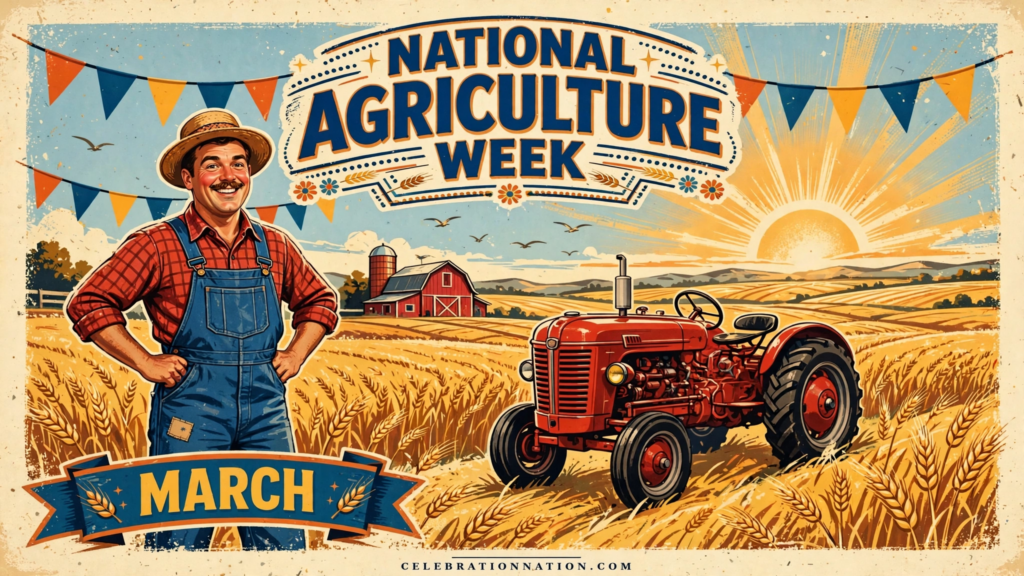
National Agriculture Week
This week sheds light on the rich tapestry of American agriculture and its global significance.
- Roots
- Organized by the Agriculture Council of America
- Vibe
- Celebration of farmers and sustainable practices
- Hashtag
- #NationalAgricultureWeek
Fast facts
The story
National Agriculture Week is a time to recognize the essential role that agriculture plays in American culture and economy. Held during the third week of March, this week-long observance invites citizens to appreciate the hard work of farmers, ranchers, and agricultural workers. These individuals not only provide food but also sustain the economy through various agribusinesses. Agriculture supports millions of jobs and is foundational to rural communities across the nation.
Read the full story
National Agriculture Week is organized each year by the Agriculture Council of America to increase awareness of agriculture's role in modern society. It serves as a reminder of the complex systems that bring food from farms to tables. Agriculture is not just about production; it encompasses sustainability, innovation, and the stewardship of land. As consumers become more conscious of where their food comes from, the appreciation for local farming practices grows.
During this week, numerous events take place across the country, from farm tours to community festivals. Schools and organizations often host educational programs to enlighten students about agricultural sciences. A focus on sustainable practices is increasingly emphasized, as the world confronts climate change and food security challenges. These initiatives encourage responsible consumption and foster an understanding of the agricultural industry's impact on the environment.
In addition to celebrating those who work the land, National Agriculture Week also encourages individuals to support local farmers and engage with food sources. This can be as simple as visiting farmers' markets or participating in community-supported agriculture (CSA) programs. As we honor the contributions of American agriculture, we acknowledge its interconnectedness with global practices, highlighting the importance of sustainable and ethical food systems.
Worth knowing
Farm Tours
Explore local farms to see firsthand the hard work that goes into agriculture. Many farms offer tours that are both educational and fun for all ages.
Farmers' Markets
Visit a nearby farmers' market to support local growers and enjoy fresh produce. It's a great way to engage with your community and learn about seasonal foods.
Sustainable Practices
Discover sustainable farming methods that protect the environment. This week, consider learning about organic farming and its benefits for the planet.
Cooking with Local Ingredients
Celebrate National Agriculture Week by preparing meals with locally sourced ingredients. This not only supports farmers but also enhances the flavor of your dishes.
Did you know?
Largest U.S. Crop
Corn is by far the largest crop produced in the United States.
Top Agricultural Export
The U.S. is a net exporter of food, shipping crops around the world.
Organic Growth
Organic farming offers consumers another choice in how their food is grown.
Farm Workforce
Census figures count more than 386,000 men and 51,000 women working as farmers and ranchers.
Rural Population
Many rural communities across the U.S. rely on agriculture.
Diverse Crops
The U.S. produces a wide range of crops, from fruits and nuts to grains.
Agricultural Education
Agricultural education programs are offered in many schools, promoting awareness and careers in farming.
Around the world
Every culture celebrates a little differently.
- USMidwestHome to the nation's corn and soybean production, the Midwest showcases vast fields and innovative farming techniques.
- USCaliforniaCalifornia's Central Valley produces fruits, vegetables, and nuts, and the state leads the nation in citrus.
- USTexasWith a rich ranching tradition, Texas is a significant player in beef production and also grows cotton and wheat.
- USPacific NorthwestKnown for its apple orchards and vineyards, the Pacific Northwest combines agriculture with stunning natural landscapes.
- USNortheastThe Northeast features small-scale farms and a growing interest in organic agriculture, contributing to local food systems.
- USSoutheastRich in agriculture, the Southeast produces significant amounts of tobacco, cotton, and a variety of fruits and vegetables.
Coming up next
See the calendar



Celebrate every day, all year
Official gear from the people who track 1,700+ celebrations.
Browse the shop National Day Celebration Card GameA party in a box, any day of the year.
Never miss a reason to celebrate.
One quick morning email with today's celebrations, ideas and posters. Free, unsubscribe anytime.
🎉 You're on the list! Watch your inbox for The Daily Confetti.