

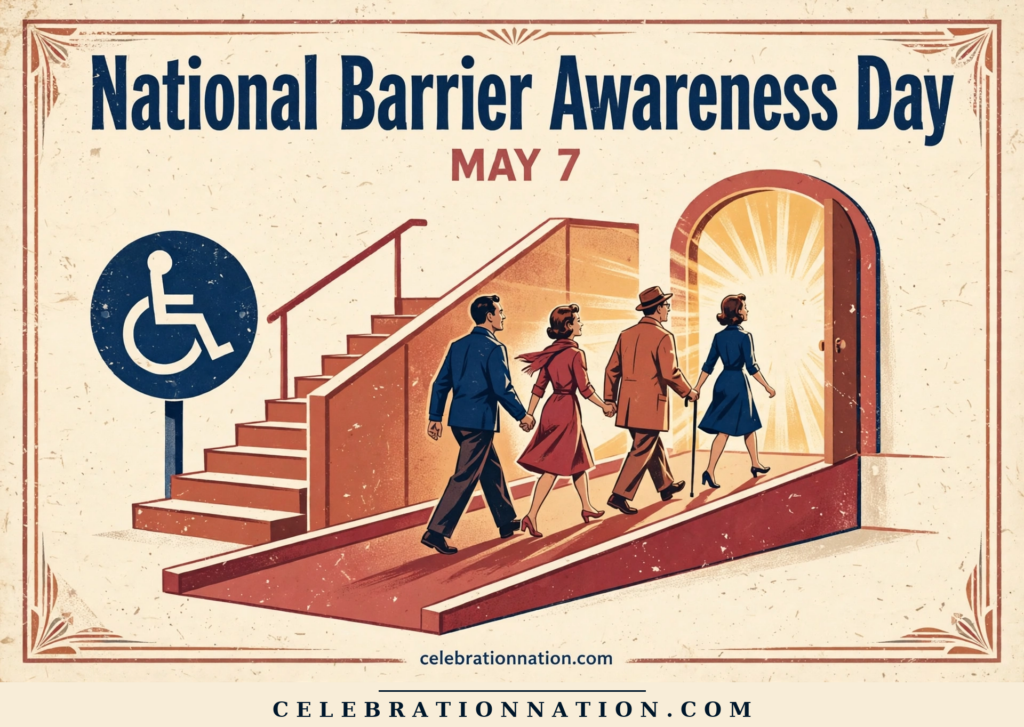
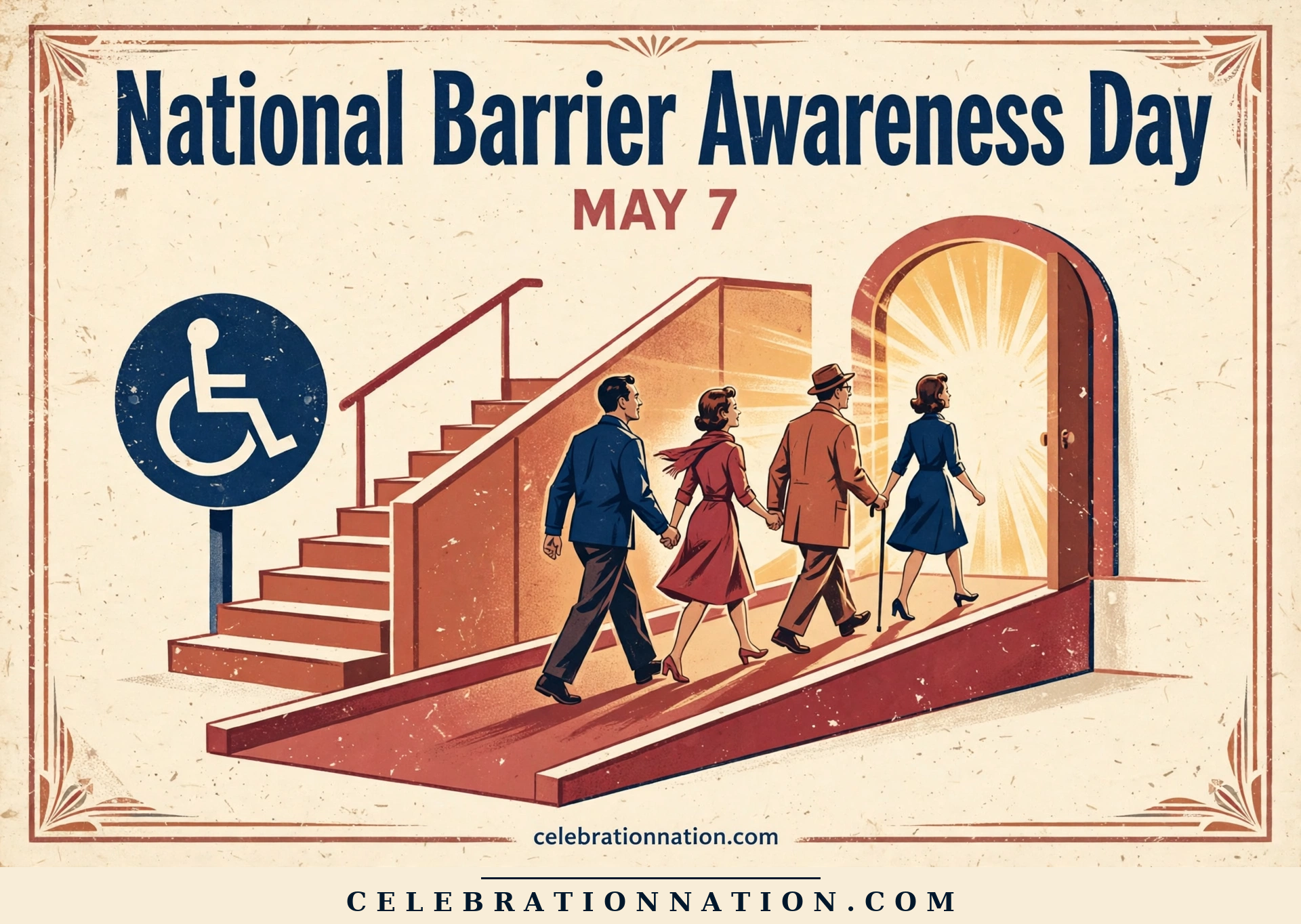
National Barrier Awareness Day
National Barrier Awareness Day is a hand extended — to the patients, caregivers, researchers, and families living with barrier awareness.
- Roots
- Designated by Congress in 1986; proclaimed by President Reagan (Proclamation 5472)
- Vibe
- A call for understanding and inclusivity
- Also on May 7
- World Athletics Day · Tourism Day · World Password Day
- Hashtag
- #NationalBarrierAwarenessDay
Ways to celebrate
Small, doable ways to celebrate National Barrier Awareness Day.
- Share one reputable resource with your network.
- Donate to a patient-led organization working on barrier awareness.
- Check in on someone you know who's living with it.
- Book the screening or appointment you've been putting off.
- Listen more than you speak.
Make it your kind of celebration
Family
Have the real conversation at the table — stigma-free, no lecture.
Kids
Answer questions honestly and age-appropriately.
Couples
Check in with each other's appointments, screenings, and follow-ups.
Office
Share vetted resources and encourage people to use their benefits.
School
Bring in an expert, survivor, or advocate to speak for a class period.
Community
Run a donation drive, a walk, or a listening session for those affected.
Just me
Reach out to someone you know is living with it. Ask how they're doing for real.
Plan ahead
National Barrier Awareness Day is observed on May 7 every year. Here is where it lands for the next ten years, handy for planners, marketers and party people.
Fast facts
The story
National Barrier Awareness Day serves as a reminder of the challenges that individuals with disabilities encounter daily. Established in 2015, this observance encourages a national dialogue about accessibility and the importance of breaking down physical and social barriers. By raising awareness, we can foster a more inclusive society for everyone, regardless of their abilities.
Read the full story
In the United States, approximately 1 in 4 adults live with a disability, highlighting the need for greater awareness and understanding. Barriers can take many forms, from physical obstacles in public spaces to societal misconceptions about disabilities. This day is an opportunity to educate ourselves and others about these issues, paving the way for a more informed and compassionate community.
Participating in National Barrier Awareness Day can be as simple as sharing information on social media or attending local events. Engaging with organizations that advocate for disability rights can also deepen your understanding of the challenges faced by these individuals. By promoting a culture of inclusivity, we can create a barrier-free environment for all.
As we observe this day, let us remember that everyone deserves access to the same opportunities and experiences. Together, we can raise awareness about barriers and work toward solutions that promote equality and accessibility. By embracing inclusivity, we not only uplift those with disabilities but enrich our communities as a whole.
Did you know?
Disability Statistics
The World Health Organization estimates that over 1 billion people live with a disability.
Historical Context
Disability rights movements have been active since the 1960s, advocating for equal rights and opportunities.
Accessibility Laws
The Americans with Disabilities Act was enacted in 1990, prohibiting discrimination based on disability.
Global Initiatives
Many countries have implemented legislation to promote accessibility and inclusion.
Cultural Impact
Art and literature increasingly reflect the experiences of individuals with disabilities.
Community Support
Support networks for individuals with disabilities are essential for fostering inclusion.
Future Goals
Continued advocacy aims to improve accessibility in all aspects of life.
Around the world
Every culture celebrates a little differently.
- USUnited StatesNational Barrier Awareness Day is widely recognized across the United States.
- GBUnited KingdomThe UK also observes various days focused on disability rights and inclusivity.
- CACanadaCanada promotes accessibility through various initiatives on Disability Awareness Day.
- AUAustraliaAustralia's National Disability Insurance Scheme focuses on removing barriers for individuals with disabilities.
- DEGermanyGermany emphasizes disability rights through national policies and community programs.
- NLNetherlandsThe Netherlands is known for its strong advocacy for disability rights and accessible public spaces.
Keep the party going
See the calendar

Celebrate every day, all year
Official gear from the people who track 1,700+ celebrations.
Browse the shop 2027 National Day Wall CalendarGet the 2026 edition free. 1,700+ observances.
Never miss a reason to celebrate.
One quick morning email with today's celebrations, ideas and posters. Free, unsubscribe anytime.
🎉 You're on the list! Watch your inbox for The Daily Confetti.