


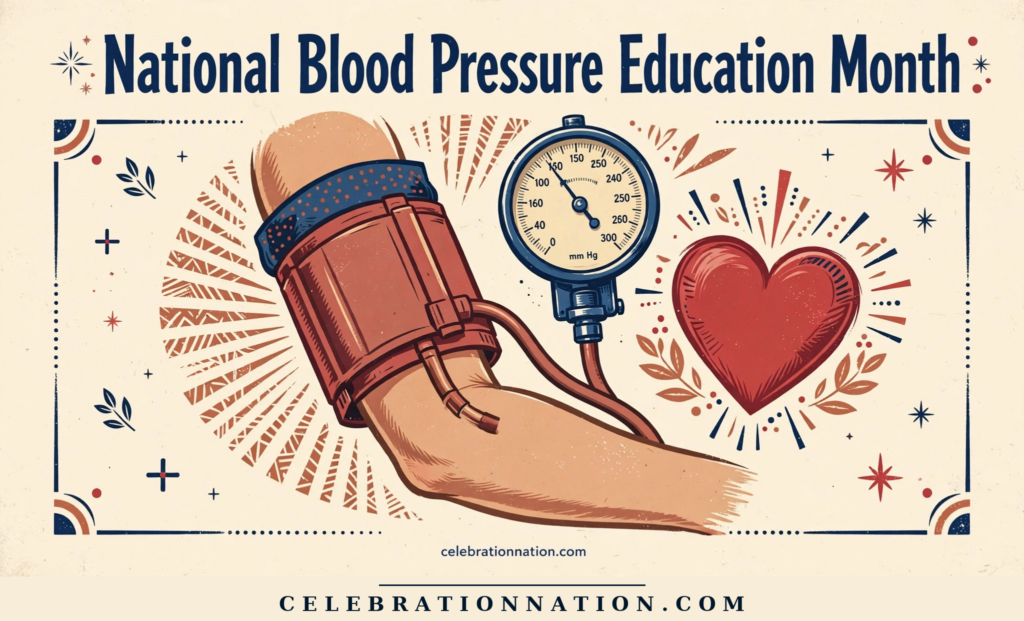
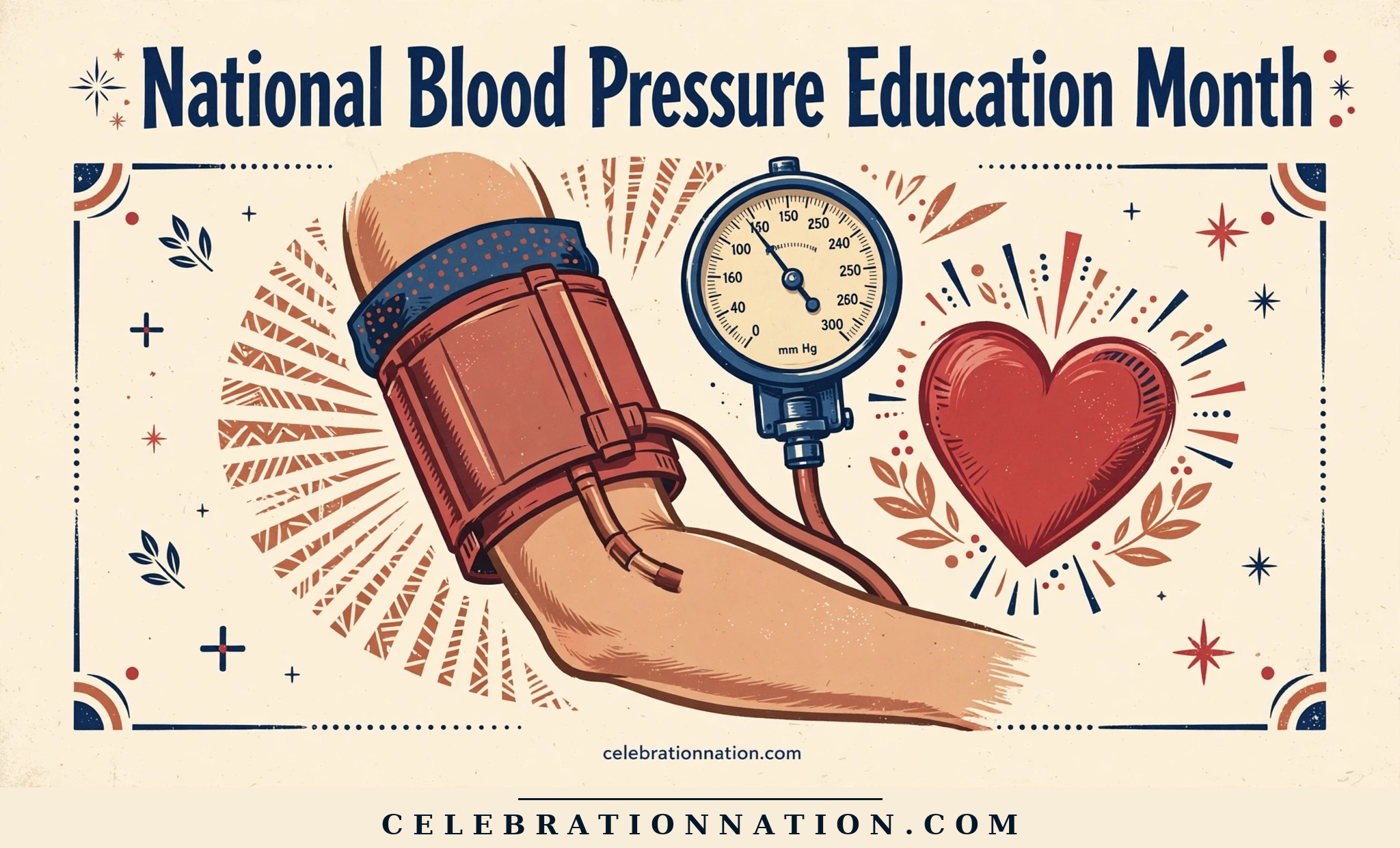
National Blood Pressure Education Month
On National Blood Pressure Education Month, we listen louder, learn more, and make sure no one feels invisible.
- Roots
- Created by the CDC and recognized by the NHLBI.
- Vibe
- An emphasis on education, prevention, and healthy lifestyle choices.
- Hashtag
- #NationalBloodPressureEducationMonth
Ways to celebrate
Small, doable ways to celebrate National Blood Pressure Education Month.
- Share one reputable resource with your network.
- Donate to a patient-led organization working on blood pressure education.
- Check in on someone you know who's living with it.
- Book the screening or appointment you've been putting off.
- Listen more than you speak.
Fast facts
The story
National Blood Pressure Education Month is an annual observance that underscores the significance of blood pressure management. Created by the Centers for Disease Control and Prevention, this initiative aims to enhance public understanding of hypertension and its associated health risks. High blood pressure can often go unnoticed, leading to severe health complications if not addressed in a timely manner. Through education and awareness, we can empower individuals to take control of their health.
Read the full story
Hypertension affects millions of Americans, contributing to heart disease and stroke, two leading causes of death. This month serves as a reminder to monitor blood pressure levels regularly and adopt healthier lifestyle choices. Engaging in physical activity, eating a balanced diet, and reducing sodium intake are essential steps in combating high blood pressure. The goal is to foster an environment where everyone can thrive through informed health choices.
Each year, National Blood Pressure Education Month encourages communities to come together and share resources. Schools, workplaces, and local organizations can host workshops to educate individuals about managing their health. By facilitating conversations about blood pressure, we can reduce the stigma and promote proactive health management.
As we observe this month, let us remember that small changes can lead to significant improvements in blood pressure control. Regular screenings, informed dietary choices, and consistent physical activity are vital. By prioritizing education and awareness, we can work towards a healthier future for ourselves and our loved ones. Let’s take this opportunity to spread the word and support one another in our health journeys.
Worth knowing
Heart Health Matters
Understanding your blood pressure is crucial for maintaining heart health. Regular check-ups can help catch potential issues early.
Get Screened
Schedule your blood pressure screening with a healthcare professional this month. Knowledge is the first step towards better health.
Eat Well
Adopt a heart-healthy diet rich in fruits, vegetables, and whole grains. Reducing salt intake can significantly lower blood pressure.
Stay Active
Engaging in regular physical activity can help manage blood pressure. Aim for at least 150 minutes of moderate exercise each week.
Did you know?
What is normal blood pressure?
A blood pressure reading has two numbers, systolic over diastolic, measured in mmHg.
Symptoms of high blood pressure
Often called a silent killer, high blood pressure may have no obvious symptoms.
Lifestyle changes
Simple changes like improving diet and increasing physical activity can greatly affect blood pressure.
Monitoring frequency
About 1 in 6 adults with high blood pressure is unaware of it, so regular checks matter.
Age factor
Blood pressure tends to rise with age, making regular monitoring essential.
Global impact
Hypertension is a leading risk factor for cardiovascular disease worldwide.
Family history
Individuals with a family history of hypertension are at higher risk themselves.
Around the world
Every culture celebrates a little differently.
- USUnited StatesIn the U.S., nearly half of adults have high blood pressure, making education crucial.
- CACanadaCanada promotes blood pressure awareness through various health initiatives and community programs.
- GBUnited KingdomThe UK's NHS provides resources for individuals to manage their blood pressure effectively.
- AUAustraliaAustralia's Heart Foundation advocates for regular health checks and lifestyle modifications.
- DEGermanyGermany emphasizes preventive care and public awareness campaigns on hypertension.
- FRFranceIn France, health authorities engage in educational campaigns around heart health and blood pressure monitoring.
Coming up next
See the calendar

Celebrate every day, all year
Official gear from the people who track 1,700+ celebrations.
Browse the shop 2027 National Day Desk CalendarA new celebration every morning. Daily tear-off.
Never miss a reason to celebrate.
One quick morning email with today's celebrations, ideas and posters. Free, unsubscribe anytime.
🎉 You're on the list! Watch your inbox for The Daily Confetti.