
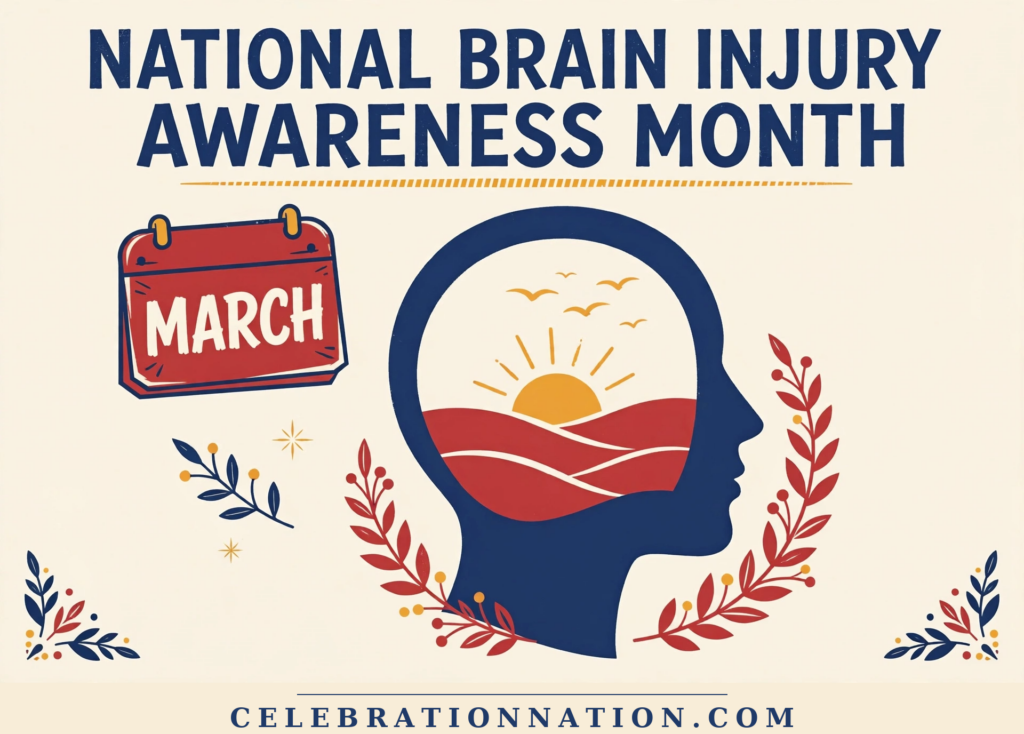
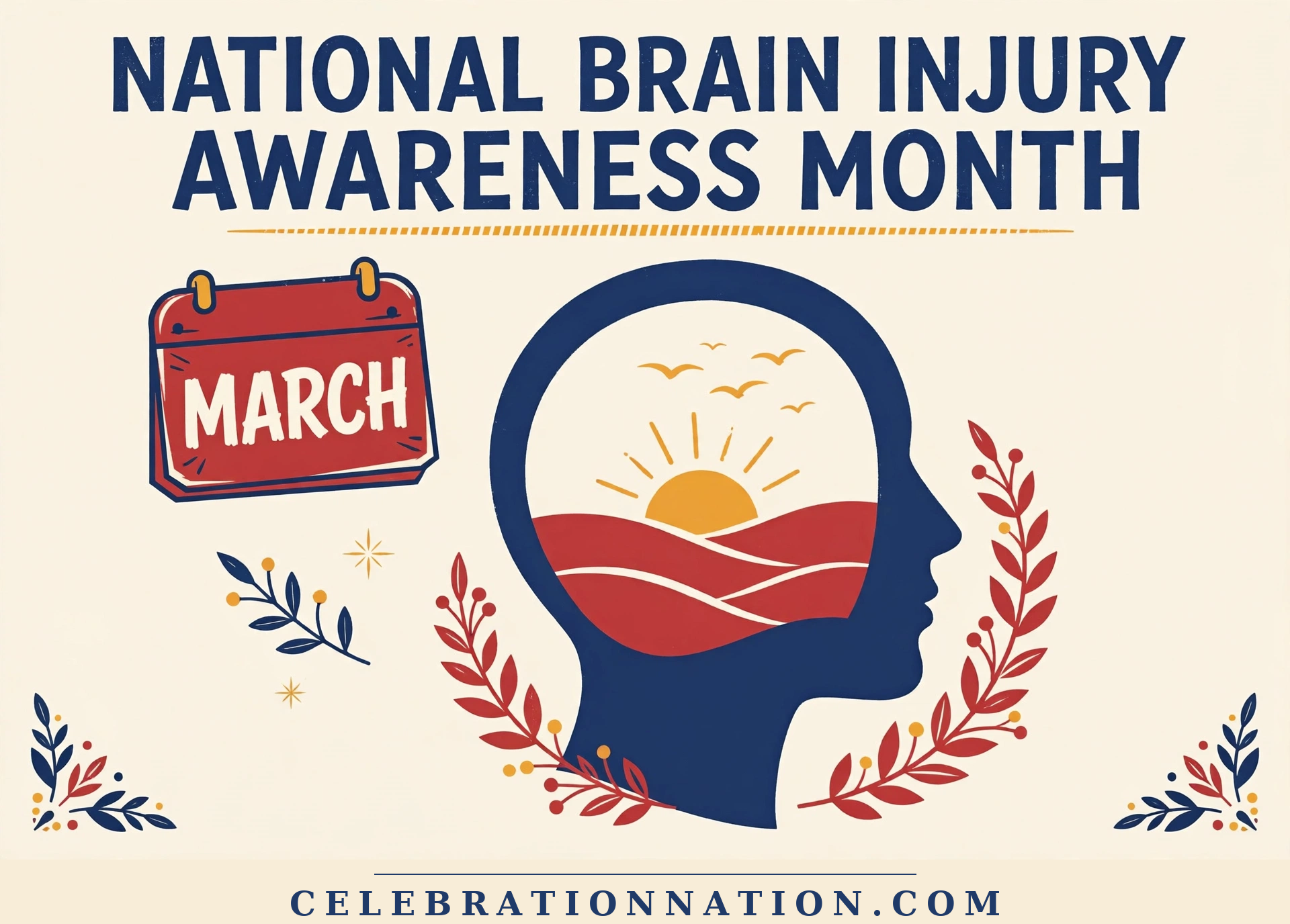
National Brain Injury Awareness Month
March is a time to raise awareness about brain injuries and their profound effects on individuals and families.
- Roots
- First recognized in 1993
- Vibe
- A collective effort to promote safety and recovery
- Hashtag
- #NationalBrainInjuryAwarenessMonth
Fast facts
The story
National Brain Injury Awareness Month began in 1993, initiated by the Brain Injury Association of America to promote understanding and prevention of brain injuries. This month highlights the need for education on brain health, emphasizing the importance of safety measures to reduce the risk of injuries. With millions affected each year, the observance serves as a call to action for communities across the nation.
Read the full story
The impact of brain injuries can be profound and life-altering. They can result from a variety of causes, including falls, car accidents, and sports injuries. Survivors often face challenges in their daily lives, ranging from cognitive impairments to emotional difficulties. Families and caregivers also experience the emotional toll that these injuries can bring, making support systems crucial for recovery.
Throughout March, numerous organizations and communities host events to raise awareness and funds for research and support programs. From educational seminars to community walks, these events foster a sense of solidarity among survivors and advocates alike. It is essential to engage in conversations about prevention and recovery, ensuring that everyone understands the long-term effects of brain injuries and the importance of rehabilitation. The goal is to create a society that prioritizes brain health and safety.
As National Brain Injury Awareness Month progresses, individuals are encouraged to participate in discussions, share resources, and promote awareness in their communities. By wearing green, the recognized color for brain injury awareness, and taking part in local events, everyone can contribute to the broader mission of prevention and support. Together, we can make strides in understanding and addressing the challenges faced by those affected by brain injuries.
Worth knowing
Learn About Brain Injuries
Education is key. Take time to learn about the different types of brain injuries and their effects on individuals and families. Knowledge empowers prevention.
Wear Green
Show your support during March by wearing green to raise awareness for brain injury prevention and recovery. Every small action counts in this collective effort.
Attend Local Events
Look for local events during March that focus on brain injury awareness. Engaging with your community can make a significant impact in spreading knowledge.
Support Survivors
Reach out to local organizations that assist brain injury survivors. Your support can help provide resources and aid in their recovery journey.
Did you know?
What is a TBI?
A Traumatic Brain Injury (TBI) can result from external force, such as a blow to the head.
Common Causes
Falls are the leading cause of TBIs, especially among older adults and children.
Long-Term Effects
TBIs can lead to long-term cognitive, physical, and emotional challenges.
Prevention Strategies
Wearing helmets and seatbelts significantly reduces the risk of TBIs.
Statistics
In 2021, about 190 Americans died from TBI-related causes each day.
Rehabilitation
Recovery from TBIs often involves physical therapy, occupational therapy, and counseling.
Public Awareness
Brain injuries can be traumatic, from an external force, or non-traumatic, from internal causes like stroke.
Around the world
Every culture celebrates a little differently.
- USUnited StatesNational observance promoting awareness and prevention of brain injuries.
- DEGermanyHas its own initiatives for brain injury awareness and support.
- GBUnited KingdomHosts events to raise awareness about brain injuries and their effects.
- CACanadaParticipates in awareness initiatives similar to those in the U.S.
- AUAustraliaFocuses on education and prevention in the realm of brain health.
- NZNew ZealandEngages in community awareness programs regarding brain injuries.
Coming up next
See the calendar

Celebrate every day, all year
Official gear from the people who track 1,700+ celebrations.
Browse the shop National Day Celebration Card GameA party in a box, any day of the year.
Never miss a reason to celebrate.
One quick morning email with today's celebrations, ideas and posters. Free, unsubscribe anytime.
🎉 You're on the list! Watch your inbox for The Daily Confetti.