

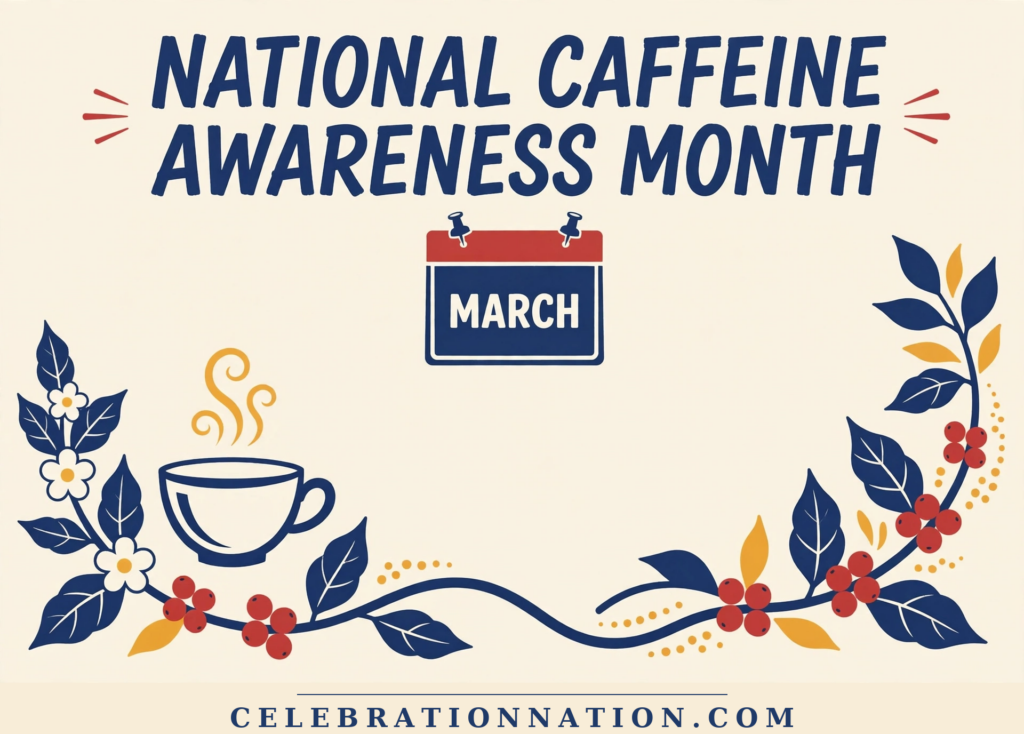
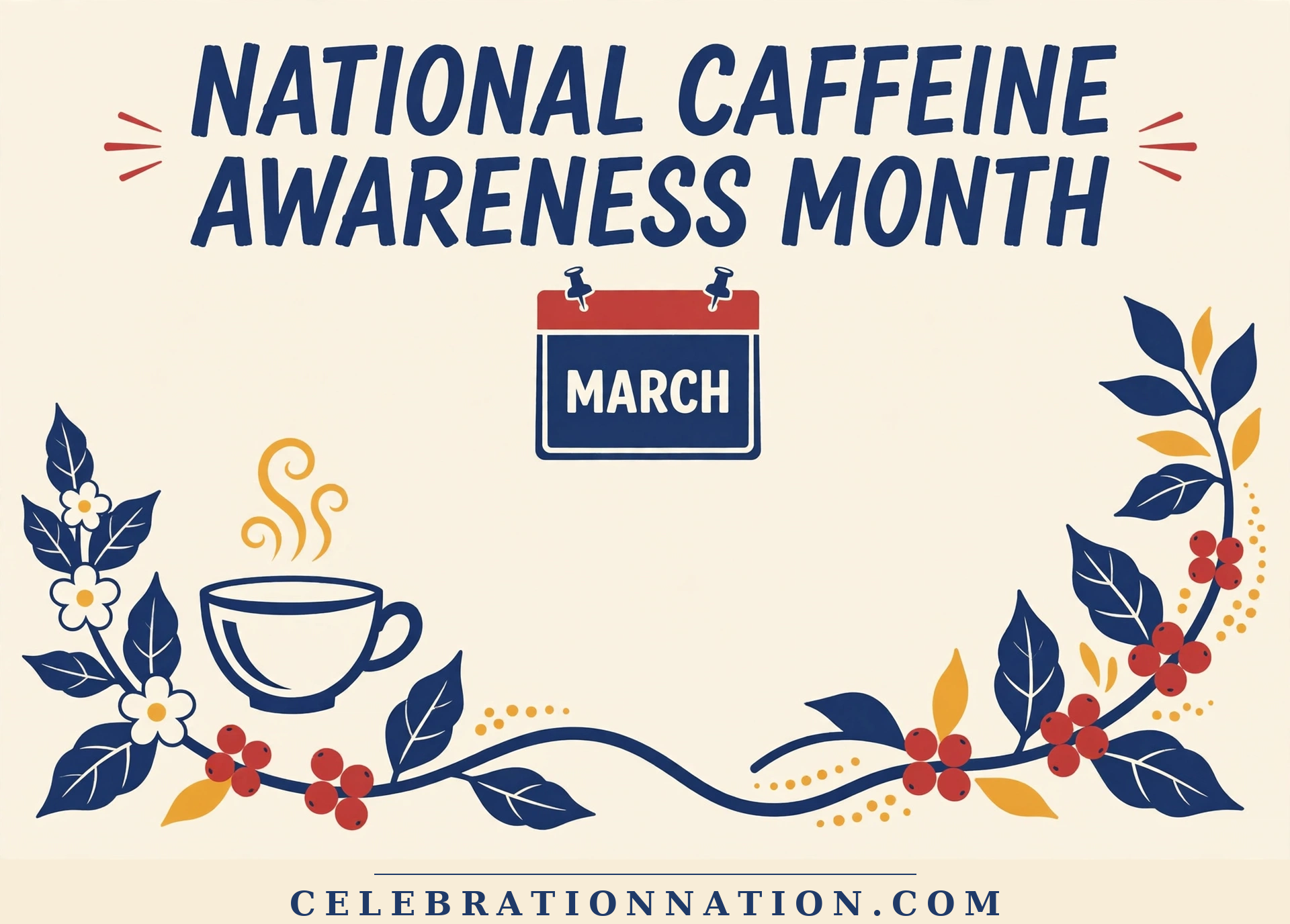
National Caffeine Awareness Month
This month, we invite you to take a closer look at caffeine's role in our lives and its impact on health.
- Roots
- Established in 2003 by the Caffeine Awareness Alliance.
- Vibe
- Caffeine is often associated with social gatherings and productivity.
- Hashtag
- #NationalCaffeineAwarenessMonth
Fast facts
The story
Caffeine is a natural stimulant found in coffee, tea, chocolate, and various energy drinks. It works by blocking adenosine, a neurotransmitter that promotes sleep, thus increasing alertness and reducing fatigue. While caffeine can enhance focus and energy, understanding its effects on the body is essential for making informed choices. National Caffeine Awareness Month serves as a reminder to reflect on our caffeine habits.
Read the full story
The celebration of caffeine is deeply rooted in American culture. From the bustling coffee shops in Seattle to the tea houses of New York City, caffeine plays a significant role in our daily routines. In fact, coffee is a daily habit for millions of Americans, many relying on it to kickstart their mornings. This month invites us to appreciate the rich history and social aspects of our favorite caffeinated drinks.
During March, discussions about caffeine often highlight its benefits and drawbacks. While moderate consumption can improve cognitive function and mood, excessive intake may lead to anxiety, insomnia, and increased heart rate. One of the key goals of National Caffeine Awareness Month is to promote a balanced approach to caffeine consumption, encouraging people to monitor their intake and explore alternatives.
In addition to its health implications, caffeine has a global cultural significance. Countries around the world enjoy their own unique coffee and tea traditions, from Italy's espresso to China's tea ceremonies. This month provides a chance not only to reflect on personal habits but also to celebrate the diverse ways caffeine connects us across cultures.
Worth knowing
Coffee Culture
Explore the rich traditions of coffee around the world, from espresso in Italy to cold brew in the U.S., and how they shape social interactions.
Tea Traditions
Delve into the diverse tea cultures globally, highlighting how tea ceremonies bring communities together and promote mindfulness.
Balanced Consumption
Learn about the importance of moderation in caffeine consumption and how it can affect your health and well-being.
Caffeine Research
Stay informed with the latest research on caffeine's benefits and risks, ensuring a well-rounded understanding of its impact on health.
Did you know?
Caffeine's Half-Life
The half-life of caffeine in the body averages about 3 to 5 hours.
Caffeine and Performance
Research shows that caffeine can enhance athletic performance by improving endurance.
Decaf Doesn't Mean Caffeine-Free
Decaffeinated coffee still contains small amounts of caffeine, typically 2 to 15 mg per 8-ounce cup.
Caffeine in Chocolate
Chocolate also contains caffeine; dark chocolate has more than milk chocolate.
Caffeine and Mood
Caffeine can improve mood and increase feelings of well-being when consumed in moderation.
Global Consumption
Finland is the highest coffee-consuming country per capita globally.
Historical Use
Caffeine has been used for centuries in various cultures for its stimulating effects.
Around the world
Every culture celebrates a little differently.
- USUnited StatesCaffeine consumption is deeply ingrained in American culture, with coffee shops and tea houses flourishing nationwide.
- GBUnited KingdomThe UK boasts a strong tea culture, with afternoon tea remaining a cherished tradition in many households.
- JPJapanJapan's tea ceremonies emphasize mindfulness and precision, showcasing the cultural significance of tea.
- ITItalyItaly is renowned for its espresso culture, where coffee is not just a drink but an integral part of social life.
- BRBrazilAs one of the largest coffee producers, Brazil has a vibrant coffee culture, celebrated in festivals and local markets.
- CNChinaChina's long history with tea includes various regional styles and ceremonies that highlight its cultural importance.
Coming up next
See the calendar
Celebrate every day, all year
Official gear from the people who track 1,700+ celebrations.
Browse the shop 2027 Wall Calendar, signed by Marlo AndersonSigned by the founder of National Day Calendar.
Never miss a reason to celebrate.
One quick morning email with today's celebrations, ideas and posters. Free, unsubscribe anytime.
🎉 You're on the list! Watch your inbox for The Daily Confetti.