



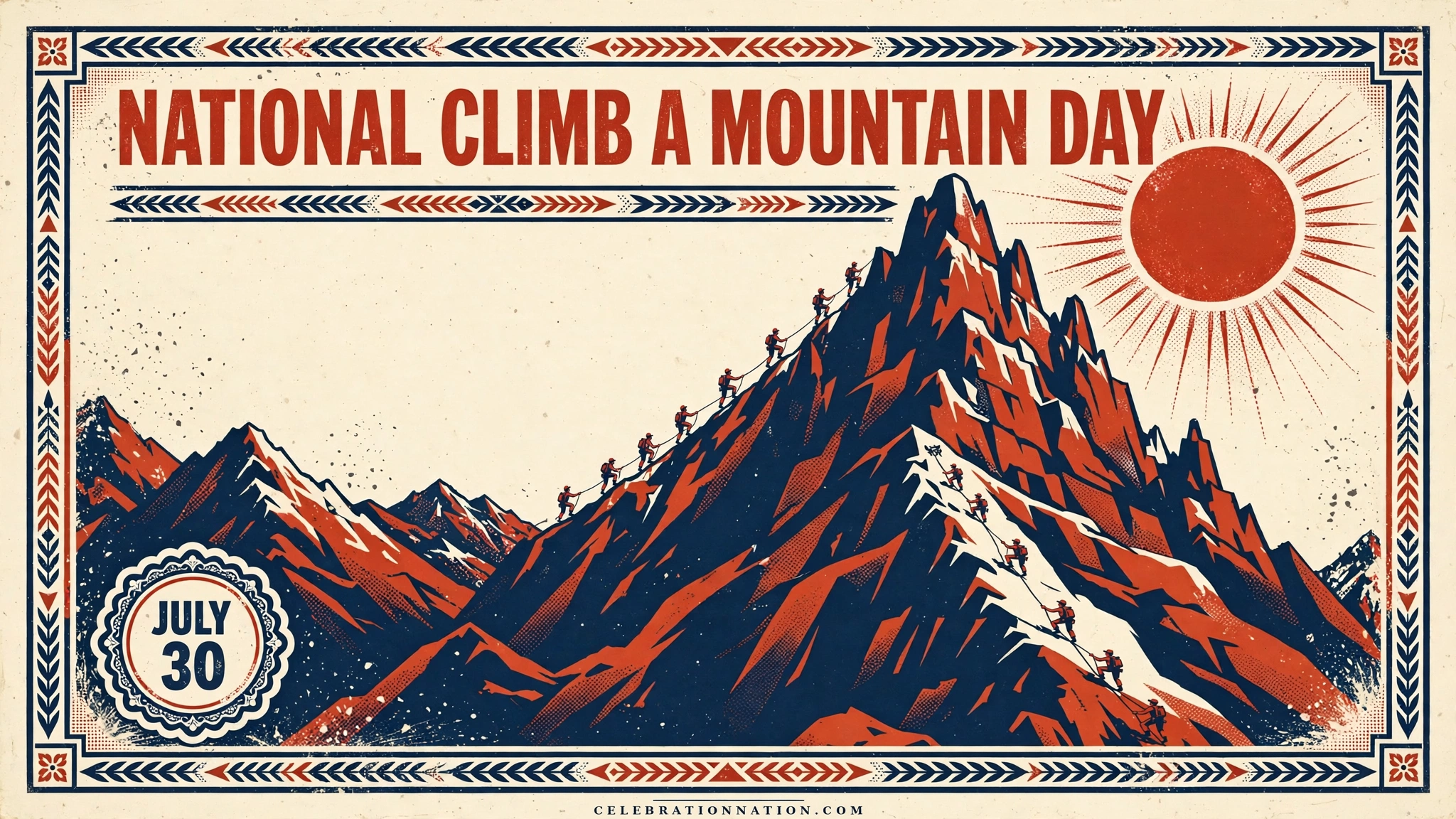
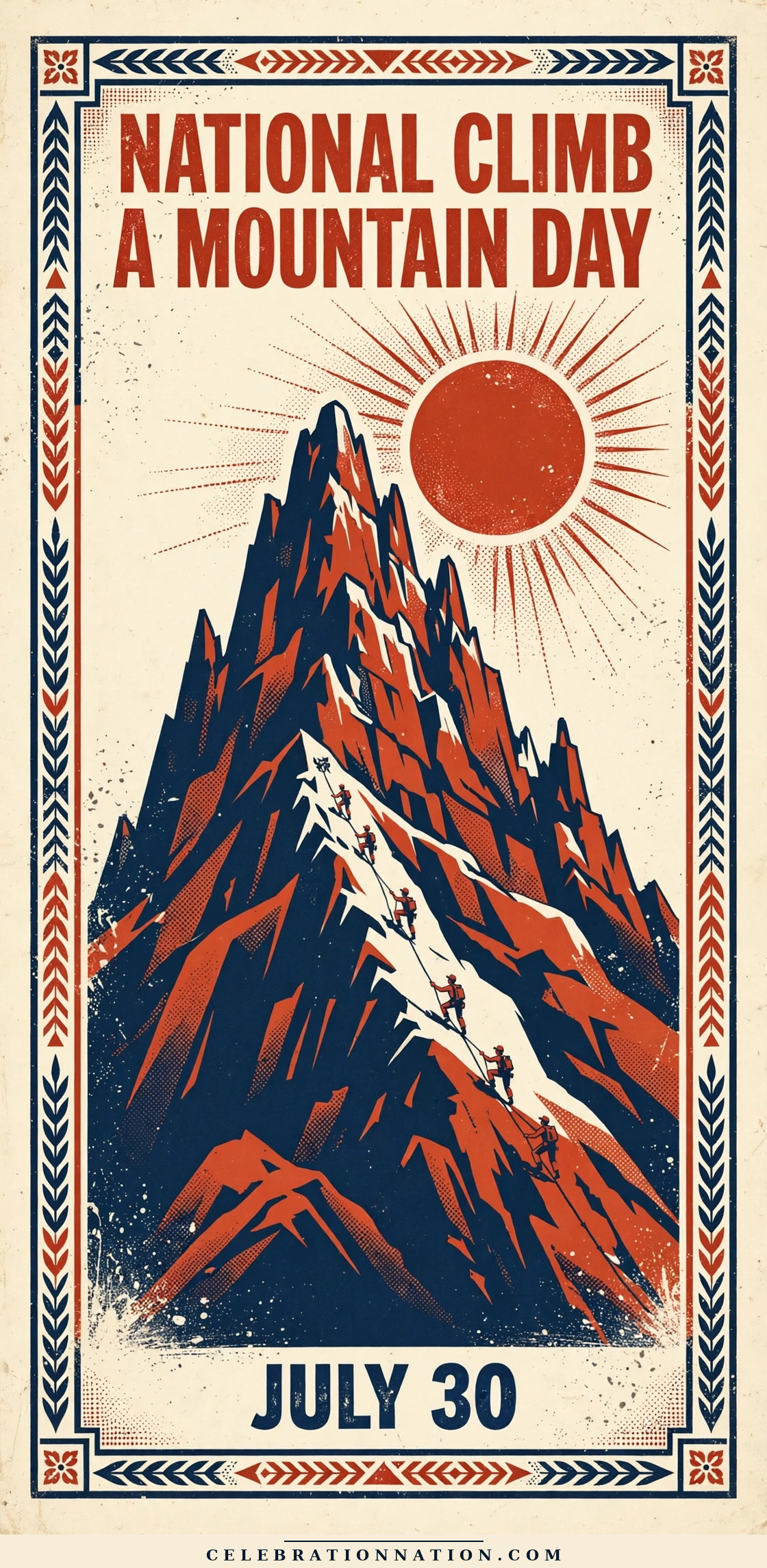
National Climb a Mountain Day
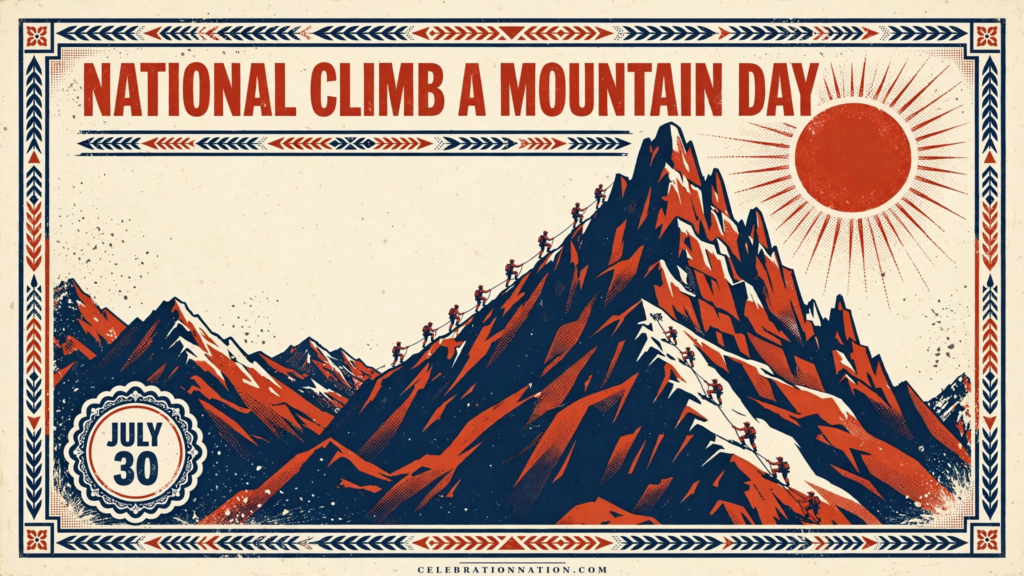
National Climb a Mountain Day is a chance to connect with nature and challenge yourself physically and mentally.
- Roots
- The origins of this observance are unclear.
- Vibe
- A sense of adventure and accomplishment.
- Also on Jul 30
- Support Public Education Day · International Day of Friendship · Cheesecake Day
- Hashtag
- #NationalClimbAMountainDay
3 ways to celebrate
Find a trail
Pick a nearby peak and plan your route for the weekend.
Summit together
Tackle a tough hike with friends and celebrate at the top.
Set a fitness goal
Set a hiking or fitness goal with coworkers and cheer each other on.
Plan ahead
National Climb a Mountain Day is observed on July 30 every year. Here is where it lands for the next ten years, handy for planners, marketers and party people.
Fast facts
The story
National Climb a Mountain Day provides an opportunity to appreciate the breathtaking landscapes that mountains offer. From the Rockies to the Appalachians, America's varied terrain invites everyone to explore. Climbing a mountain can be a transformative experience, fostering a deeper connection to the environment and promoting physical wellness.
Read the full story
Mountains have long been symbols of challenge and achievement in various cultures. In the United States, iconic locations like Mount Rainier in Washington and the Grand Teton in Wyoming draw climbers and hikers from all over. Participating in this day can not only enhance your physical fitness but also instill a sense of accomplishment, especially when you reach the summit.
Whether you’re an experienced climber or a novice hiker, this day offers a chance to enjoy the outdoors and the great beauty of nature. Engaging with mountain trails can lead to newfound friendships, as shared experiences often create lasting bonds. You might even discover hidden gems in your own backyard.
As you plan your climb, consider the environmental impact of your journey. Respect nature by following Leave No Trace principles and advocating for sustainable practices. National Climb a Mountain Day is not just about reaching the peak; it’s also about ensuring that these majestic landscapes remain pristine for generations to come.
Did you know?
Historic Climbs
The first recorded ascent of Mount Everest was in 1953 by Sir Edmund Hillary and Tenzing Norgay.
Cultural Significance
Many cultures view mountains as sacred spaces, representing the connection between heaven and earth.
Environmental Impact
Climbing can impact delicate ecosystems; hence, responsible climbing is essential.
Famous Trails
The Appalachian Trail spans over 2,190 miles, stretching from Georgia to Maine.
Climbing Techniques
There are various climbing techniques, including bouldering, sport climbing, and traditional climbing.
Health Benefits
Climbing improves cardiovascular health, strength, and mental well-being.
Mountain Ranges
The Himalayas are the highest mountain range in the world, with peaks over 29,000 feet.
Around the world
Every culture celebrates a little differently.
- USUnited StatesHome to diverse mountain ranges like the Rockies and Appalachians.
- CACanadaFeatures the majestic Canadian Rockies, attracting climbers worldwide.
- MXMexicoMount Orizaba, the highest peak in Mexico, is a popular climbing destination.
- AUAustraliaThe Australian Alps offer unique climbing experiences with stunning views.
- BRBrazilMount Roraima features dramatic cliffs and rich biodiversity.
- NZNew ZealandKnown for its breathtaking mountains, like Aoraki/Mount Cook, perfect for climbers.
Keep the party going
See the calendar



Celebrate every day, all year
Official gear from the people who track 1,700+ celebrations.
Browse the shop 2027 National Day Wall CalendarGet the 2026 edition free. 1,700+ observances.
Never miss a reason to celebrate.
One quick morning email with today's celebrations, ideas and posters. Free, unsubscribe anytime.
🎉 You're on the list! Watch your inbox for The Daily Confetti.