



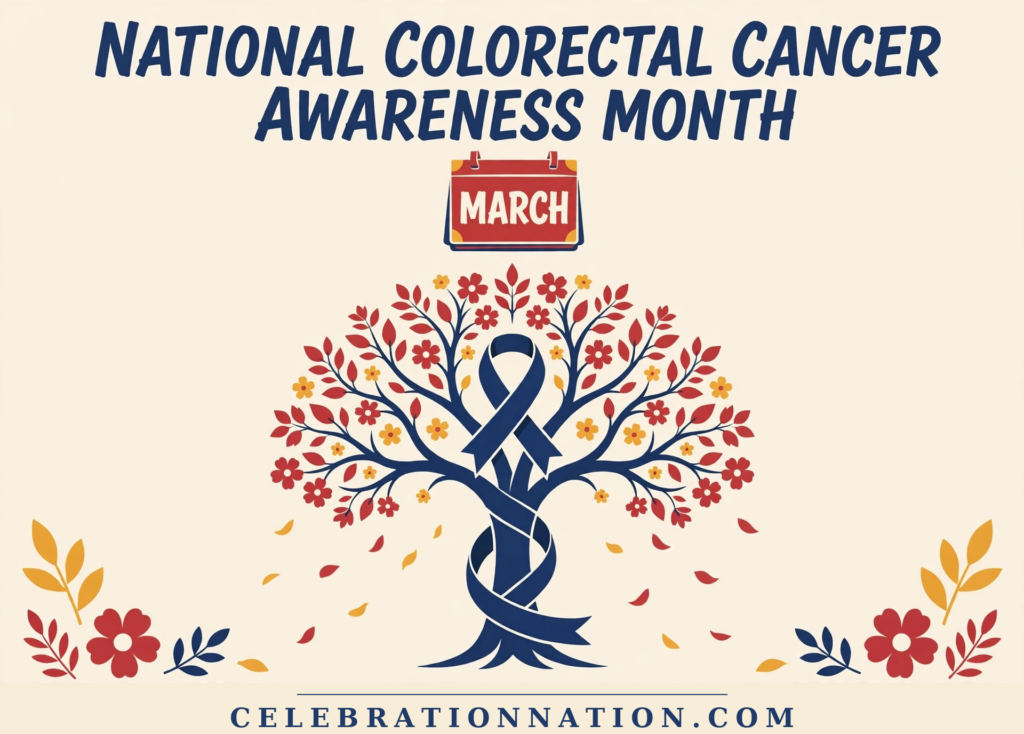
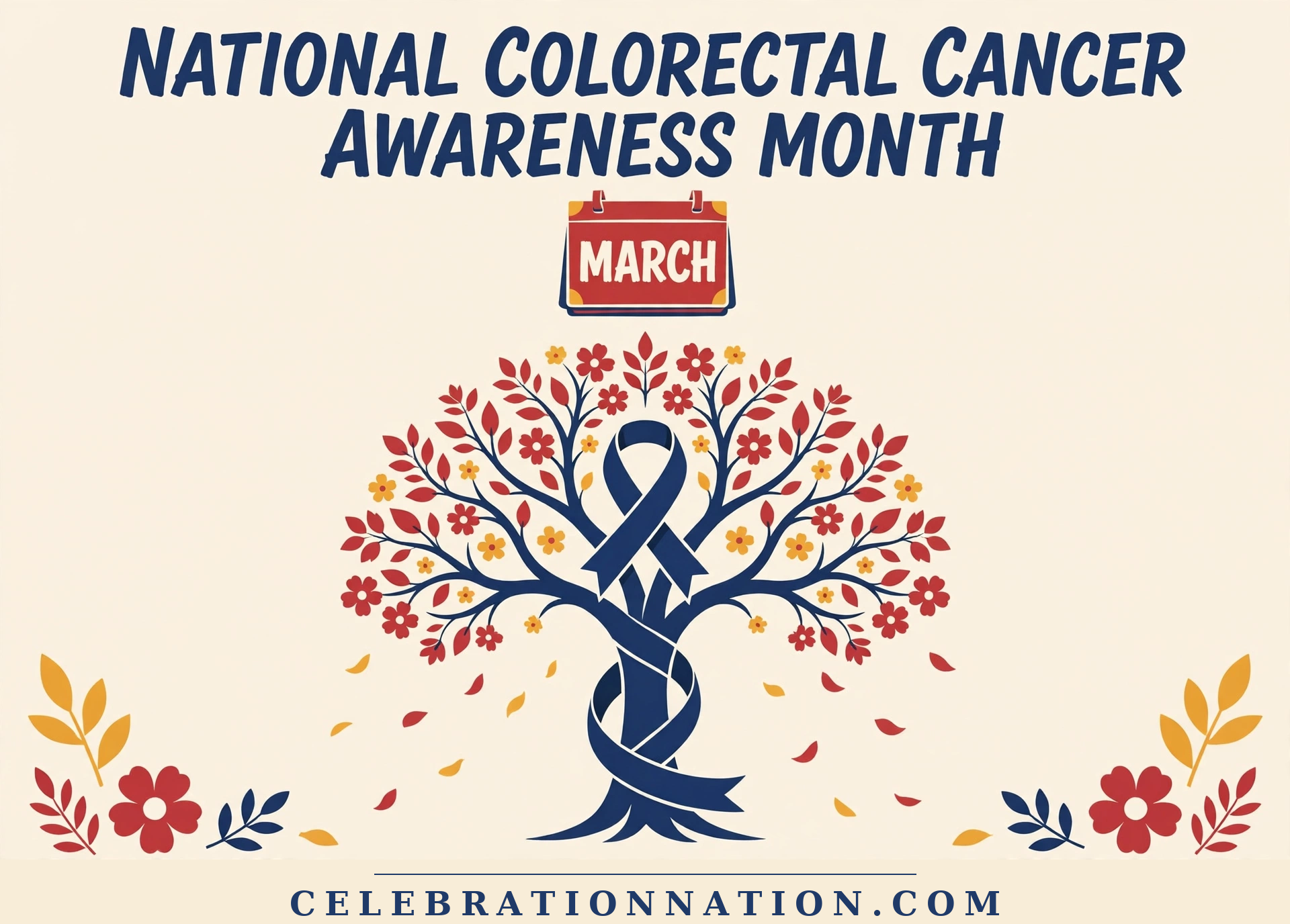
National Colorectal Cancer Awareness Month
March invites us to reflect on colorectal health, many lives can be saved through awareness and early detection.
- Roots
- The observance began in 2000 as a way to educate the public.
- Vibe
- A focus on prevention, screening, and support for affected families.
- Hashtag
- #NationalColorectalCancerAwarenessMonth
Fast facts
The story
Colorectal cancer, which affects the colon and rectum, is a major health concern in the United States. According to the American Cancer Society, it ranks as one of the most common cancers diagnosed in both men and women. Each March, awareness efforts intensify, encouraging people to learn about the risk factors and the importance of early detection through screenings.
Read the full story
The month serves as a reminder for individuals aged 45 and older to prioritize regular screenings. If detected early, colorectal cancer can have a high survival rate, with about 90% of people diagnosed at a localized stage surviving at least five years. Awareness campaigns often focus on education regarding symptoms, lifestyle changes, and the significance of routine check-ups.
A key message is "Screening Saves Lives", emphasizing proactive health measures. Community events, educational seminars, and fundraisers support ongoing research into colorectal cancer treatments. Organizations such as the Colorectal Cancer Alliance provide crucial resources, stories of hope, and support for those affected.
Ultimately, National Colorectal Cancer Awareness Month is about unity in the fight against this disease. It encourages open discussions around colorectal health, dispels myths, and fosters a supportive environment for patients and families alike. By participating in awareness activities, everyone can contribute to the collective effort of reducing the impact of this cancer.
Worth knowing
Support the Cause
Participate in local events and donate to organizations dedicated to colorectal cancer research and patient support.
Get Screened
If you are 45 or older, talk to your doctor about when to begin screenings for colorectal cancer.
Educate Yourself
Learn about the risk factors and symptoms associated with colorectal cancer to help recognize potential issues early.
Join a Support Group
Connect with others affected by colorectal cancer to share experiences and support through difficult times.
Did you know?
Age Risk Factor
Colorectal cancer risk increases significantly after the age of 45.
Diet Impact
A diet high in red and processed meats is associated with a higher risk of colorectal cancer.
Family History
Individuals with a family history of colorectal cancer are at increased risk.
Screening Recommendations
The American Cancer Society recommends screening starting at age 45 for average-risk individuals.
Symptoms to Watch
Common symptoms include changes in bowel habits, blood in stool, and unexplained weight loss.
Survival Rates
The five-year survival rate for localized colorectal cancer is about 90%.
Prevention Strategies
Regular exercise, a healthy diet, and avoiding tobacco can reduce risk factors.
Around the world
Every culture celebrates a little differently.
- USUnited StatesColorectal cancer awareness campaigns are prevalent across the U.S., with numerous organizations leading efforts.
- CACanadaColorectal cancer is also a significant health issue in Canada, with similar awareness initiatives.
- GBUnited KingdomIn the U.K., charities run campaigns to raise awareness about bowel cancer.
- AUAustraliaAustralia promotes awareness through campaigns aimed at early detection and prevention.
- DEGermanyGermany observes awareness activities that focus on education and support for affected individuals.
- INIndiaIn India, awareness efforts are growing, with initiatives aiming to improve screening rates.
Coming up next
See the calendar

Celebrate every day, all year
Official gear from the people who track 1,700+ celebrations.
Browse the shop 2027 National Day Wall CalendarGet the 2026 edition free. 1,700+ observances.
Never miss a reason to celebrate.
One quick morning email with today's celebrations, ideas and posters. Free, unsubscribe anytime.
🎉 You're on the list! Watch your inbox for The Daily Confetti.