





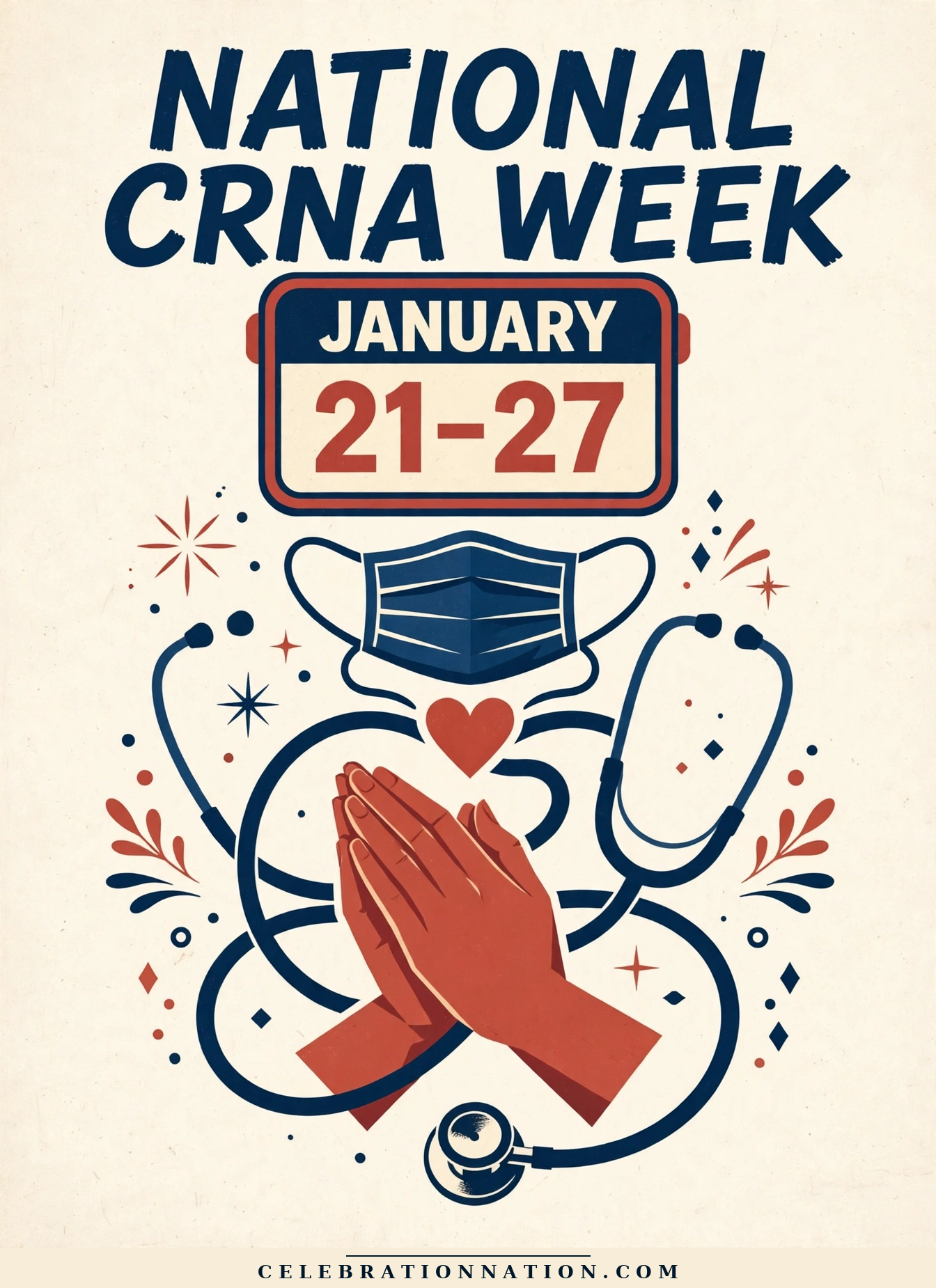
National CRNA Week
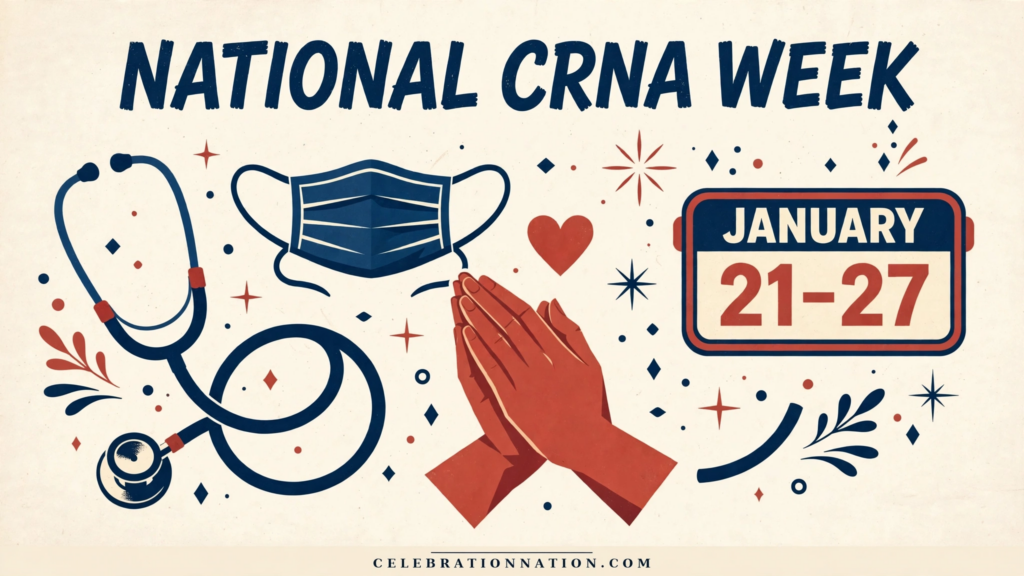
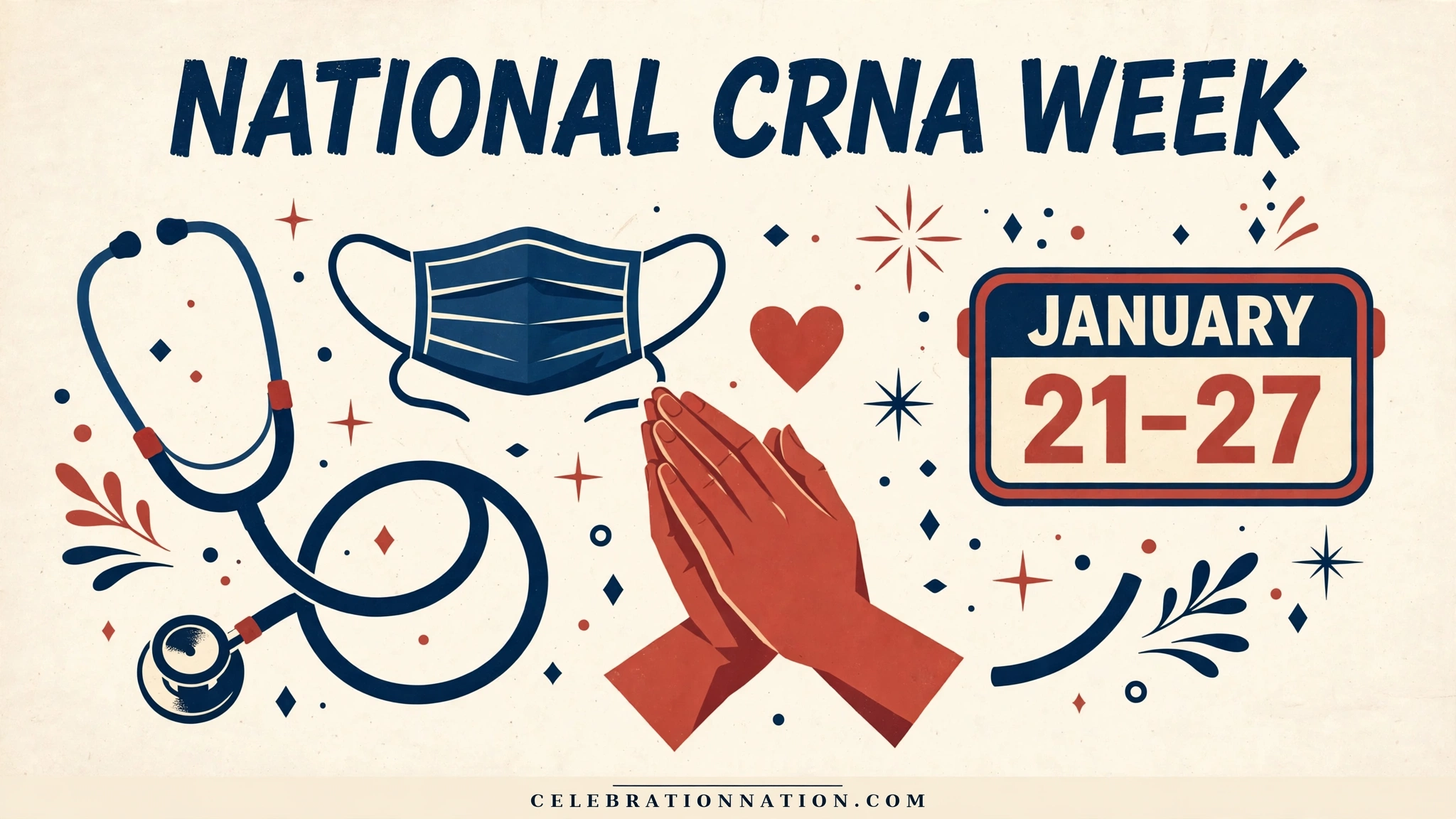
This week is a dedicated time to recognize CRNAs for their essential role in healthcare.
- Roots
- Established by the American Association of Nurse Anesthetists in 2000
- Vibe
- A week of gratitude and education about anesthesia practice.
- Hashtag
- #NationalCRNAWeek
Fast facts
The story
National CRNA Week is an annual celebration that highlights the significant role of Certified Registered Nurse Anesthetists in the healthcare system. These highly trained professionals administer anesthesia and provide care for patients undergoing surgical and other medical procedures. The week serves not only as a time for recognition but also as an opportunity for education regarding anesthesia practices and the valuable contributions of CRNAs.
Read the full story
Established by the American Association of Nurse Anesthetists (AANA) in 2000, this week aims to raise awareness about the profession and its impact on patient safety and comfort. From providing pain management options to ensuring that patients are well-informed before procedures, CRNAs play a crucial role in the surgical team. Their expertise helps to create a reassuring environment during what can be a daunting experience for many.
During National CRNA Week, various events and activities take place across the country, including educational seminars, community outreach programs, and social media campaigns. One highlight of the week is the opportunity for CRNAs to share their stories and experiences, fostering a deeper understanding of their essential work in healthcare settings.
As we celebrate this week, it is important to recognize the dedication and skill of CRNAs who often work behind the scenes in operating rooms. Their commitment to patient care and safety ensures that surgeries and procedures are conducted smoothly. By acknowledging their contributions, we not only show appreciation but also encourage future generations to consider this rewarding profession.
Worth knowing
Understanding Anesthesia
CRNAs are experts in anesthesia care, providing vital support in various surgical settings. They ensure patients receive appropriate pain management tailored to individual needs.
Education and Training
To become a CRNA, one must complete a master's or doctoral degree in nurse anesthesia, along with extensive clinical training, making them highly skilled healthcare professionals.
Patient Safety First
CRNAs prioritize patient safety, monitoring vital signs and adjusting anesthesia levels as necessary throughout procedures, ensuring optimal outcomes for all patients.
Community Engagement
During National CRNA Week, CRNAs engage with their communities through educational events, sharing knowledge about their role and the importance of anesthesia safety.
Did you know?
First CRNA
Agatha Hodgins formally established the Lakeside Hospital School of Anesthesia in Cleveland, Ohio, in 1915.
Anesthesia Evolution
Anesthesia has evolved significantly since the first surgical procedures, which often involved alcohol or opium.
CRNA Autonomy
Many states have opted out of the federal requirement for CRNAs to be supervised by physicians.
Historical Milestone
The first national certification exam for nurse anesthetists was given in 1945, and the CRNA credential was established in 1956.
CRNA Workforce
CRNAs comprise over 50% of anesthesia providers in the United States.
Global Presence
Countries worldwide recognize the value of nurse anesthetists, incorporating them into their healthcare frameworks.
Advocacy Efforts
The AANA actively advocates for CRNA practice rights and education funding at the national level.
Around the world
Every culture celebrates a little differently.
- USUnited StatesIn the U.S., CRNAs provide anesthesia care in diverse settings, from large hospitals to rural clinics.
- CACanadaIn Canada, anesthesia care teams work alongside physicians in various healthcare facilities.
- GBUnited KingdomIn the UK, anaesthesia teams contribute to surgical care and patient safety.
- AUAustraliaIn Australia, anaesthesia teams provide care in diverse environments, including remote locations.
- NZNew ZealandIn New Zealand, anaesthesia teams are integral to surgical practices.
- DEGermanyIn Germany, trained anesthesia staff support physicians in anesthesia care.
Coming up next
See the calendar


Celebrate every day, all year
Official gear from the people who track 1,700+ celebrations.
Browse the shop 2027 Wall Calendar, signed by Marlo AndersonSigned by the founder of National Day Calendar.
Never miss a reason to celebrate.
One quick morning email with today's celebrations, ideas and posters. Free, unsubscribe anytime.
🎉 You're on the list! Watch your inbox for The Daily Confetti.