
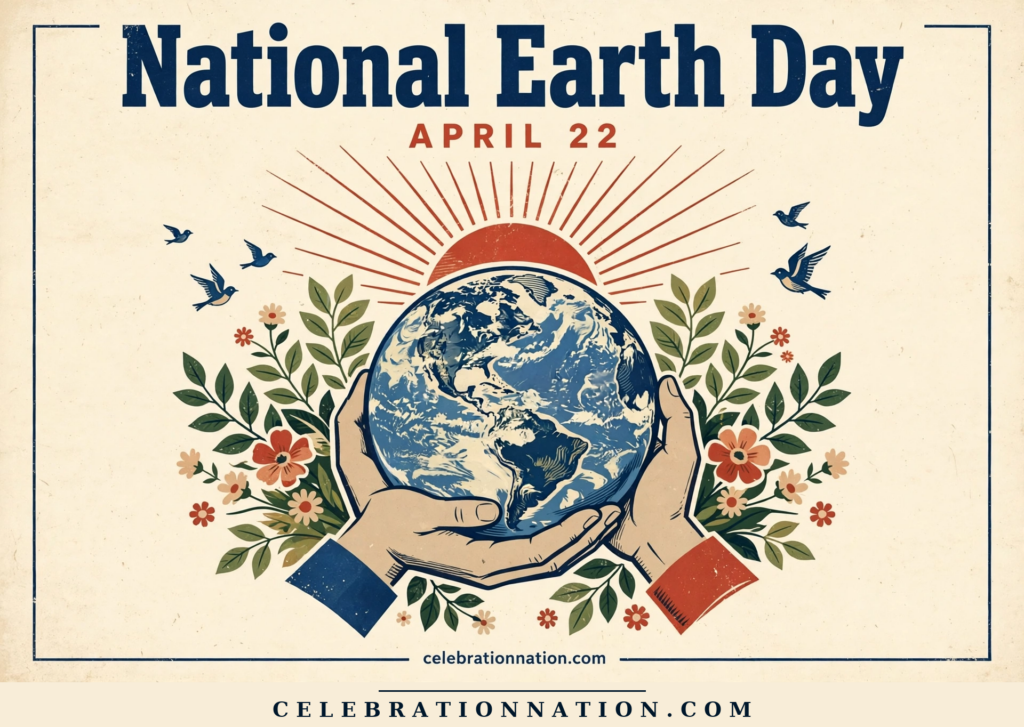
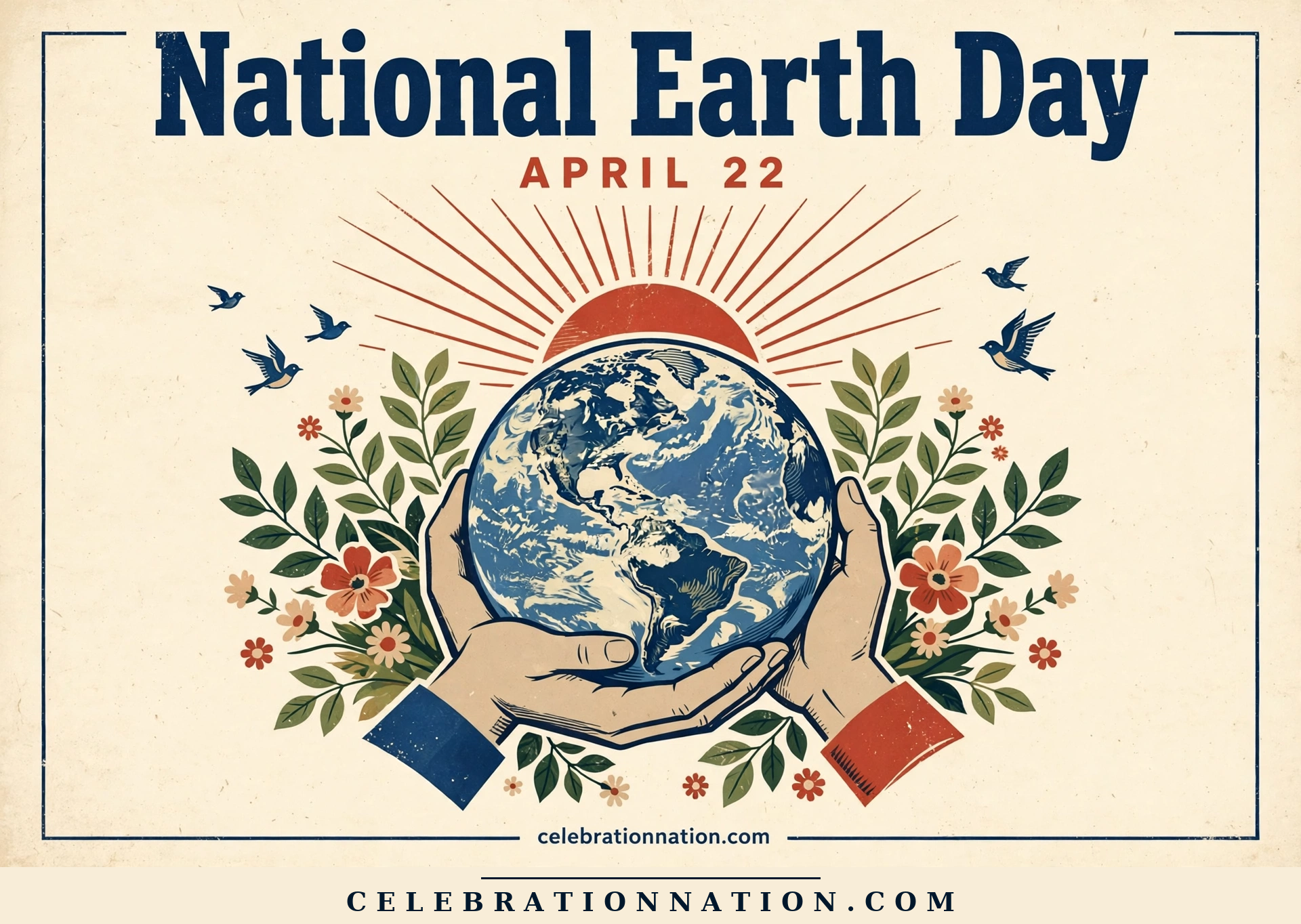
National Earth Day
50+ years of the world's largest civic day — and the moment American environmentalism stopped being a fringe idea. Earth Day on April 22 is the day the planet gets top billing.
- Vibe
- Rolling Up Sleeves
- Also on Apr 22
- International Mother Earth Day · Girl Scout Leader’s Day · Jelly Bean Day
- Hashtag
- #NationalEarthDay
Ways to celebrate
Start with one small commitment. Then build:
- 🗑️ Clean one public place. 20 minutes with a trash bag at a park or beach. The smallest civic act that immediately pays dividends.
- 🌱 Plant something. Tree, flower, native wildflower seed mix. Every yard can host a pollinator garden.
- 🚲 Skip a car trip. Walk, bike, bus, or combine errands. Even one a week compounds over a year.
- ♻️ Audit your recycling. Most of what people put in curbside bins ends up as trash. Know what your municipality actually takes.
- 📞 Call your representative. Climate policy is passed at the state and federal level. 5 minutes; high leverage.
Make it your kind of celebration
Family
Family park cleanup day. 30 minutes with bags and gloves. Kids love picking up trash if it's framed as a mission. Finish with ice cream.
Kids
Plant a seed in a cup together. Watch it grow this week. Talk about why pollinators matter. Age 4+ can totally grasp the ecosystem idea.
Couples
Switch one habit together. Reusable bags, refillable water bottles, no-buy April — whatever fits. Habits stick better in pairs.
Office
Company-wide Earth Day cleanup, native plant sale, or electricity audit. Most offices waste 30-50% of the energy they pay for.
School
Classic Earth Day curriculum still works: cleanup, planting, classroom recycling audit. Tie it to the first Earth Day in 1970 for history.
Community
Local nonprofits and parks departments often organize Earth Day events. Check your city's website; show up.
Just me
One 30-minute walk. One piece of trash picked up and binned. One email to a rep. That's a complete Earth Day.
Plan ahead
National Earth Day is observed on April 22 every year. Here is where it lands for the next ten years, handy for planners, marketers and party people.
Fast facts
The story
Before Earth Day 1970, there was no EPA, and federal clean-air and clean-water protections were far weaker. After Earth Day 1970 came the EPA plus stronger clean-air, clean-water, and endangered-species laws, within three years.
Read the full story
In January 1969, an oil platform off Santa Barbara blew out and dumped three million gallons of crude into the Pacific. Beaches were black; birds were coated; TV footage ran nationwide. Wisconsin Senator Gaylord Nelson watched the coverage and had an idea: what if environmental concern got the same mass-rally treatment that had mobilized students for civil rights and Vietnam? He proposed a nationwide "teach-in" on the environment.
April 22, 1970 was the date. On that Wednesday, 20 million Americans, 10% of the population, participated in some form of environmental activity: rallies, cleanups, lectures, teach-ins, demonstrations. It was the largest civic event in American history up to that point. It wasn't political in the partisan sense; it was broadly American.
The legislative response was swift and historic. Within eight months, Nixon created the Environmental Protection Agency. Within three years, Congress passed the Clean Air Act (1970), the Clean Water Act (1972), and the Endangered Species Act (1973), the legal foundation of American environmentalism. All three are widely credited to the mobilization that Earth Day created.
Today, Earth Day is observed in 193 countries. The Paris Climate Agreement was opened for signature on Earth Day 2016. Activism has evolved, from teach-ins to Climate Strike marches, from "reduce, reuse, recycle" to "systems change, not climate change." The urgency has grown. The basic premise, that collective action can change environmental policy, still holds.
Four things that actually move the needle (more than reusable straws):
Six countries, six versions of the same impulse:
Did you know?
Earth Day 1970 = the largest civic event ever, at the time.
20 million people, 10% of the U.S. population, participated. No single-day event in American history before it drew more.
Gaylord Nelson won the Presidential Medal of Freedom.
Awarded to Nelson in 1995 by President Clinton. Specifically for creating Earth Day and shaping American environmental policy.
Earth Day went global in 1990.
The 20th anniversary. Organized by Denis Hayes (Nelson's 1970 coordinator). 200 million people in 141 countries. The biggest single day of environmental activism in history.
The Earth Day flag is a real thing.
Designed in 1969, it features a NASA photograph of Earth from space. Now a widely-recognized symbol flown at Earth Day events worldwide.
Keep the party going
See the calendar
Celebrate every day, all year
Official gear from the people who track 1,700+ celebrations.
Browse the shop 2027 National Day Wall CalendarGet the 2026 edition free. 1,700+ observances.
Never miss a reason to celebrate.
One quick morning email with today's celebrations, ideas and posters. Free, unsubscribe anytime.
🎉 You're on the list! Watch your inbox for The Daily Confetti.