
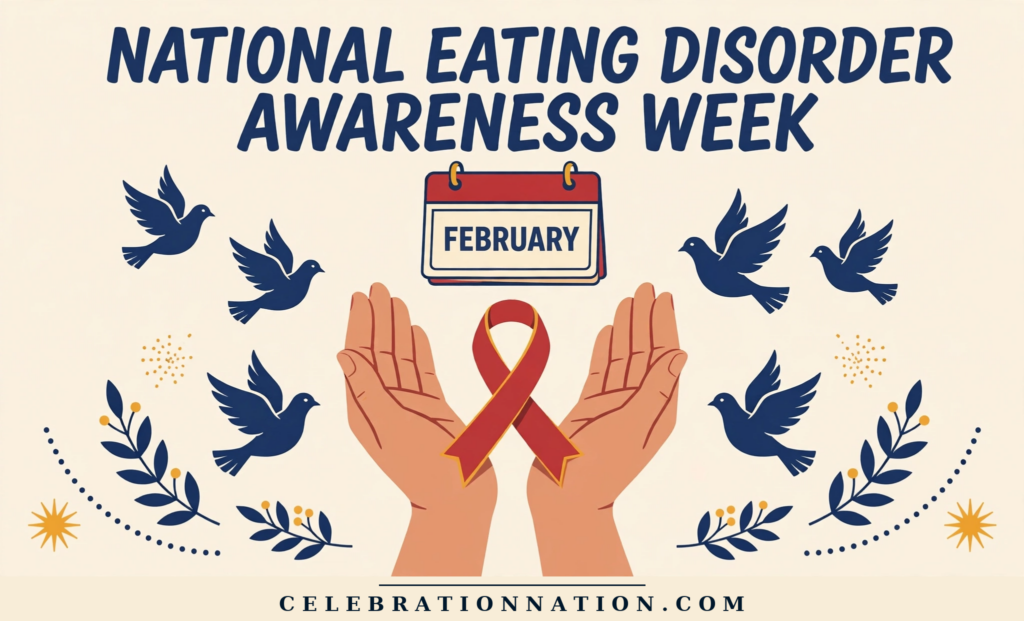
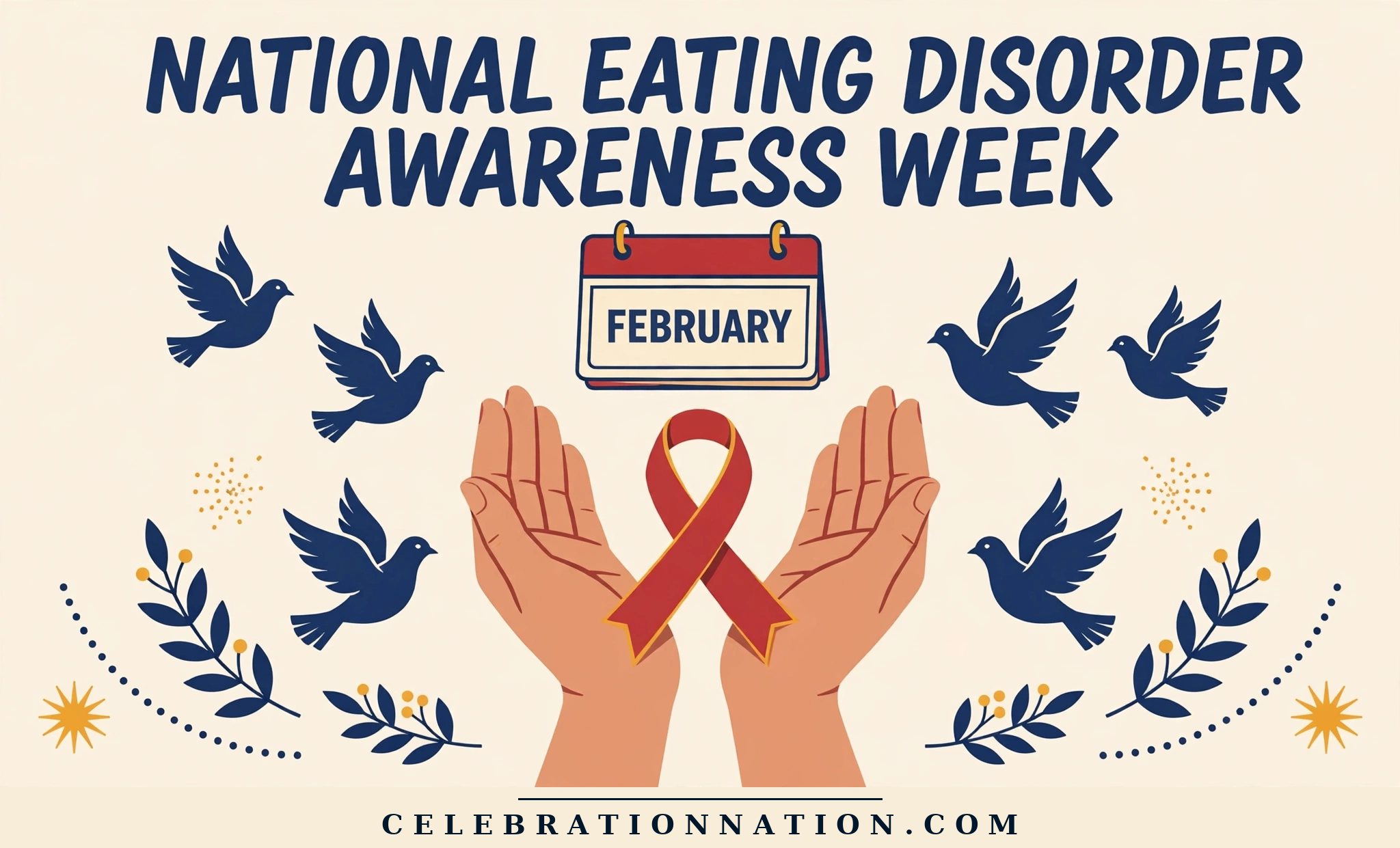
National Eating Disorder Awareness Week
This week is a time to foster understanding and compassion for those affected by eating disorders.
- Roots
- National awareness campaigns began around 2000.
- Vibe
- A week of education, support, and advocacy for recovery.
- Hashtag
- #NationalEatingDisorderAwarenessWeek
Fast facts
The story
National Eating Disorder Awareness Week is a significant event that begins each year on the last Monday in February. Part of national awareness campaigns that began around 2000, this week aims to provide education and resources to individuals and families affected by eating disorders. Through various campaigns and events, the week serves as a reminder of the importance of understanding these complex health issues and fostering a supportive community.
Read the full story
Eating disorders encompass a range of conditions, including anorexia, bulimia, and binge eating disorder. These disorders can affect individuals of any age, gender, or background, making awareness and education crucial. This week encourages open conversations about the impact of societal pressures and the importance of body positivity, emphasizing that recovery is possible and support is available.
Throughout the week, many organizations host events designed to raise awareness and promote understanding of eating disorders. From community workshops to online campaigns, these initiatives aim to equip individuals with knowledge and resources. The week highlights the idea that everyone's voice matters in the fight against eating disorders, encouraging everyone to share their stories.
As National Eating Disorder Awareness Week progresses, it becomes increasingly vital for communities to come together and support one another. By sharing experiences and educating ourselves and others, we can work toward dismantling the stigma surrounding eating disorders. Join the conversation, advocate for those in need, and help create a culture of understanding and acceptance. Together, we can make a difference.
Coming up next
See the calendar
Celebrate every day, all year
Official gear from the people who track 1,700+ celebrations.
Browse the shop 2027 Wall Calendar, signed by Marlo AndersonSigned by the founder of National Day Calendar.
Never miss a reason to celebrate.
One quick morning email with today's celebrations, ideas and posters. Free, unsubscribe anytime.
🎉 You're on the list! Watch your inbox for The Daily Confetti.