





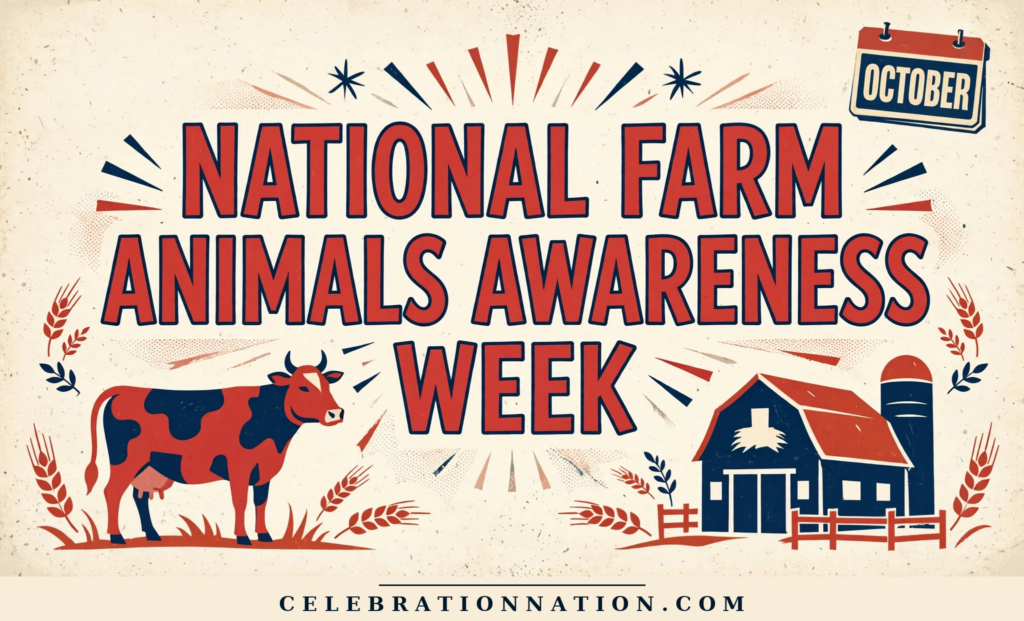
National Farm Animals Awareness Week
This week reminds us of the vital role of farm animals in our ecosystem and economy, highlighting their significant contributions to society.
- Roots
- Established to promote awareness of farm animal welfare
- Vibe
- Community-driven, educational, and advocacy-focused
- Hashtag
- #NationalFarmAnimalsAwarenessWeek
Fast facts
The story
National Farm Animals Awareness Week serves as a reminder that farm animals are integral to agriculture and our daily lives. These animals not only provide us with food, but they also contribute to the economy and culture of rural communities across America. From the humble chicken to the majestic cow, each animal plays a role in sustaining our food systems and rural heritage.
Read the full story
As we celebrate this week, it is essential to consider the welfare of these animals. Many organizations advocate for better living conditions, humane treatment, and respect for the rights of farm animals. The increasing awareness of these issues reflects a broader societal shift towards compassionate farming practices and ethical consumption.
During this week, individuals and families can engage in various activities that promote awareness. Visiting local farms allows people to see firsthand the care that goes into raising animals responsibly. Many farms offer educational programs that highlight the importance of animal welfare and sustainable farming practices. This hands-on exposure fosters a deeper understanding of the animals that often go unnoticed in our modern lives, reinforcing the connection between humans and animals.
In addition to farm visits, educational resources are available through books, documentaries, and community events. Schools often participate in activities that emphasize animal welfare and encourage students to think critically about their food sources. By raising awareness and advocating for the rights of farm animals, we can create a more compassionate society that values every living being.
Worth knowing
Understanding Farm Animals
Farm animals are often seen as mere commodities, but they have their own needs and emotions. Understanding their behavior is essential for promoting their welfare.
Join the Movement
Numerous organizations are dedicated to the welfare of farm animals. Joining or supporting these groups can amplify your voice in advocacy efforts.
Support Local Farms
Buying local not only supports your community but also encourages humane treatment of animals, as many local farms prioritize animal welfare.
Educate Others
Share what you learn about farm animal welfare with friends and family, helping to spread awareness and encourage compassionate choices.
Did you know?
Diverse Farm Animal Species
There are over 25 different species of farm animals raised for various purposes worldwide.
Historical Significance
Farming practices date back over 10,000 years, marking the beginning of human civilization.
Animal Intelligence
Studies show that pigs are as intelligent as dogs, exhibiting complex behaviors and emotions.
Global Production
The U.S. is the largest producer of beef and chicken in the world.
Environmental Impact
Sustainable farming practices help reduce the environmental footprint of animal agriculture.
Animal Sentience
Many countries now recognize farm animals as sentient beings deserving of legal protection.
Nutrition Contributions
Farm animals provide essential nutrients and proteins that are critical for human health.
Around the world
Every culture celebrates a little differently.
- USUnited StatesThe U.S. is home to millions of farm animals, contributing significantly to the agricultural economy.
- CACanadaCanada has various programs emphasizing humane treatment and welfare of farm animals.
- GBUnited KingdomThe UK has a strong focus on animal rights and welfare, with many initiatives supporting farm animals.
- AUAustraliaAustralia's farming practices include regulations to ensure the welfare of farm animals.
- DEGermanyGermany is known for its high standards in animal welfare, impacting farming practices across Europe.
- FRFranceFrance promotes awareness about farm animal rights through various campaigns and educational programs.
Coming up next
See the calendar


Celebrate every day, all year
Official gear from the people who track 1,700+ celebrations.
Browse the shop 2027 National Day Wall CalendarGet the 2026 edition free. 1,700+ observances.
Never miss a reason to celebrate.
One quick morning email with today's celebrations, ideas and posters. Free, unsubscribe anytime.
🎉 You're on the list! Watch your inbox for The Daily Confetti.