


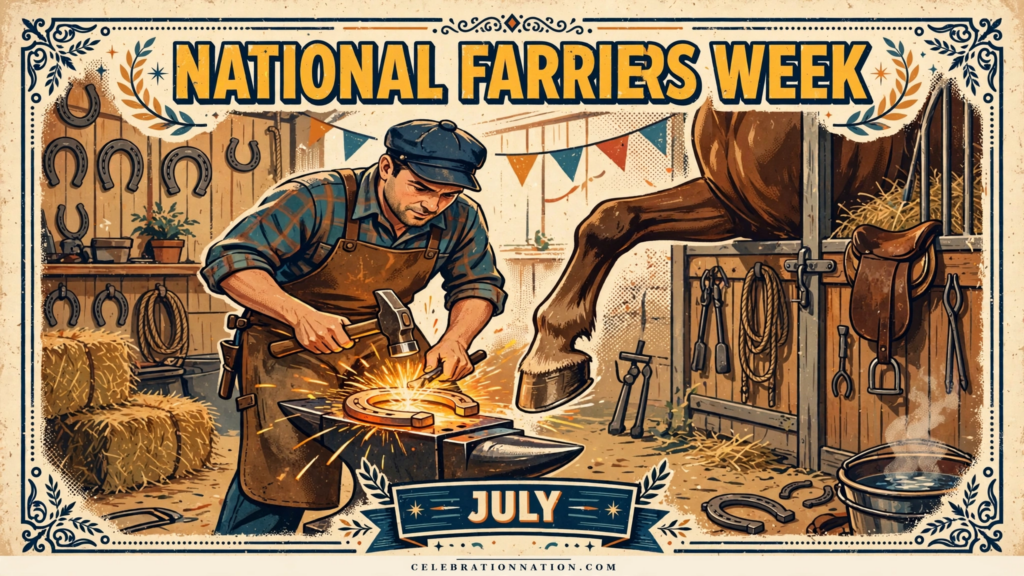
National Farriers Week
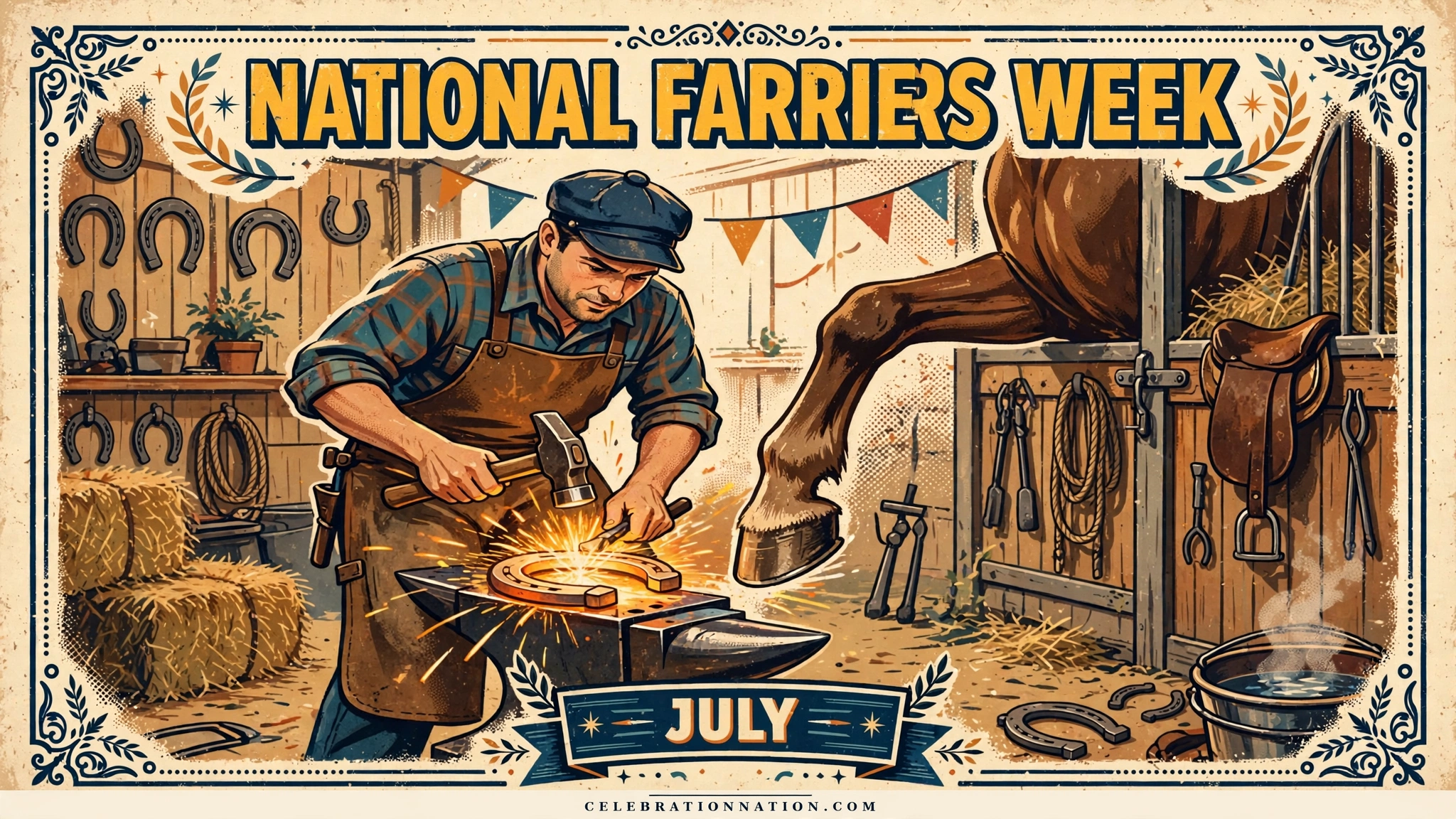
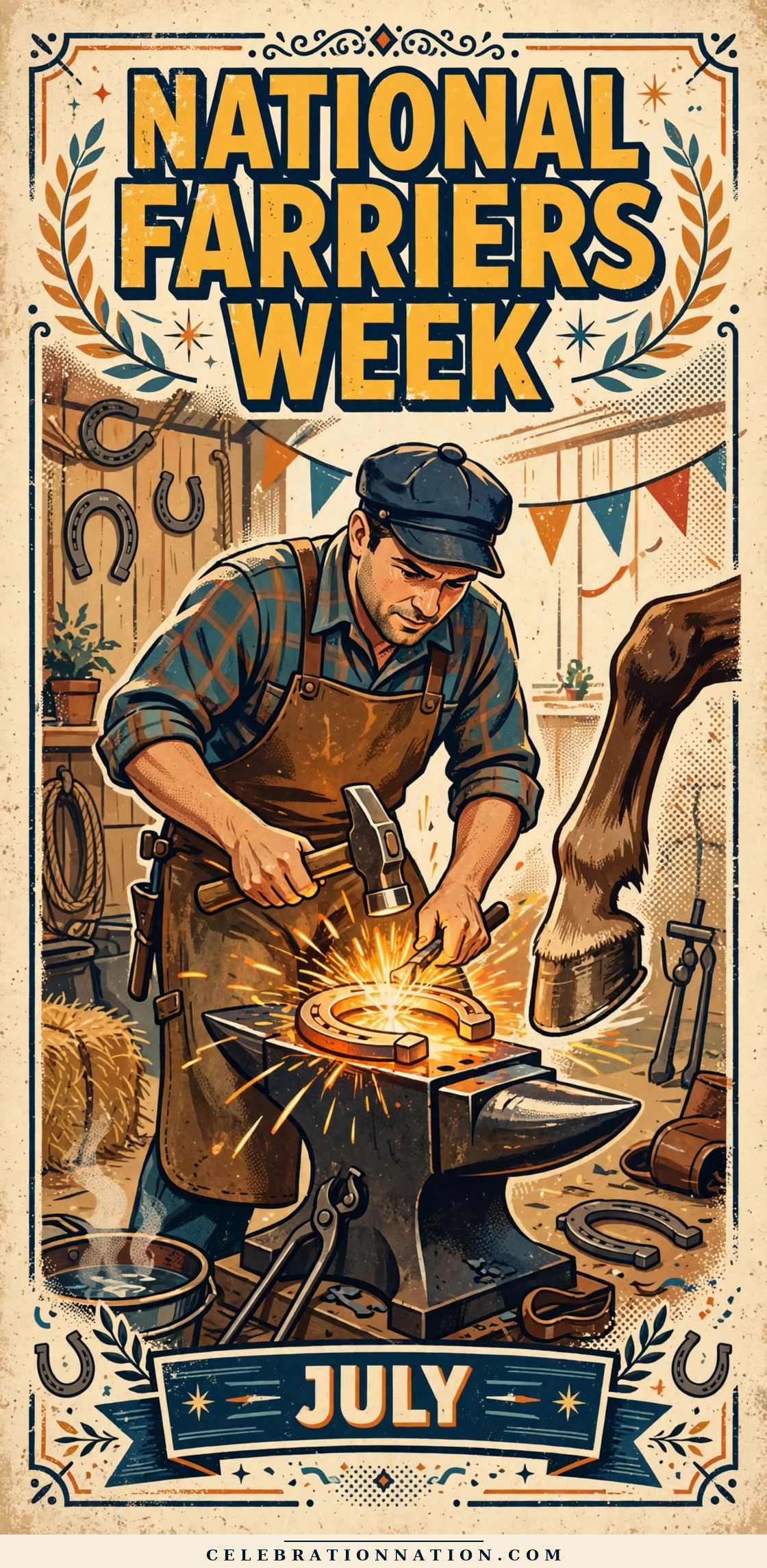
This week, we recognize the invaluable work of farriers, those who ensure horses are healthy and ready for their best performance.
- Roots
- Established by American Farriers Journal in 1998
- Vibe
- Community-focused and educational
- Hashtag
- #NationalFarriersWeek
Fast facts
The story
National Farriers Week, celebrated during the second week of July, serves to acknowledge the dedicated professionals who work tirelessly to maintain the hoof health of horses. Established by American Farriers Journal in 1998, this week highlights the importance of farriery in both equestrian sports and leisure riding. Farriers are vital to the health and well-being of horses, and this week encourages horse owners and enthusiasts to appreciate their work.
Read the full story
The life of a farrier is demanding, requiring a blend of physical skill, knowledge, and compassion. Farriers are trained to trim and shape hooves, fit horseshoes, and recognize signs of hoof-related issues. This profession not only supports the performance of horses but also contributes to their overall health. As we celebrate this week, we can learn more about the challenges and rewards faced by these skilled artisans.
Many farriers also play a role in educating horse owners about hoof care and maintenance. They help clients understand the significance of regular hoof care, which can prevent serious health problems. A well-cared-for hoof can make the difference between a competitive edge and a painful experience for a horse. During this week, it's important to remember that the work of farriers extends beyond mere shoeing, it involves a deep understanding of equine anatomy and behavior. Their expertise is crucial for both performance and health.
Celebrating National Farriers Week is not just about recognizing individuals; it's about fostering community connections. Many local farriers are deeply involved in their communities, participating in events and offering educational workshops. This week serves as a reminder for horse owners to engage with these professionals, to ask questions, and to appreciate the craftsmanship that goes into caring for their equine companions. By supporting local farriers, we contribute to the health of the equestrian community at large.
Worth knowing
Meet Your Farrier
Take the time to learn about the farrier who works with your horse. Understanding their techniques and knowledge can enhance your relationship and the care your horse receives.
Shop Local
Support local farrier businesses by purchasing hoof care products or services. This helps sustain the community and the skilled professionals who dedicate their lives to horse care.
Educate Yourself
Read books or attend workshops about hoof care and farriery. Learning about this trade can deepen your understanding of horse care and improve your horse's well-being.
Host an Event
Consider organizing a community event that focuses on farriery and equine care. This could be a fun way to engage others and promote the importance of hoof health.
Did you know?
Historical Roots
The practice of farriery dates back to ancient civilizations, where horses were essential for transportation and agriculture.
Traditional Techniques
Farriers often use traditional tools like hammers and rasps, blending old-world craftsmanship with modern techniques.
Farrier Training
Becoming a farrier typically requires a combination of apprenticeship and formal education.
Horse Health
Farriers can identify early hoof problems and provide corrective care.
Cultural Significance
Farriers are celebrated in many cultures, often depicted in art and literature.
Community Engagement
Many farriers participate in local events to educate the public about horse care.
Environmental Impact
The word farrier comes from the French ferrier, meaning blacksmith, from the Latin ferrum, iron.
Around the world
Every culture celebrates a little differently.
- USUnited StatesHome to thousands of farriers, the U.S. celebrates this profession with events and educational opportunities.
- GBUnited KingdomFarriery is a respected craft in the UK, with historical roots and a strong community of professionals.
- AUAustraliaAustralia boasts a vibrant equestrian culture, where farriers play a crucial role in horse care.
- CACanadaFarriers in Canada are essential to the health of horses, especially in rural communities.
- DEGermanyIn Germany, the craft of farriery is highly regarded, with extensive training and certification available.
- NZNew ZealandNew Zealand's equestrian community values farriers for their expertise in hoof care and performance.
Coming up next
See the calendar
Celebrate every day, all year
Official gear from the people who track 1,700+ celebrations.
Browse the shop 2027 Wall + Desk Calendar BundleCelebrate every day at home and at work.
Never miss a reason to celebrate.
One quick morning email with today's celebrations, ideas and posters. Free, unsubscribe anytime.
🎉 You're on the list! Watch your inbox for The Daily Confetti.