




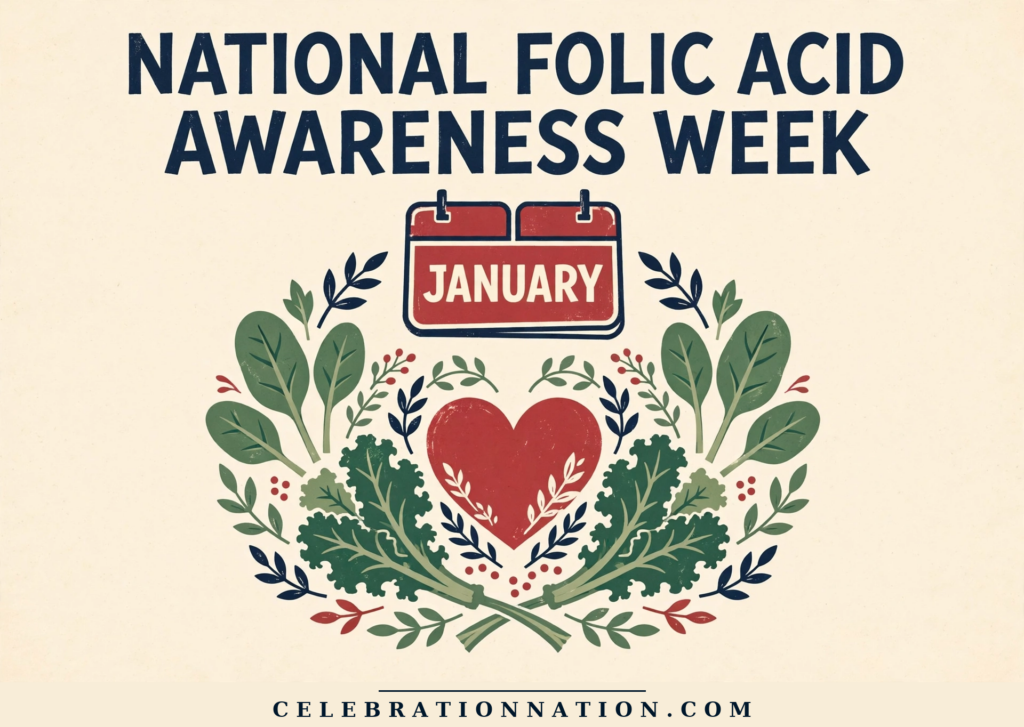
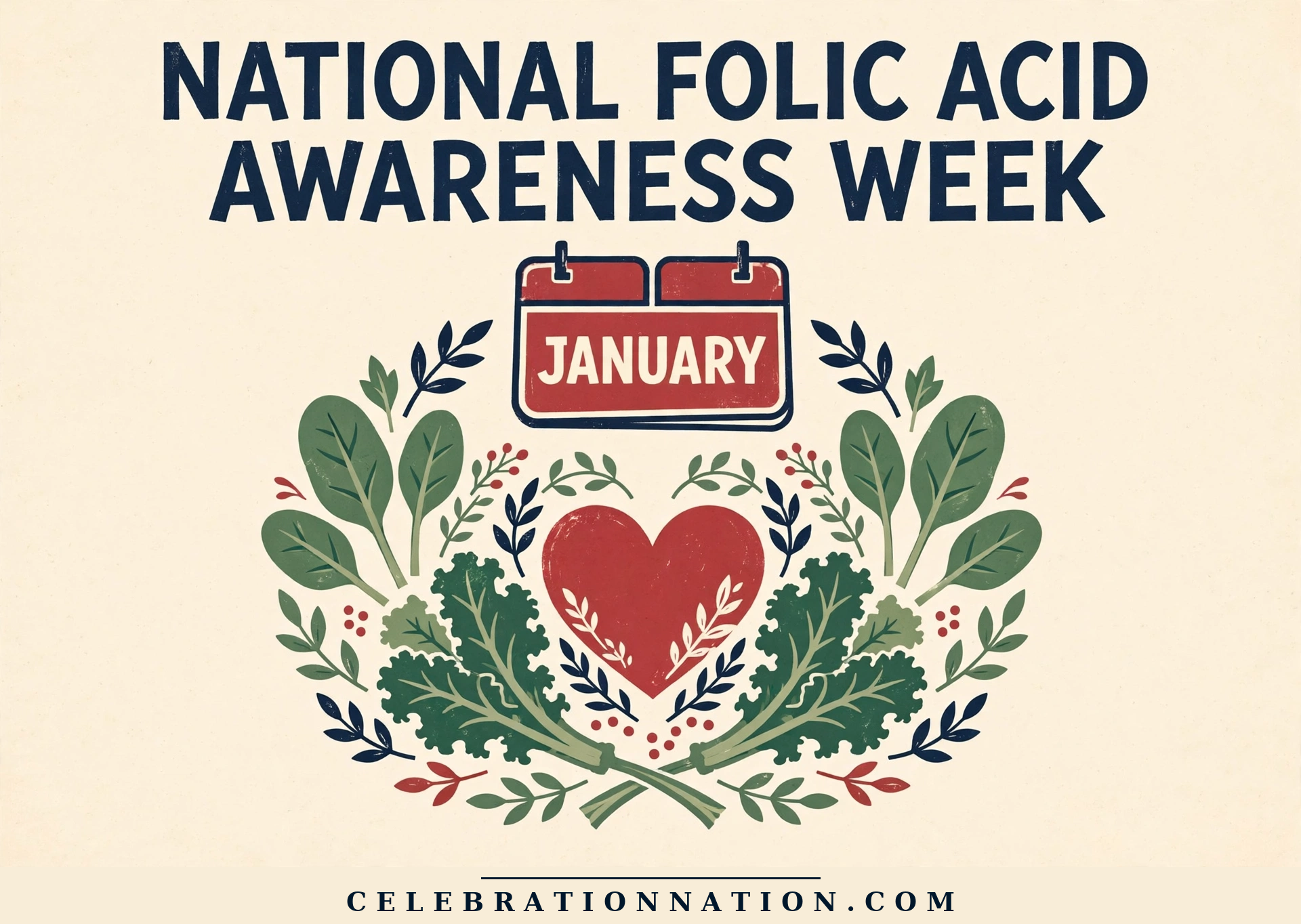
National Folic Acid Awareness Week
Celebrate the significance of folic acid with a focus on nutrition and well-being.
- Roots
- Established by the CDC in 1998
- Vibe
- A week dedicated to health and awareness
- Hashtag
- #NationalFolicAcidAwarenessWeek
Fast facts
The story
National Folic Acid Awareness Week, observed in the first week of January, highlights the crucial role that folic acid plays in maintaining health, especially for women planning to conceive. Folic acid, a B vitamin, is essential for DNA synthesis and the proper development of the fetus during pregnancy. This week is an opportunity to educate individuals about the importance of adequate folate intake, emphasizing that a healthy diet can make a significant difference in reproductive health.
Read the full story
The Centers for Disease Control and Prevention (CDC) first launched this initiative in 1998, aiming to raise awareness about the importance of folic acid in preventing neural tube defects. These birth defects affect the brain and spine, and they occur in the first few weeks of pregnancy, often before a woman knows she is pregnant. By promoting folic acid awareness, the CDC seeks to empower women to take proactive steps in their health, ensuring they receive the necessary nutrients before conception.
Dietary sources of folate include leafy greens, beans, citrus fruits, and fortified cereals. It is recommended that women of childbearing age consume at least 400 micrograms of folic acid daily, whether through food or supplements. Folic acid is a simple yet powerful tool for improving health outcomes and preventing serious developmental issues.
As we observe National Folic Acid Awareness Week, it is essential to engage with the community, share knowledge, and advocate for better nutrition practices. Local health organizations often host events and workshops, providing resources and support. By fostering a culture of awareness and education, we can help ensure that future generations are born healthy and strong.
Worth knowing
Nutritional Choices
Incorporating folate-rich foods into your diet can significantly enhance your health. Consider adding foods like spinach, beans, and fortified cereals.
Educational Resources
Explore various guides and brochures available through health organizations that detail the importance of folic acid and how to incorporate it into your diet.
Consult a Professional
Speak with your healthcare provider to discuss the benefits of folic acid and whether you should consider supplementation as part of your health regimen.
Community Engagement
Join local health events or discussions to enhance awareness about folic acid and its significance, fostering a community focused on health education.
Did you know?
Key Benefits
Folic acid is known to help prevent major birth defects of the baby's brain and spine.
Daily Requirements
The recommended daily intake of folic acid for women of childbearing age is 400 micrograms.
Food Sources
Foods rich in folate include dark leafy greens, nuts, beans, and fortified grains.
Supplement Use
It's often recommended to start taking folic acid before conception and continue through the first trimester.
Worldwide Awareness
Many countries have initiatives similar to National Folic Acid Awareness Week to promote health.
Cultural Impact
In some cultures, traditional diets are naturally rich in folate, showcasing a historical awareness of its benefits.
Research Findings
Studies suggest that adequate folic acid intake can lead to healthier pregnancy outcomes.
Around the world
Every culture celebrates a little differently.
- USUnited StatesIn the U.S., National Folic Acid Awareness Week encourages women to prioritize their health.
- GBUnited KingdomThe UK also recognizes the importance of folic acid in pregnancy and promotes similar awareness initiatives.
- CACanadaCanadian health authorities advocate for folic acid supplementation among women of childbearing age.
- AUAustraliaAustralia promotes folic acid awareness, emphasizing its role in preventing birth defects.
- DEGermanyGermany supports nutritional education focusing on the benefits of folate.
- FRFranceIn France, health campaigns promote folic acid intake among women planning pregnancies.
Coming up next
See the calendar

Celebrate every day, all year
Official gear from the people who track 1,700+ celebrations.
Browse the shop 2027 Wall Calendar, signed by Marlo AndersonSigned by the founder of National Day Calendar.
Never miss a reason to celebrate.
One quick morning email with today's celebrations, ideas and posters. Free, unsubscribe anytime.
🎉 You're on the list! Watch your inbox for The Daily Confetti.