



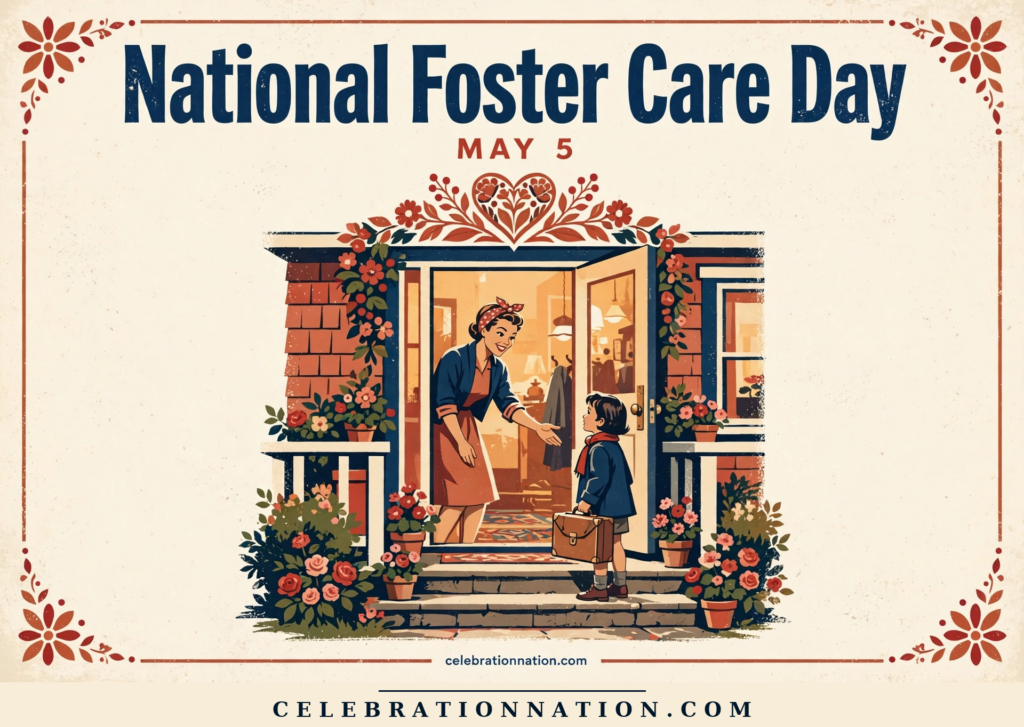
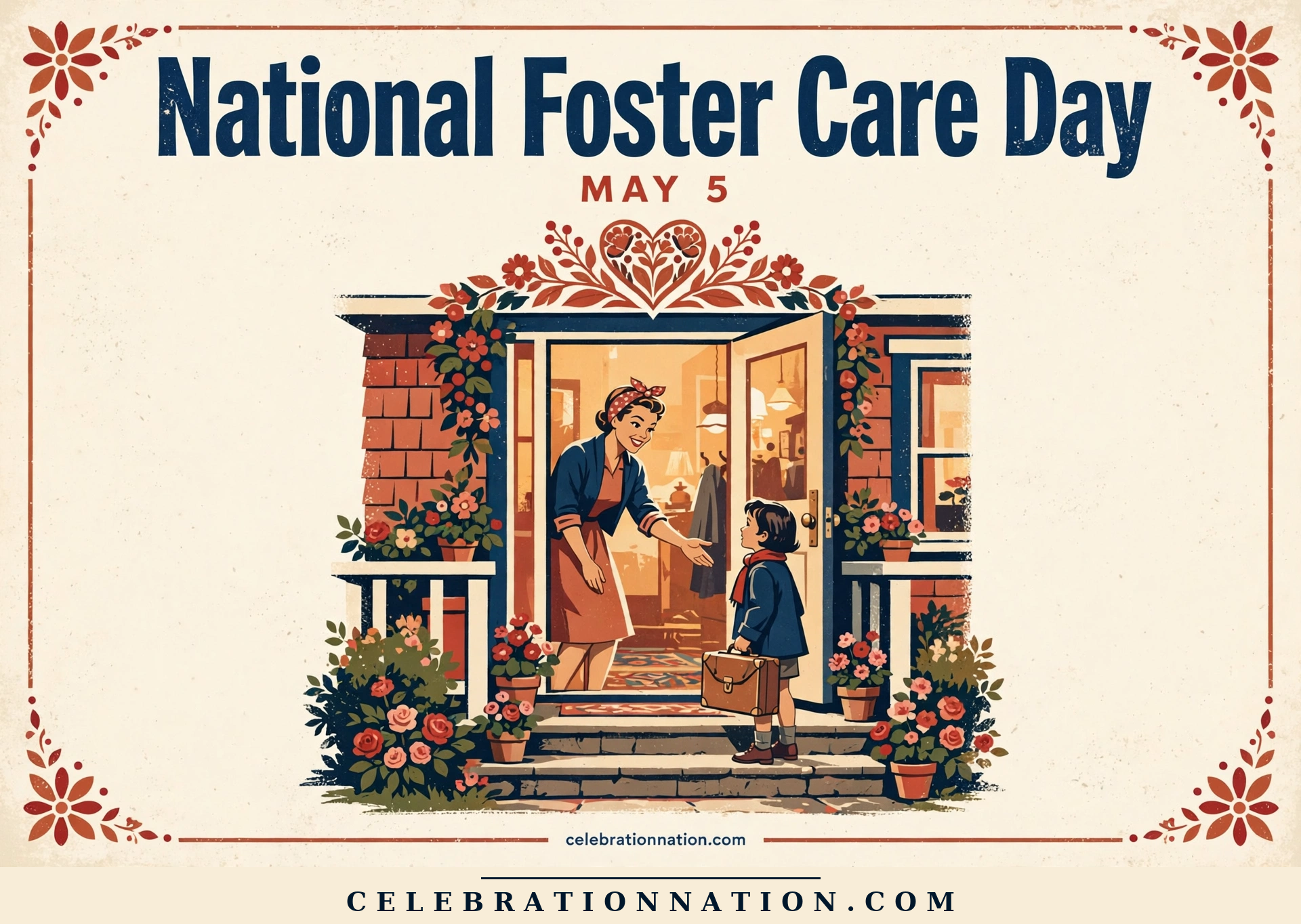
National Foster Care Day
National Foster Care Day on May 7 honors the 400,000+ American children currently in foster care, the 210,000 foster families who open their homes to them, and the social workers, CASAs, and frontline nonprofits doing the quiet work of giving vulnerable kids stability. A sobering observance — and an urgent one. The foster-care system is the most consequential child-welfare institution in the country, and it needs more families.
- Vibe
- Urgent & Compassionate
- Also on May 5
- Mmiw Awareness Day · Teacher Appreciation Day · World Asthma Day
- Hashtag
- #NationalFosterCareDay
Ways to celebrate
Help vulnerable kids — however you can:
- 🏡 Learn about foster parenting. Every state's Department of Children and Family Services has information sessions. No commitment; just show up and learn.
- ⚖️ Volunteer as a CASA. Court Appointed Special Advocates train volunteers to be the trusted adult in a foster child's life during court proceedings. 30 hours of training; lasting impact.
- 🎁 Donate to foster-focused nonprofits. National CASA, Together We Rise, A Home Within — all highly-rated organizations serving foster children directly.
- 📚 Read memoirs by foster alumni. Ashley Rhodes-Courter's 'Three Little Words' or Regina Calcaterra's 'Etched in Sand' give the honest inside view.
- 🫂 Support the foster family in your orbit. Meals, babysitting, hand-me-down clothes. Most foster parents are overwhelmed; small gestures help hugely.
Make it your kind of celebration
Family
Age-appropriate conversations about what foster care is. Donate kid-appropriate items (new backpacks, books, clothes) to local foster agencies.
Kids
Too young for the hard reality, but can participate in toy/book drives. Great civic-awareness starting point.
Couples
Foster parenting requires partnership. If you've ever wondered, learn together. Information sessions are non-binding.
Office
Workplace drive for Together We Rise's 'Sweet Cases' (new duffels for foster kids who often arrive at placements with trash bags). Easy corporate service project.
School
Classrooms with foster kids often have hidden needs. School counselors know who. Help quietly.
Community
Become a CASA. The training is intensive but flexible. Every CASA helps 1-2 kids at a time; changes lives.
Just me
Donate to CASA (nationalcasagal.org). Or check your state's 'adopt US Kids' program for kids who are available for permanent adoption.
Plan ahead
National Foster Care Day is observed on the first Tuesday in May. Here is where it lands for the next ten years, handy for planners, marketers and party people.
Fast facts
The story
The foster-care system in the US is old. 'Orphan trains' (1854-1929) carried ~200,000 children from Northeastern cities to rural foster families. The Social Security Act of 1935 established federal funding for foster care. The Adoption Assistance and Child Welfare Act of 1980 reformed the system. The Adoption and Safe Families Act of 1997 strengthened permanency requirements. It's a system built in layers.
Read the full story
Today, ~400,000 American children are in foster care at any given time. Most come from homes with serious neglect, abuse, substance abuse, or parental incarceration. About half reunify with their biological families. About 20% are adopted (often by the foster family). The rest 'age out' at 18 or 21 without a permanent family, a brutal outcome that predicts homelessness, incarceration, and trauma.
The system has a severe family shortage. Every state needs more foster families. The shortage is worst for teenagers, sibling groups, LGBTQ+ kids, kids with medical needs, and kids of color. Most American foster kids cycle through multiple placements, sometimes 10+, because there aren't enough homes. Stability is the #1 unmet need.
National Foster Care Day (the first Tuesday in May) is within National Foster Care Month (May). Proclaimed each year by the White House since 1988 under Reagan. The month's goal: raise awareness, recruit families, honor the workforce. Organizations like Together We Rise, A Home Within, and CASA coordinate drives and fundraisers. It's a hard observance, but an important one. The numbers don't get better without more people paying attention.
Four concrete ways Americans can support foster kids and families:
Six organizations doing foster-care work at national scale:
Did you know?
Many foster alumni have changed the world.
Notable foster alumni include: Nelson Mandela, Steve Jobs, Babe Ruth, Ice-T, Tommy Davidson, Jamie Foxx, James MacArthur, Cher, Marilyn Monroe, Eddie Murphy. Each life a reminder of what foster children can become, with support.
Every state has different rules.
Foster care is run at the state level with federal funding. Training requirements, reimbursements, licensing rules all vary significantly. Texas requires 35 hours of initial training; CA 33; NY 30. Check your state's Department of Children and Family Services.
Foster parents receive monthly reimbursement.
Varies by state: ~$450-800/month per child for basic care (food, clothing, housing). Higher for kids with special medical, behavioral, or therapeutic needs. Not enough to 'profit', barely covers costs in most states.
Aging out at 18 is devastating.
Without permanent family connections, 23,000 American youth 'age out' of foster care each year. Within 4 years: 60% incarcerated, 50% unemployed, 33% homeless, 71% of women pregnant. The long-term cost of not finding permanent families is enormous.
Keep the party going
See the calendar


Celebrate every day, all year
Official gear from the people who track 1,700+ celebrations.
Browse the shop National Day Celebration Card GameA party in a box, any day of the year.
Never miss a reason to celebrate.
One quick morning email with today's celebrations, ideas and posters. Free, unsubscribe anytime.
🎉 You're on the list! Watch your inbox for The Daily Confetti.