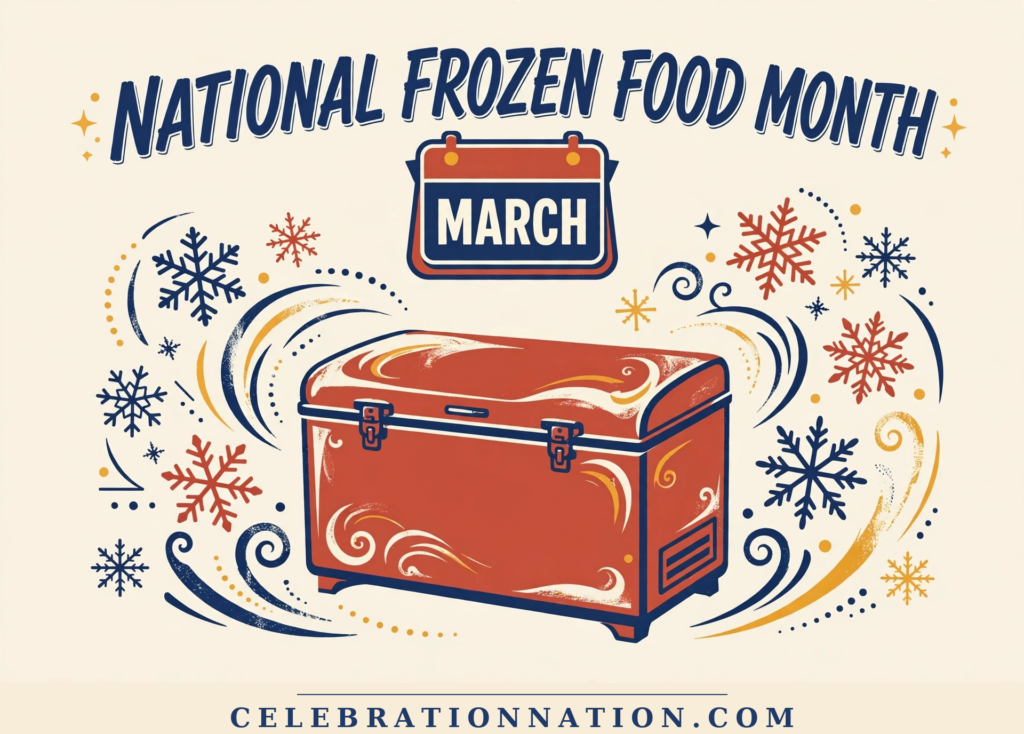
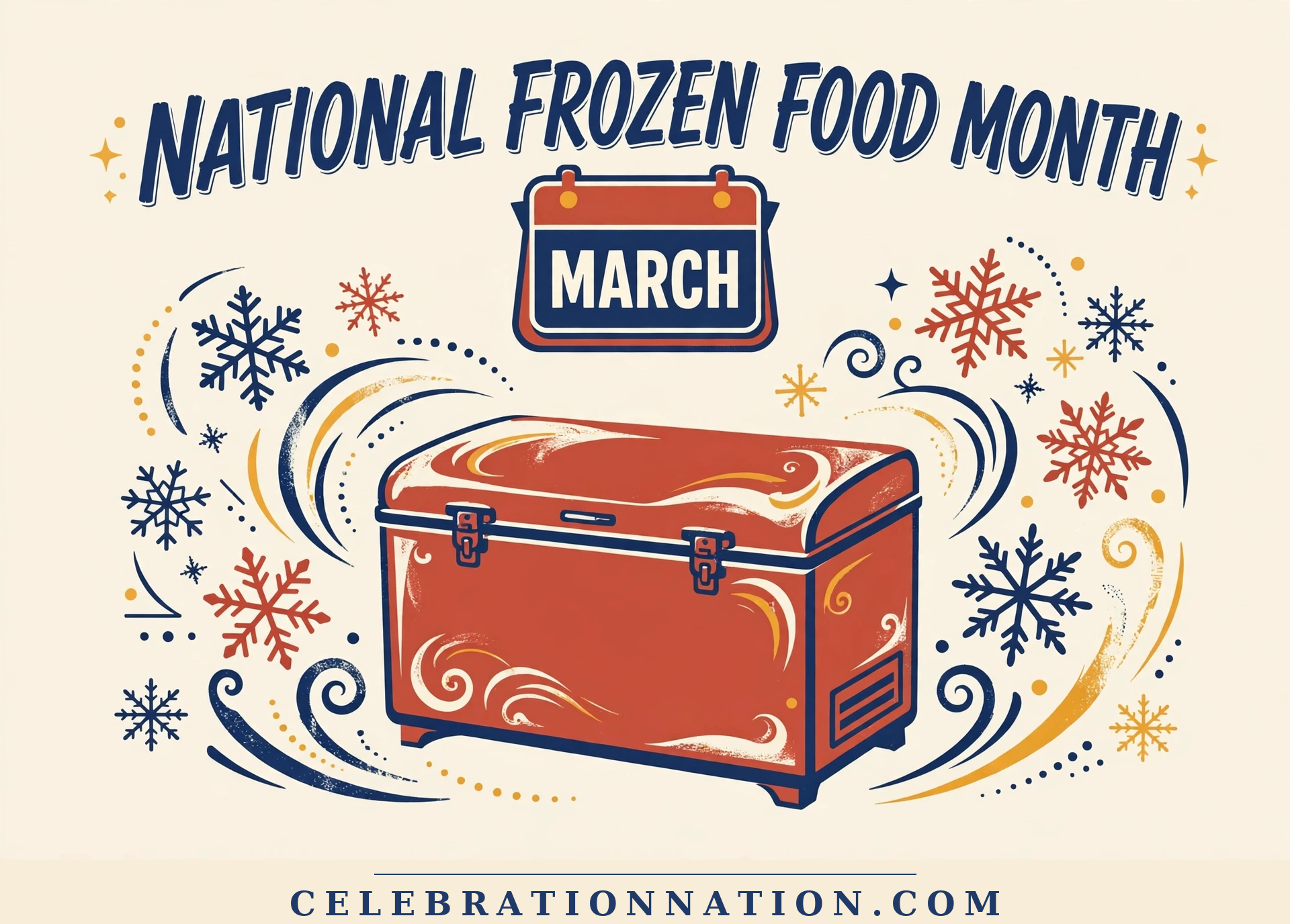
National Frozen Food Month
March welcomes a celebration of frozen foods, a convenient way to enjoy meals any day of the week.
- Roots
- Supported by the National Frozen & Refrigerated Foods Association
- Vibe
- Convenient, versatile, and budget-friendly
- Hashtag
- #NationalFrozenFoodMonth
Fast facts
The story
National Frozen Food Month is celebrated every March and is supported by the National Frozen & Refrigerated Foods Association. This observance aims to raise awareness about the variety and convenience of frozen foods. With busy lifestyles, many families turn to their freezers for quick meals and snacks, making frozen foods an essential part of the modern kitchen.
Read the full story
The frozen food industry has grown significantly, and frozen products are a regular part of many American grocery lists. From frozen fruits and vegetables to complete meals, the options are plentiful. Not only do these foods save time, but they also reduce food waste, as they can be kept for longer periods without spoiling.
Frozen foods also provide a nutritious option for families and individuals alike. Many frozen fruits and vegetables are harvested at peak ripeness and flash-frozen to lock in their nutrients. This method often preserves more vitamins than fresh produce that has been transported over long distances.
As we celebrate National Frozen Food Month, it’s a great opportunity to explore new frozen meal options, experiment with recipes, and enjoy the benefits of this culinary convenience. Whether you're a busy parent or a solo cook, frozen foods can help streamline your meal preparation while still delivering tasty and nutritious options.
Worth knowing
Health Benefits
Frozen foods can be just as nutritious as fresh ones, often preserving vitamins and minerals better. They offer a great way to include more fruits and vegetables in your diet.
Convenience
With frozen meals, you can save time on cooking and meal prep. Simply heat and serve for a quick dinner, perfect for busy weeknights.
Endless Variety
From frozen pizzas to gourmet entrées, the variety available ensures there's something for everyone. Discover new flavors and cuisines without leaving your home.
Food Waste Reduction
Freezing food helps reduce waste. Leftovers can be frozen and enjoyed later, ensuring that food is not wasted and money is saved.
Did you know?
First Frozen Food
Clarence Birdseye developed quick-freezing methods in the 1920s, revolutionizing food preservation.
Frozen Food Sales
Food can be safely refrozen after thawing, though its flavor may diminish.
Nutrient Preservation
Frozen fruits and vegetables often retain more nutrients than fresh produce that has been stored for several days.
Freezer Storage
Frozen food stays safe in the freezer indefinitely, though quality can decline over time.
Popular Frozen Foods
Frozen vegetables and pizzas are among the top-selling frozen food items in the U.S.
Freezing History
The process of freezing food dates back to ancient times when people used ice and snow to preserve food.
Industry Support
The National Frozen & Refrigerated Foods Association supports National Frozen Food Month every March.
Around the world
Every culture celebrates a little differently.
- USUnited StatesIn the U.S., frozen foods are a staple in many households, highlighting convenience and accessibility.
- CACanadaCanadians also embrace frozen foods, with a wide variety available in grocery stores across the country.
- GBUnited KingdomThe UK has a rich history of frozen food, with many traditional meals available in frozen form.
- AUAustraliaAustralia's frozen food market continues to grow, offering healthy and convenient meal options.
- DEGermanyGermany is known for its frozen pizza and ready-to-eat meals, catering to busy lifestyles.
- FRFranceFrench cuisine is also represented in frozen foods, allowing for gourmet meals at home.
Coming up next
See the calendar
Celebrate every day, all year
Official gear from the people who track 1,700+ celebrations.
Browse the shop 2027 National Day Desk CalendarA new celebration every morning. Daily tear-off.
Never miss a reason to celebrate.
One quick morning email with today's celebrations, ideas and posters. Free, unsubscribe anytime.
🎉 You're on the list! Watch your inbox for The Daily Confetti.