

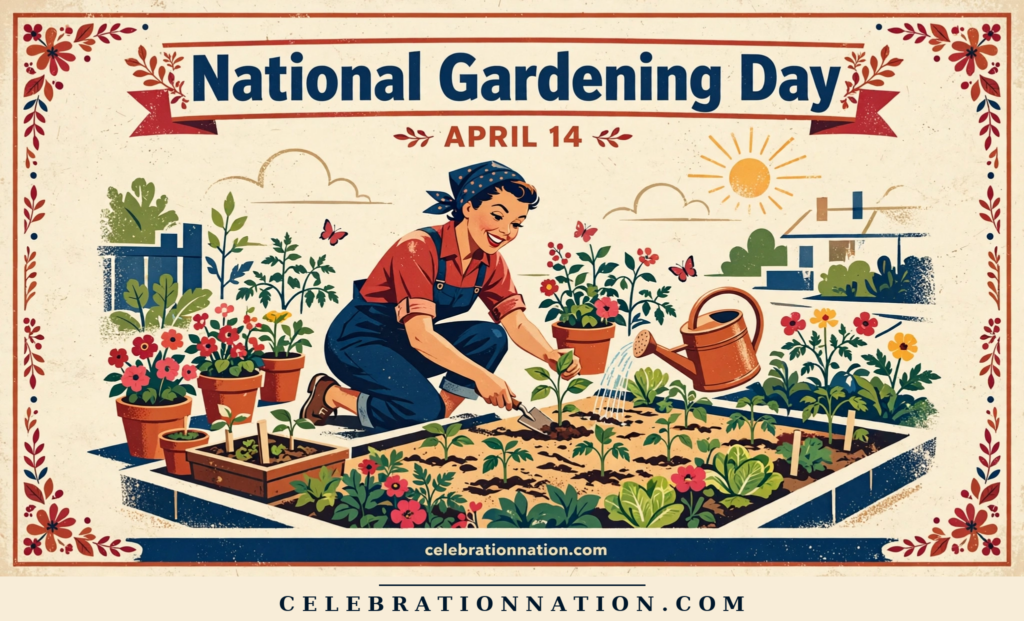
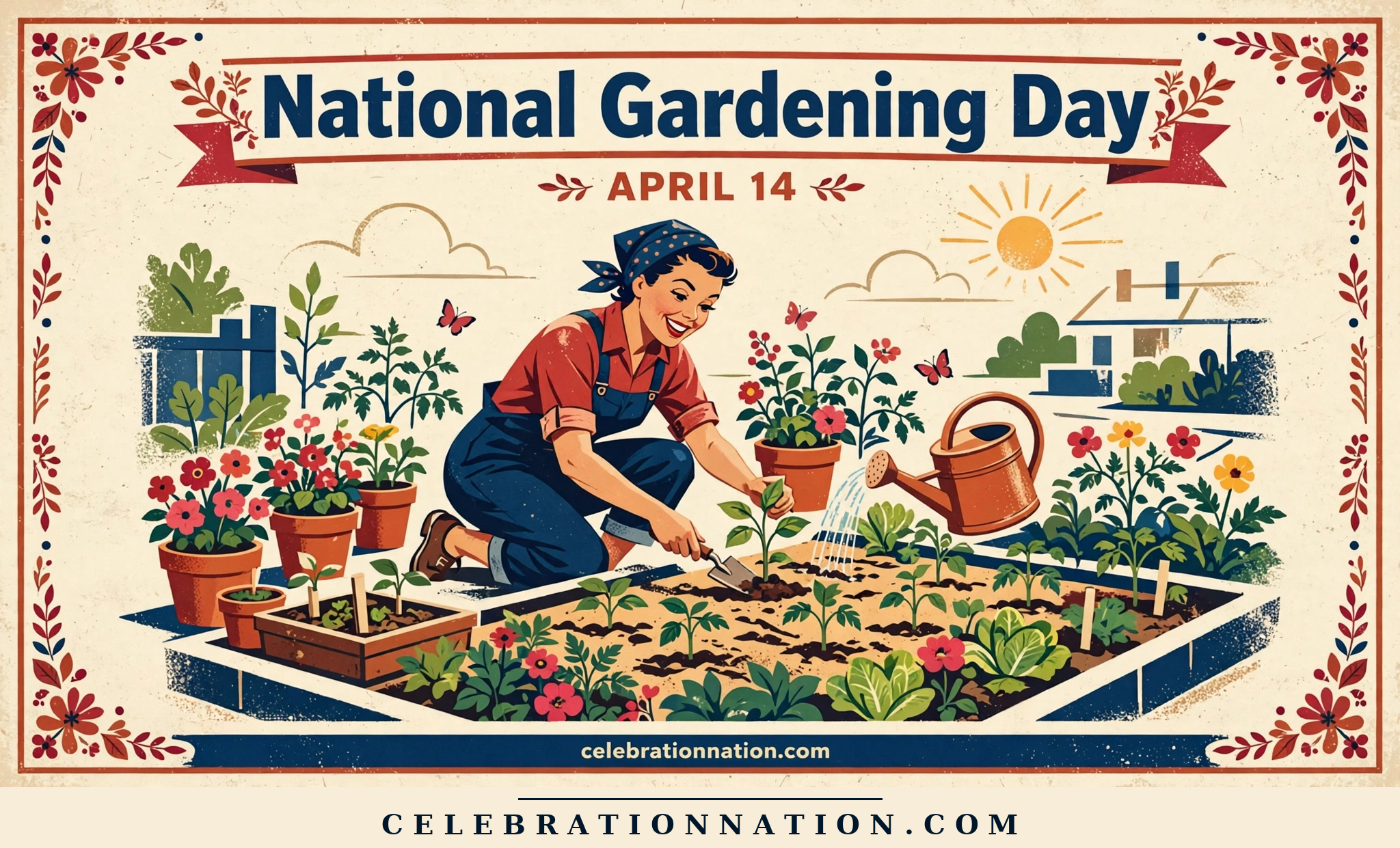
National Gardening Day
Dig in. Grow something. National Gardening Day on April 14 is the starter pistol for backyard gardeners across America — the day the frost worry ends for most zones, and the soil is finally ready.
- Vibe
- Hands in Dirt
- Also on Apr 14
- International Moment of Laughter Day · World Chagas Disease Day · Pan American Day
- Hashtag
- #NationalGardeningDay
Ways to celebrate
Your backyard is waiting:
- 🌱 Start one bed. A 4x4 square is plenty. Good soil, 4+ hours of sun, hose access — you're in business.
- 🌼 Plant pollinators. Native wildflowers, milkweed (butterflies), lavender (bees). Your yard becomes an ecosystem.
- 🍅 Grow one food. Cherry tomatoes, basil, zucchini, lettuce, radishes. All beginner-friendly; all pay off in weeks.
- 📚 Learn your zone. USDA plant hardiness zone tells you what thrives where. Free at planthardiness.ars.usda.gov.
- 🏞️ Visit a local garden center. Independent ones > big box. The staff will plan your bed for free if you ask.
Make it your kind of celebration
Family
Each family member picks one plant. Shared bed, shared responsibility. Kids water their plants; you handle soil. Everyone's invested.
Kids
Kids LOVE growing radishes (20 days from seed to food) and cherry tomatoes (instant snacking). Start there; fail at nothing; hook them on it.
Couples
A shared garden plot is a relationship investment. Years of Saturday morning together; years of shared harvests. Bigger than it sounds.
Office
Office plant wall or herb garden by the window. Fresh herbs for the break room coffee. Small cost; huge vibe shift.
School
Classroom or schoolyard garden is transformative. Real science, real food, real responsibility. Every K-12 school should have one.
Community
Community garden plots are often cheap ($25-100 / year) and in short supply. Check your city's parks department website.
Just me
One pot on a balcony. One herb, one flower, one vegetable. You'll check it every morning; you'll care more than you expected.
Plan ahead
National Gardening Day is observed on April 14 every year. Here is where it lands for the next ten years, handy for planners, marketers and party people.
Fast facts
The story
April is the month home gardening begins for most of America, and National Gardening Day fell where it did for a reason.
Read the full story
National Gardening Day was founded in 2018 by Cool Springs Press, a garden-focused publishing house that wanted an official day to encourage beginners to start. The date, April 14, was chosen because it falls in the middle of the safe planting window for most U.S. hardiness zones (zones 6-8), where the last frost is typically late March or early April. North of zone 5, you wait another week or two; south of zone 8, you've been planting for a month already. April 14 is the moment the country's center-of-mass of gardeners starts their year.
The home-gardening movement has quietly exploded. According to the National Gardening Association, 35% of U.S. households grow some food at home the highest rate since World War II's Victory Gardens. The pandemic years accelerated it further; seed suppliers reported 300-500% year-over-year sales in 2020. Many of those gardeners kept growing.
Home gardening's case is straightforward. It's good for mental health (consistently shown in studies). It's good for biodiversity (every native-plant garden is habitat). It's good for food quality (a tomato from your yard in August is a different food than any grocery tomato). It's good for community, neighborhood garden tours, seed swaps, tool libraries are all real things.
National Gardening Day on April 14 is one of those rare holidays where the "celebration" is also the "productive action." You celebrate by gardening. By the time the day rolls around, most of the country has gotten enough warm sun and thawed soil that doing the thing is finally possible. Start today. You'll be eating your own tomatoes by August.
Four rules every new gardener learns the hard way. Skip ahead:
Six plants every beginner should try in year one, near-impossible to fail at:
Did you know?
The White House has had a vegetable garden since Michelle Obama.
The Kitchen Garden was planted in 2009. First White House vegetable garden since Eleanor Roosevelt's Victory Garden during WWII. Every first family since has maintained it.
Victory Gardens fed 40% of America during WWII.
At the peak in 1944, 20 million home gardens produced 8 million tons of vegetables, 40% of the U.S. vegetable supply. A genuinely civic effort.
The avocado is a botanical berry.
As are tomatoes, eggplants, and bananas. By botany's definition, a berry is a single-seed fruit with a fleshy pericarp. Strawberries, technically, are not berries.
Gardening is associated with longer life.
Multiple studies have shown gardening correlates with lower cardiovascular mortality, lower stress, and better mental health in older adults. Among the most-recommended lifestyle interventions in geriatric medicine.
Keep the party going
See the calendar
Celebrate every day, all year
Official gear from the people who track 1,700+ celebrations.
Browse the shop 2027 National Day Wall CalendarGet the 2026 edition free. 1,700+ observances.
Never miss a reason to celebrate.
One quick morning email with today's celebrations, ideas and posters. Free, unsubscribe anytime.
🎉 You're on the list! Watch your inbox for The Daily Confetti.