


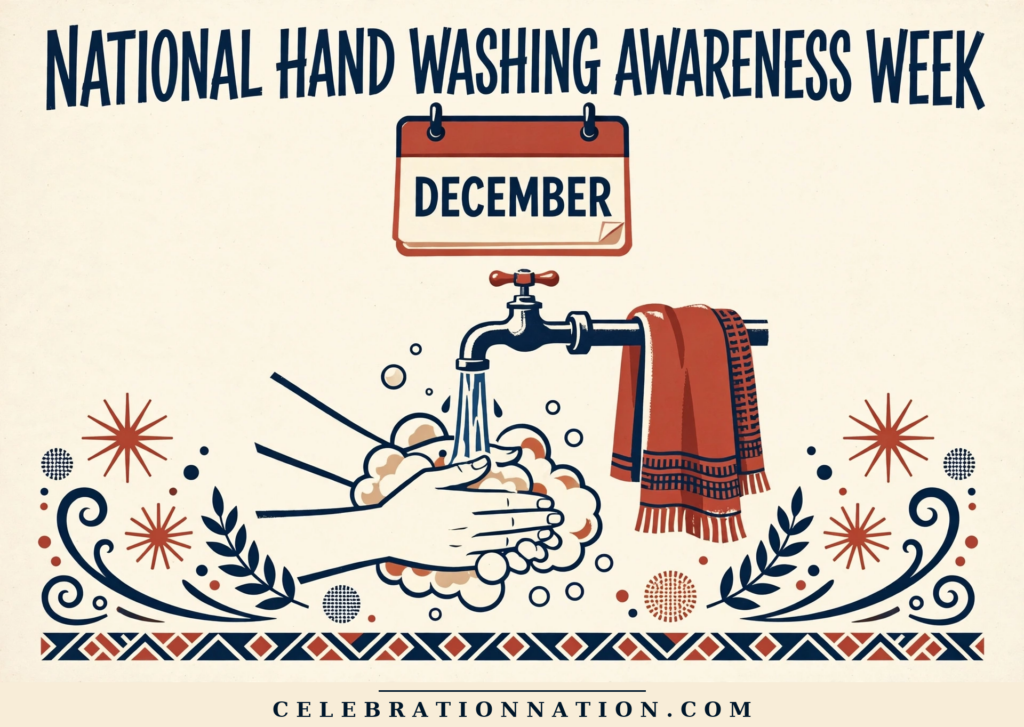
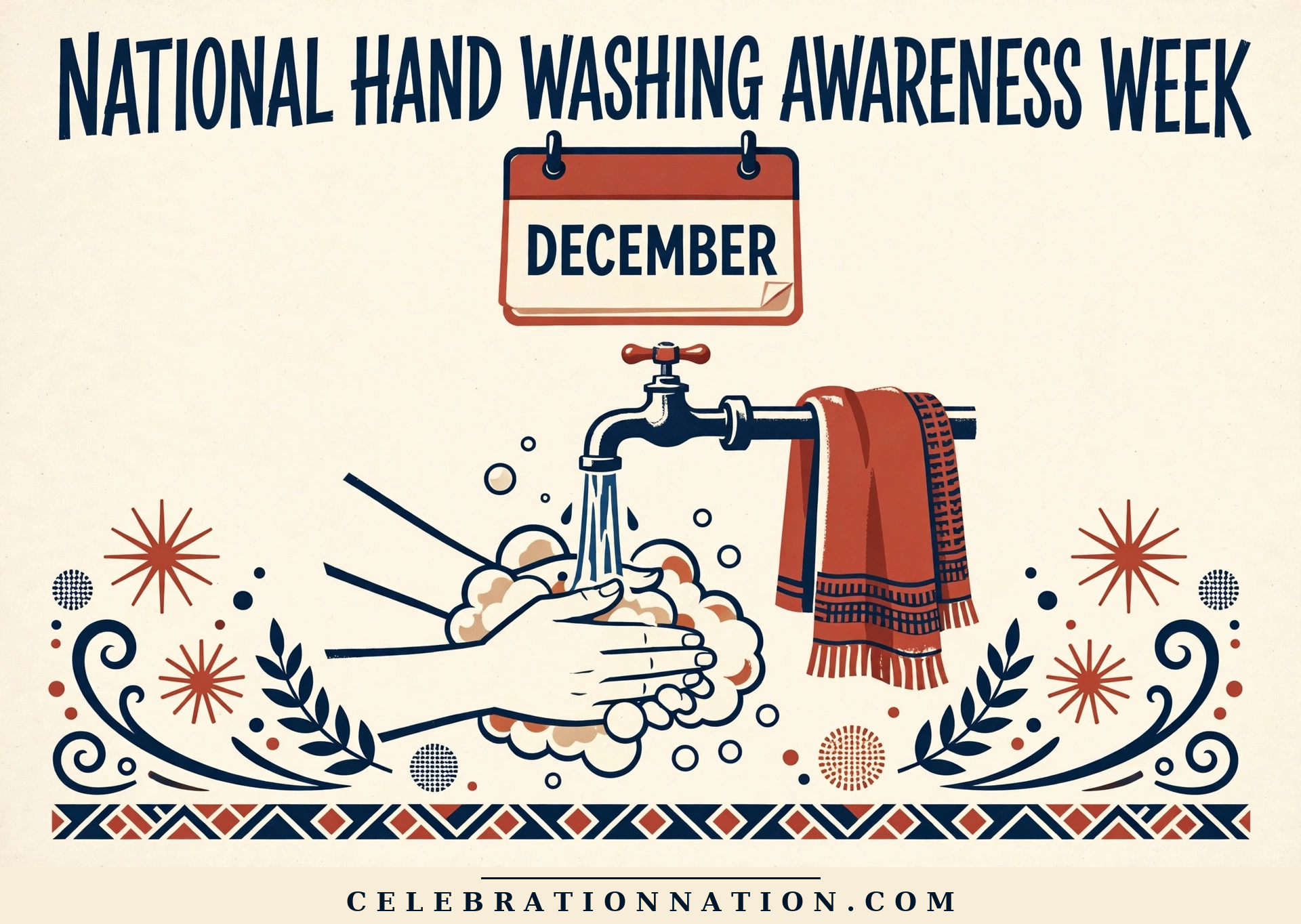
National Hand Washing Awareness Week
Celebrate the impact of hand hygiene with a focus on health and wellness this week.
- Roots
- Established by the CDC in 2008
- Vibe
- Promoting health through simple hygiene practices
- Hashtag
- #NationalHandWashingAwarenessWeek
Fast facts
The story
National Hand Washing Awareness Week serves as an essential reminder about the importance of hand hygiene, especially during flu season. The observance, founded in 1999 by Dr. Will Sawyer and the Henry the Hand Foundation, focuses on educating the public about the effectiveness of washing hands in preventing the spread of germs and illnesses. With cold and flu viruses on the rise, this week emphasizes a proactive approach to health.
Read the full story
Proper hand washing techniques include using soap and water for at least 20 seconds and ensuring that all parts of the hands are cleaned, including between fingers and under nails. The CDC recommends washing hands before eating, after using the restroom, and after being in public spaces. By incorporating these simple practices into daily routines, families can significantly reduce the risk of contracting or spreading infections.
During this week, schools and community organizations often host events to promote hand washing. These initiatives can include workshops, demonstrations, and educational materials aimed at children and adults alike. Such efforts not only raise awareness but also engage communities in creating healthier environments.
As we celebrate National Hand Washing Awareness Week, it is vital to remember that hand hygiene is a shared responsibility. Encouraging good habits can lead to improved public health outcomes. By taking the time to wash our hands regularly, we contribute to a culture of health and well-being that extends beyond our individual households.
Worth knowing
Why Wash?
Washing hands with soap removes dirt, viruses, and bacteria. It is the most effective way to prevent the spread of illness.
Proper Technique
Use warm water and soap. Scrub for at least 20 seconds, rinse thoroughly, and dry with a clean towel or air dry.
Community Impact
Promoting hand washing in schools and workplaces can significantly reduce absenteeism due to illness.
Make It a Habit
Incorporate hand washing into daily routines. Set reminders and make it fun for children to encourage regular practices.
Did you know?
Historical Practices
Hand washing has been practiced for centuries, with origins dating back to ancient civilizations.
Health Impact
Research shows that proper hand washing can reduce diarrheal diseases by up to 40%.
Global Awareness
World Hand Hygiene Day is celebrated on May 5th, promoting hand hygiene worldwide.
Hygiene Education
Hand washing education is crucial in developing countries to combat preventable diseases.
Soap Innovations
Liquid soap was invented in the 19th century, revolutionizing hand hygiene.
Germ Facts
A single gram of feces can contain about 1 trillion germs, highlighting the importance of hand washing.
Public Health
Hand washing is recognized as a key public health intervention by the WHO.
Around the world
Every culture celebrates a little differently.
- USUnited StatesThe CDC leads initiatives to promote hand hygiene across the nation.
- GBUnited KingdomHealth agencies in the UK also emphasize hand washing as a primary defense against germs.
- CACanadaCanadian health authorities advocate hand hygiene in schools and public spaces.
- AUAustraliaAustralia promotes hand washing through public health campaigns, especially during flu season.
- EUEuropean UnionCountries in the EU collaborate on hygiene awareness to combat public health threats.
- INIndiaIndia's health campaigns focus on hand hygiene to reduce infectious diseases.
Coming up next
See the calendar

Celebrate every day, all year
Official gear from the people who track 1,700+ celebrations.
Browse the shop National Day Celebration Card GameA party in a box, any day of the year.
Never miss a reason to celebrate.
One quick morning email with today's celebrations, ideas and posters. Free, unsubscribe anytime.
🎉 You're on the list! Watch your inbox for The Daily Confetti.