






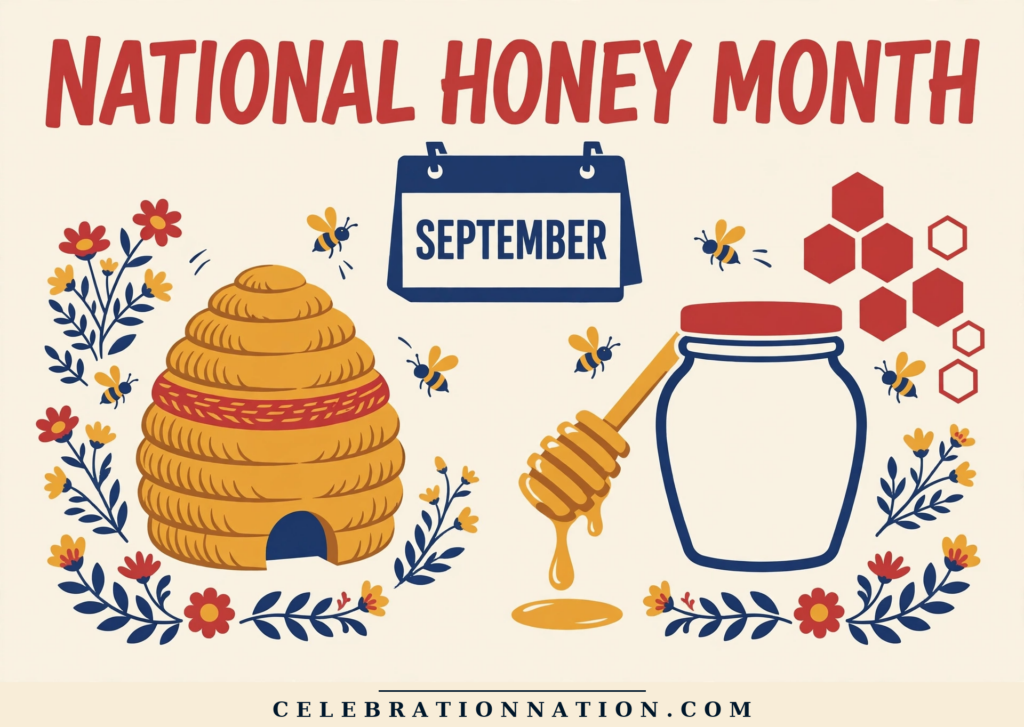
National Honey Month
This September, we honor the vital role of honey in our lives, with a special focus on its benefits. Join in the celebration!
- Roots
- Established in 1989 by the National Honey Board
- Vibe
- A celebration of bees, nature, and sustainability.
- Hashtag
- #NationalHoneyMonth
Fast facts
The story
National Honey Month was first established by the National Honey Board in 1989 to promote the importance of honey and beekeeping. Celebrated every September, this month serves as a reminder of the vital role bees play in our ecosystem. Honey, a natural sweetener produced by bees, has been cherished for centuries, not just for its taste but also for its health benefits.
Read the full story
In the United States, honey is produced in all 50 states, with California, Florida, and North Dakota being the top honey-producing states. Each region offers unique varieties, influenced by local flora. The diversity of honey types, ranging from clover to wildflower, demonstrates the vastness of flavors and colors available to consumers, enhancing culinary experiences.
Beyond its delicious taste, honey is rich in antioxidants and has antibacterial properties. It is often used in traditional remedies for sore throats and allergies. The health benefits of honey are numerous, making it a staple in many households. Additionally, the decline in bee populations has led to increased awareness of sustainable practices in beekeeping and honey production.
As we celebrate National Honey Month, it’s crucial to support local beekeepers and educate ourselves about the importance of bees in agriculture. Events across the country, such as honey tastings, farmers’ markets, and educational workshops, encourage community engagement. By choosing local honey, we not only enjoy its flavors but also contribute to sustainable practices that protect our environment.
Worth knowing
Sweet Benefits
Honey is not just a sweetener; it offers numerous health benefits, including antioxidant properties and antibacterial effects. It's a natural remedy for various ailments.
Save the Bees
Bees are essential pollinators, contributing to the growth of many crops. Supporting beekeeping practices helps protect these vital creatures and our food supply.
Honey in Recipes
Incorporate honey into your meals, try it in dressings, marinades, or as a natural sweetener in baked goods. Its versatility enhances flavors in various dishes.
Explore Varieties
Discover the different types of honey available, from clover to manuka. Each variety offers unique flavors and benefits, making honey a delightful addition to any pantry.
Did you know?
Honey's Age
Honey found in ancient Egyptian tombs is over 3,000 years old and still edible.
Bee Species
There are approximately 20,000 species of bees worldwide, with only a few producing honey.
Honey's Color
The color of honey varies depending on the nectar source, ranging from light amber to dark brown.
Global Production
China is the largest producer of honey in the world, followed by the United States and Turkey.
Bee Lifespan
Worker bees live for about six weeks, while queen bees can live for several years.
Honey in Medicine
Honey has been used in traditional medicine for centuries to treat wounds and infections.
Honey's Density
Honey is denser than water, which is why it settles at the bottom of containers.
Around the world
Every culture celebrates a little differently.
- USNorth AmericaHome to diverse honey varieties, North America features local beekeepers dedicated to sustainable practices.
- AUAustraliaFamous for its unique manuka honey, Australia has a thriving beekeeping community and rich floral diversity.
- DEEuropeMany European countries celebrate honey festivals, showcasing their local honey varieties and emphasizing bee conservation.
- BRSouth AmericaWith its tropical climate, South America produces unique honey types, including rainforest varieties that are rich in flavor.
- ITAsiaAsia, especially countries like China and Japan, is known for its traditional honey uses in cuisine and medicine.
- ZAAfricaAfrican honey, often harvested from wild colonies, is renowned for its distinct flavors and health benefits.
Coming up next
See the calendar



Celebrate every day, all year
Official gear from the people who track 1,700+ celebrations.
Browse the shop 2027 National Day Desk CalendarA new celebration every morning. Daily tear-off.
Never miss a reason to celebrate.
One quick morning email with today's celebrations, ideas and posters. Free, unsubscribe anytime.
🎉 You're on the list! Watch your inbox for The Daily Confetti.