





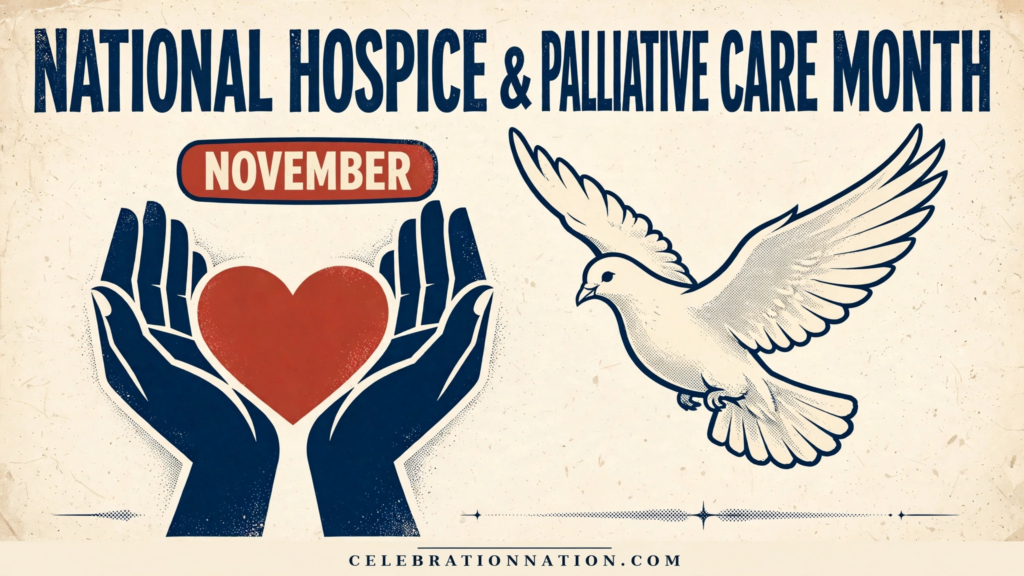
National Hospice & Palliative Care Month
This month, we focus on the invaluable work of hospice and palliative care professionals who provide comfort and dignity.
- Roots
- First proclaimed in 1978 by President Jimmy Carter
- Vibe
- A time of reflection, compassion, and community support.
- Hashtag
- #NationalHospice038PalliativeCareMonth
Fast facts
The story
National Hospice & Palliative Care Month serves as a reminder of the critical services offered to patients and families facing serious illness. It began in 2001 as a way to raise awareness and celebrate the contributions of hospice and palliative care professionals. Throughout November, various organizations across the country host events to educate the public about available resources and support systems.
Read the full story
Hospice care focuses on providing comfort and dignity to patients in the final stages of life, while palliative care can be provided alongside curative treatment. Both approaches prioritize quality of life, pain management, and emotional support for patients and their loved ones. These services are not just about end-of-life care; they emphasize holistic approaches that enhance well-being.
Throughout the month, communities come together to recognize the dedication and compassion of caregivers. Many families share personal stories about how hospice care has transformed their experiences during difficult times. Such narratives highlight the vital role these professionals play in ensuring dignity and comfort.
As we observe National Hospice & Palliative Care Month, it is essential to engage in conversations about the importance of these services. By supporting hospice and palliative care, we affirm our commitment to respecting the wishes of individuals facing serious illness, fostering a culture of compassion and understanding in our communities.
Worth knowing
Understanding Hospice Care
Hospice care is designed for patients with terminal illnesses, focusing on comfort rather than cure. It supports not only the patient but also their families during difficult times.
The Role of Palliative Care
Palliative care can be provided at any stage of illness, focusing on relieving symptoms and improving quality of life. It integrates physical, emotional, and spiritual support.
Community Involvement
Communities can play a crucial role by volunteering or donating to local hospice organizations, ensuring they have the resources to provide comprehensive care.
Educational Resources
Numerous resources are available to educate families about hospice and palliative care, ensuring informed decisions and effective communication during challenging times.
Did you know?
First Hospice in the U.S.
The first hospice in the United States was established in 1974 in New Haven, Connecticut, known as the Connecticut Hospice.
Global Movement
The hospice movement began in the United Kingdom, with Dame Cicely Saunders founding the first modern hospice in 1967.
Patient Statistics
Studies show that hospice care can significantly improve the quality of life for patients and their families.
Volunteer Impact
Many hospice organizations rely on volunteers, who provide essential support and companionship to patients.
Cultural Variations
Palliative care philosophies can vary significantly between cultures, affecting how care is delivered.
Legislative Support
In the U.S., legislation supports hospice care, ensuring it is covered by Medicare and Medicaid.
Increasing Demand
As the population ages, the demand for hospice and palliative care services continues to grow.
Around the world
Every culture celebrates a little differently.
- USNorth AmericaIn the United States, hospice care is recognized for its comprehensive services, emphasizing quality of life and dignity.
- CACanadaCanada also has a robust palliative care system, with organizations dedicated to improving access and quality of services.
- GBUnited KingdomThe UK's National Health Service includes hospice services, highlighting the importance of compassionate care in end-of-life situations.
- AUAustraliaAustralia's palliative care framework aims to ensure patients receive support tailored to their individual needs, enhancing comfort and dignity.
- DEGermanyGermany has developed a comprehensive hospice care model that emphasizes multidisciplinary approaches to patient care.
- FRFranceIn France, hospice care is integrated into the healthcare system, focusing on both physical and emotional support for patients and families.
Coming up next
See the calendar




Celebrate every day, all year
Official gear from the people who track 1,700+ celebrations.
Browse the shop National Day Celebration Card GameA party in a box, any day of the year.
Never miss a reason to celebrate.
One quick morning email with today's celebrations, ideas and posters. Free, unsubscribe anytime.
🎉 You're on the list! Watch your inbox for The Daily Confetti.