



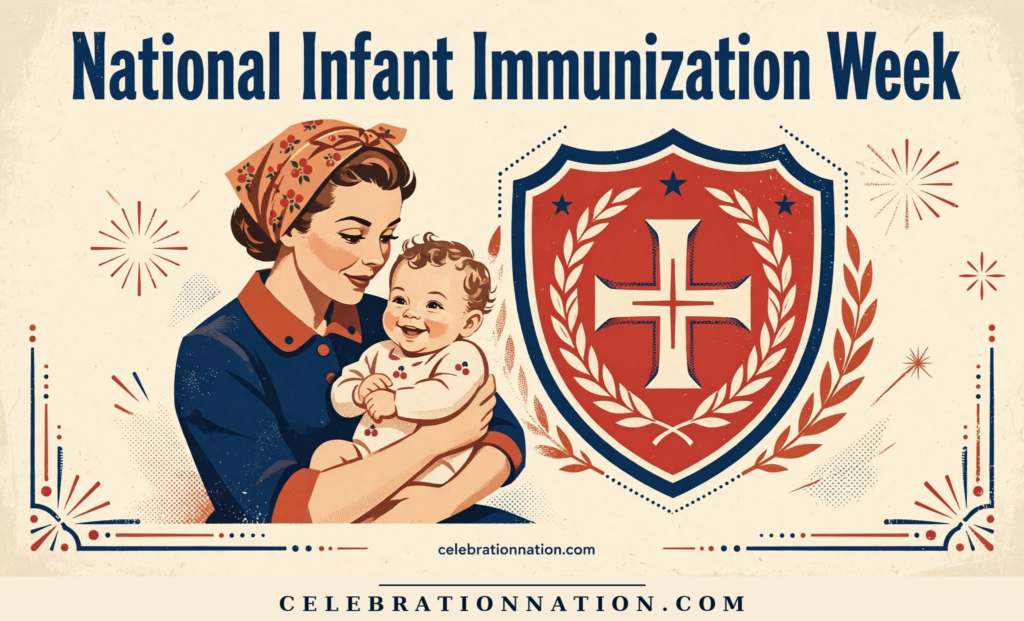
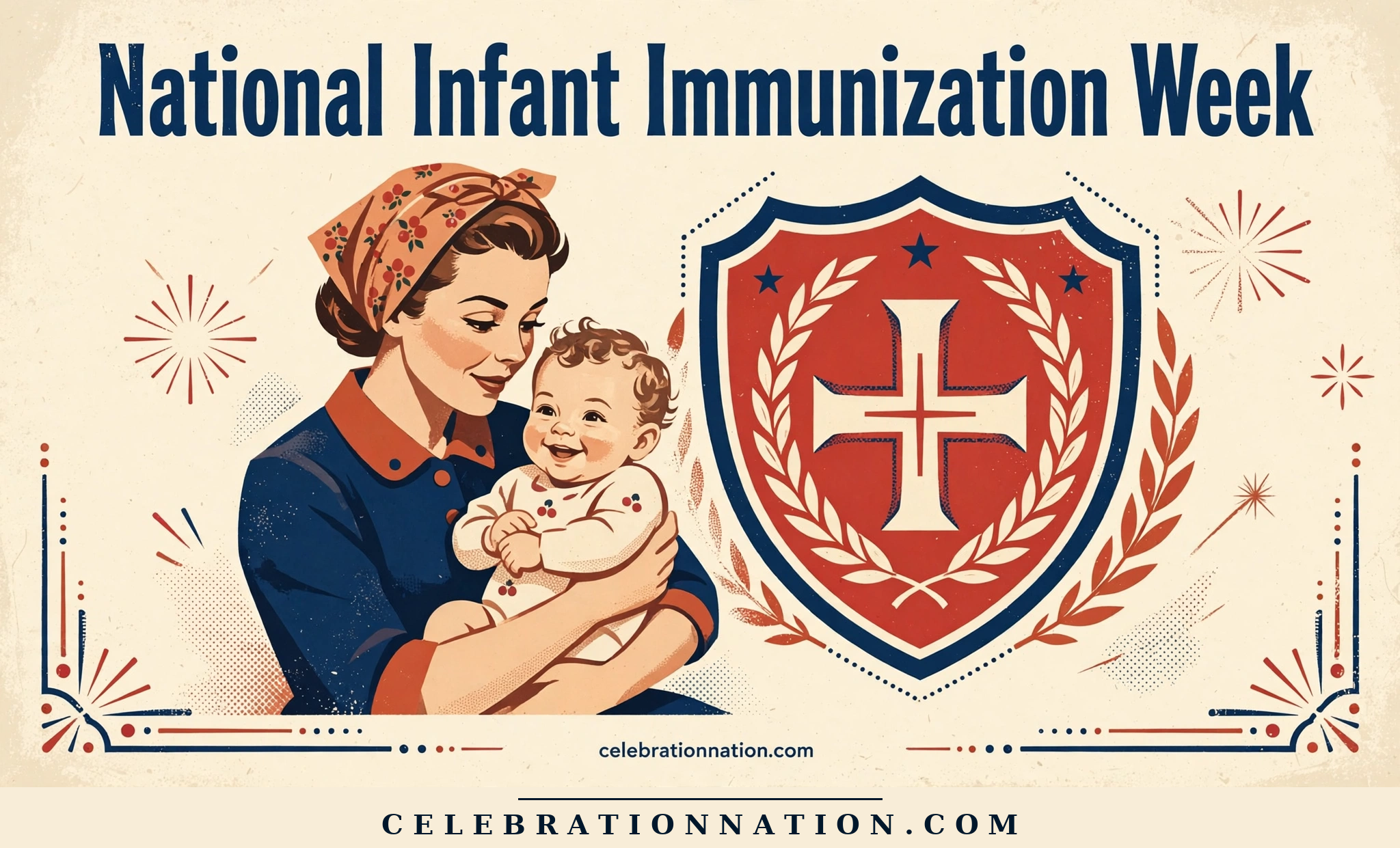
National Infant Immunization Week
National Infant Immunization Week is a small but real reason to pause, notice, and celebrate — together if we can.
- Roots
- First observed in 1994
- Vibe
- Community focus on child health and safety.
- Hashtag
- #NationalInfantImmunizationWeek
Ways to celebrate
Small, doable ways to celebrate National Infant Immunization Week.
- Do one small thing that makes the day feel marked.
- Tell someone what you're celebrating and why.
- Share a post, a photo, or a memory connected to it.
- Make a tiny tradition — something you could do again next year.
- Let it be simple. Not every celebration has to be a production.
Fast facts
The story
National Infant Immunization Week takes place annually in late April, focusing on the significance of childhood vaccinations. This initiative aims to educate parents and caregivers about the critical role immunizations play in preventing disease outbreaks. By ensuring infants receive their vaccinations on schedule, communities can protect both individual children and public health at large.
Read the full story
Vaccination is one of the most effective public health strategies, reducing the incidence of diseases such as measles, mumps, and rubella. The Centers for Disease Control and Prevention (CDC) recommends a series of vaccines for infants, starting at birth and continuing through their early years. As awareness grows, more families are recognizing the importance of adhering to these schedules.
Despite the overwhelming evidence supporting vaccinations, some parents still harbor concerns influenced by misinformation. It is essential to address these fears by providing accurate information and encouraging open discussions with healthcare providers. Vaccines undergo rigorous testing for safety and efficacy, ensuring that children receive the best possible protection. Remember, timely vaccinations are crucial for community immunity, keeping everyone safe.
During National Infant Immunization Week, community organizations, healthcare providers, and families unite to raise awareness. Local health departments often hold events to facilitate easy access to vaccinations. Parents are encouraged to learn about the schedule and the importance of each vaccine. By participating in this observance, we can collectively contribute to a healthier future for our children.
Worth knowing
Vaccination Clinics
Local clinics often offer free or low-cost vaccinations during National Infant Immunization Week. Check with your local health department for resources.
Educational Resources
Visit the CDC's website for comprehensive information on immunization schedules and the benefits of vaccines to help guide your family.
Global Impact
Vaccinations not only protect individuals but also contribute to global health initiatives, preventing disease outbreaks worldwide.
Community Engagement
Engage with local health organizations to promote vaccination awareness, and encourage your community to prioritize immunization for children.
Did you know?
Vaccination Milestones
The first vaccine was developed in 1796 by Edward Jenner to protect against smallpox.
Herd Immunity
Herd immunity occurs when a significant portion of a population is vaccinated, protecting those who cannot be vaccinated.
Vaccine Safety
Vaccines are subject to strict safety testing before approval, monitored continuously post-licensure.
Global Vaccination Efforts
The Global Vaccine Action Plan aimed to extend the benefits of vaccines to all people, especially in low-income countries.
Historical Impact
Vaccination campaigns have successfully eradicated smallpox and significantly reduced polio cases.
Vaccine Hesitancy
Misinformation about vaccines has led to increased vaccine hesitancy in some communities.
Vaccination Rates
Since 1994, NIIW has urged that infants be fully immunized against 14 vaccine-preventable diseases.
Around the world
Every culture celebrates a little differently.
- USUnited StatesNational Infant Immunization Week is celebrated across all states, emphasizing the importance of vaccinations for infants.
- CACanadaCanada also observes similar initiatives to promote infant immunization, facilitating access to vaccines.
- GBUnited KingdomThe UK supports vaccination campaigns, with a focus on ensuring children receive their immunizations on time.
- AUAustraliaAustralia's immunization programs aim to maintain high vaccination rates among infants and young children.
- NZNew ZealandNew Zealand promotes vaccination awareness through community outreach and healthcare provider education.
- DEGermanyGermany emphasizes early childhood vaccinations, ensuring infants are protected from preventable diseases.
Coming up next
See the calendar

Celebrate every day, all year
Official gear from the people who track 1,700+ celebrations.
Browse the shop National Day Celebration Card GameA party in a box, any day of the year.
Never miss a reason to celebrate.
One quick morning email with today's celebrations, ideas and posters. Free, unsubscribe anytime.
🎉 You're on the list! Watch your inbox for The Daily Confetti.